Status: active - level 1
Last updated on 28 August 2026
Bundibugyo Ebola virus outbreak
Actions by ANRS MIE
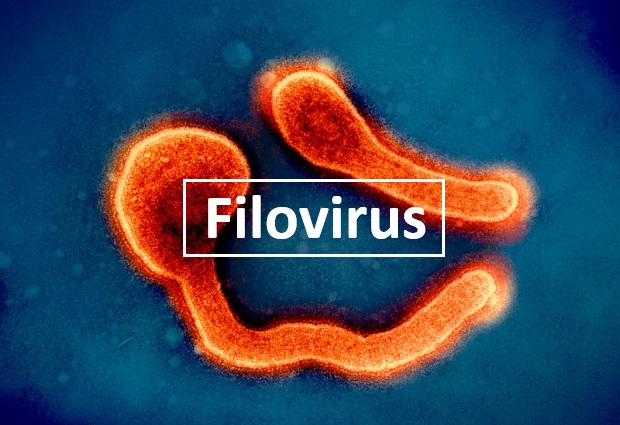
The filovirus family comprises various viruses responsible for acute haemorrhagic fevers, which are particularly lethal (with a fatality rate of between 25% and 90%), including Marburg virus disease and Ebola virus disease (linked to the Zaire, Sudan and Bundibugyo strains).
As part of its Outbreak Response programme and its coordination of the WHO Collaborative Open Research Consortium (CORC) on filoviruses, the ANRS Emerging Infectious Diseases has operated a Level 1 Outbreak Response unit since March 2025 to monitor filovirus–related outbreaks.
Its role is to establish enhanced scientific surveillance and to define research priorities in collaboration with scientific communities, expert groups and associations, producing information for public decision-makers.
A previous Émergence unit dedicated solely to the Ebola virus (Sudan strain) was activated between September 2022 and January 2023.
As part of the ANRS MIE Outbreak Response programme and the CORC Filovirus program, the agency publishes a weekly scientific review on filoviruses, with a particular focus on Sudan virus—responsible for Ebola virus disease—and Marburg virus, providing updates on the most recent research findings.
In particular, you will find in the scientific review available for download:
The filovirus family comprises single–stranded RNA viruses responsible for acute, highly lethal haemorrhagic fevers, such as Marburg virus disease and Ebola virus disease. The latter is caused by viruses of the genus Orthoebolavirus, with a case fatality rate ranging from 25 to 90% depending on the outbreak.1
The first filoviruses were discovered in 1967 during an outbreak of a severe haemorrhagic syndrome in Marburg (Germany) and Belgrade (Serbia). The virus identified was named, on that occasion, Marburg virus.
In 1976, two further viral haemorrhagic fevers occurred, one in South Sudan and the other in the Democratic Republic of the Congo (formerly Zaire). These were the first descriptions of Ebola virus disease and, respectively, the Sudan virus (or ‘Sudan strain’, SUDV) and the Zaire Ebola virus (or ‘Zaire strain’, ZEBOV or EBOV).2,3
A third viral species causing Ebola virus disease affects humans: the Bundibugyo virus (BDBV), first identified during an outbreak in 2007–2008 in Uganda and subsequently in the Democratic Republic of the Congo in 2012.4
Know more on EbolaOn 5 May 2026, the World Health Organisation (WHO) was alerted to an outbreak with high mortality in Ituri Province in the Democratic Republic of the Congo. On 15 May, following confirmation by laboratory analysis, the pathogen was identified as the Bundibugyo virus.
On 17 May 2026, the World Health Organisation (WHO) declared that the Ebola virus disease outbreak caused by the Bundibugyo virus in the Democratic Republic of the Congo and Uganda constitutes a ‘public health emergency of international concern’ but poses no risk of a pandemic at this stage.
As of 16 May, the WHO had recorded 8 confirmed cases, 246 suspected cases and 80 deaths.5
Given the relative proximity of Mayotte, the French government states at this stage that “the risk of importation into mainland France and Mayotte is very low.”6
On 14 November 2025, a new Marburg outbreak occurred in the Southern Ethiopia region. A total of 14 confirmed cases were reported, including nine deaths and five recovered patients. Five additional deaths involved probable cases.
On 26 January 2026, the Government of Ethiopia officially declared the end of its very first Marburg virus disease outbreak, following a period of enhanced surveillance and mandatory monitoring, during which no new confirmed cases were reported for 42 consecutive days.
On 1 September 2025, the Democratic Republic of the Congo reported an outbreak of Ebola virus disease (EVD) in the Kasai province, in the south-west of the country.
The index case, a 34-year-old pregnant woman, died after presenting with fever, haemorrhages and multi-organ failure. By 13 September 2025, 81 suspected cases (including 28 deaths) had been recorded, with initial nosocomial transmission followed by community transmission. Samples analysed at the INRB in Kinshasa confirmed EBOV infection, and sequencing suggested a zoonotic origin.
The Congolese authorities, supported by the WHO and the CDC Africa, implemented response measures including case isolation, contact tracing, community awareness-raising and the deployment of doses of the Ervebo vaccine. The WHO assessed the risk as high at the national level, moderate at the regional level and low at the global level.
On 1 December 2025, the Democratic Republic of the Congo officially announced the end of the Ebola virus disease outbreak in Kasai Province, as no new cases had been reported during the 42 days since the last patient’s recovery on 19 October 2025.
On 30 January 2025, Uganda’s Minister of Health declared an outbreak of Sudan virus disease (SVD), following the confirmation of a case in Kampala. As of 5 March 2025, 12 further confirmed cases and 2 probable cases, of which 4 (case fatality rate 29%) had been reported. Of these 14 cases, from 6 districts (Figure 2), 8 patients have recovered since the start of the outbreak. Following the latest identified cases, 192 at-risk contacts have been identified and placed under surveillance. These are in addition to the 308 contacts previously identified.
In response to this new outbreak, and with the support of the WHO, the Government of Uganda, through the Uganda Virus Research Institute (UVRI), launched a four-day randomised vaccine trial, ‘TOKOMEZA SVD’, of the rVSV-SUDV vaccine candidate. Vaccination was offered to the identified contacts. This is the first trial during an epidemic to assess the clinical efficacy and immunogenicity of a single dose of the SUDV vaccine. 7
On 14 January 2025, an outbreak of Marburg virus (MARV) in the Kagera region, which had caused 8 deaths among 9 reported cases, was reported to the WHO. As of 14 February 2025, Tanzania had reported a tenth case (2 confirmed, 8 probable), including 10 deaths (CFR 100%).
On 13 March 2025, the Ministry of Health of the United Republic of Tanzania declared the end of the Marburg virus disease outbreak. This declaration follows two consecutive incubation periods (a total of 42 days) with no new cases detected since the last reported case. This outbreak occurred just one month after the WHO had declared the end of the MVD outbreak in Rwanda, which lasted three months and killed 15 people. Furthermore, in March 2023, Tanzania had already declared a first Marburg outbreak, also in the Kagera region, with a total of 9 cases.8
Scientific coordination: in 2024, ANRS MIE launched a coordinated initiative on viral haemorrhagic fevers chaired by Sylvain Baize, Marie Jaspard and Abdoulaye Touré. This group for exchange and strategic reflection is dedicated in particular to scientific research on filoviruses and aims, through its working groups (therapeutics, wildlife, vaccines), to develop research projects within the framework of international collaborations, primarily with our partners in Africa.
CORC Filovirus: as part of its long-term commitment to the WHO, the coordination of the CORC Filovirus has been entrusted to ANRS MIE. CORCs are international networks of research institutions whose mission is to strengthen global pandemic preparedness through collaborative research, knowledge sharing and the rapid development of countermeasures. A review of the priorities for filovirus research and surveillance (WHO-AFIRM) is currently being carried out by ANRS MIE, the WHO, and all the experts from the Filovirus CORC.9
Development of the 10 Ebola research priorities defined with the WHO: following the declaration of a new Ebola outbreak in the Democratic Republic of the Congo, the ANRS MIE and the WHO convened experts from the Filovirus CORC on 5 September 2025. Together, they defined ten research priorities to support the immediate response and strengthen preparedness for future outbreaks.
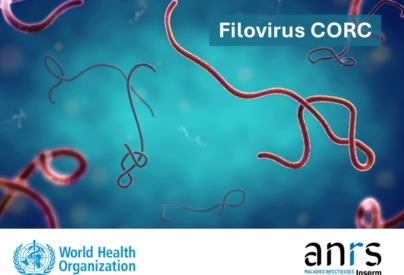
Fighting epidemics: ANRS MIE leads WHO filovirus CORC.
Image credit: NIAID (Marburg virus)