

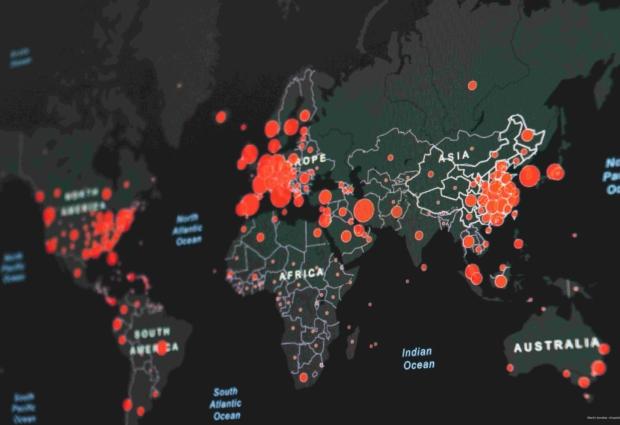
ANRS MIE is at the forefront of crisis preparedness and response.
Last updated on 25 June 2026
ANRS MIE is a key player in supporting and structuring research in the field of future infectious threats. It is fully involved in the implementation of the National Acceleration Strategy for Emerging Infectious Diseases and Nuclear, Radiological, Biological and Chemical Threats ” (SA MIE MN), defined as part of the France 2030 plan.
In accordance with measure 2 of the SA MIE MN, ANRS MIE is responsible for the scientific management and implementation of the Priority Research Programme and Equipment for Emerging Infectious Diseases (PEPR MIE). This programme has a budget of €70 million, funded by the France 2030 plan, and is divided each year into calls for research projects in three areas: deepening fundamental knowledge of EMIs; contributing to innovation in diagnostics, vaccines and treatments; and improving public policy responses to epidemic crises.
ANRS MIE also oversees:
As part of measure 6 of the SA MIE MN, the agency also coordinates the establishment of research platforms.
A project implemented in 2021 as part of the ‘Santé en commun’ initiative, the international and inter-institutional consortium AFROSCREEN aims to structure a genomic surveillance network by contributing to the strengthening of laboratory capacities for the diagnosis, detection and surveillance of SARS-CoV-2 variants and other emerging pathogens. It is coordinated by ANRS MIE and conducted in partnership with the Institut Pasteur, IRD and laboratories in thirteen African countries.
ANRS MIE is also one of nine international coordination centres for the STRIVE network (Strategies and Treatments for Respiratory Infections and Viral Emergencies). Created in 2023, the network links more than 300 clinical trials conducted in 40 countries around the world. The whole network is managed by a highly specialised statistics and data management centre based at the University of Minnesota in the United States. The network conducts high-quality methodological therapeutic clinical trials to respond quickly and effectively to infectious disease emergencies.
In 2025, four years after its launch in collaboration with Santé publique France, the EMERGEN consortium, which aims to monitor developments and strengthen genomic research capabilities on SARS-CoV-2 (Covid-19 virus) variants, expanded to include other pathogens under the name EMERGEN 2.0.
Developed during the Covid-19 pandemic, I-REIVAC Emergence is a national clinical vaccine research platform for emerging infectious diseases, jointly supported by the AP-HP. Launched in 2025, Open-ReMIE is also a national platform dedicated to clinical therapeutic research on emerging infectious diseases in France, supported by ANRS MIE and co-directed by the Hospices Civils de Lyon.
ANRS MIE plays a decisive role in responding to epidemic crises. In the event of epidemic outbreaks in France and around the world due to the emergence or re-emergence of a pathogen, the agency triggers a procedure proportionate to the health crisis.
While ANRS MIE plays a central role in supporting the preparation of responses to future infectious threats, it also acts as a reference point, inter-institutional coordinator and research accelerator.
To this end, it has set up the Outbreak Response programme: in the event of emerging or re-emerging epidemics in France and around the world, ANRS MIE can trigger a coordination and monitoring procedure to respond quickly to health crises. This multimodal mechanism consists of three levels of response that evolve according to the severity of an epidemic outbreak.
The Collaborative Open Research Consortium (CORC) is an innovative initiative by the World Health Organisation (WHO) to help implement rapid responses to emerging health threats. In 2025, ANRS MIE was designated by the WHO to coordinate the CORC filovirus.
In collaboration with the WHO and other international partners, ANRS MIE leads global consultations and coordinates international scientific efforts to anticipate and respond rapidly to emerging health threats related to filoviruses such as Ebola and Marburg.
In the event of an emerging or re-emerging epidemic in France or worldwide, our agency can activate a facilitation and watch procedure for a rapid response to health crises.
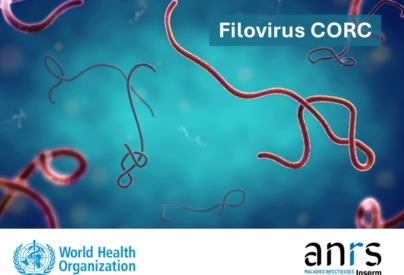
Fighting epidemics: ANRS MIE leads WHO filovirus CORC.
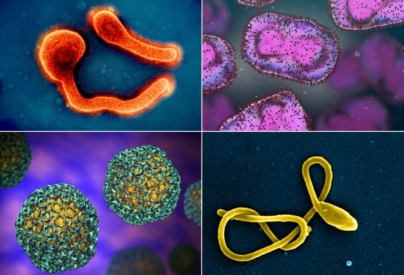
In the event of an epidemic outbreak due to the emergence or re-emergence of a pathogen, in France or anywhere else in the world, the agency triggers a dedicated levelled procedure in order to respond proportionately to health crises.