

To mark the anniversary of the discovery, on 24 March 1882, of the bacillus responsible for tuberculosis by Dr Robert Koch.
Last updated on 16 July 2026
Once again this year, the World Health Organisation (WHO) continues to assert emphatically: “Yes! We can end tuberculosis!” In 2026, it is calling on countries around the world to support the fight against this disease even more actively.
Having been involved in this fight for many years, particularly given the danger tuberculosis poses to people living with HIV/AIDS, the ANRS Emerging Infectious Diseases (ANRS MIE) continues to fund and oversee research into this disease.
Tuberculosis, one of the many diseases that ANRS MIE combats, represents an ongoing health crisis in many countries around the world.
Whilst the global population grew by around 8% in the year between 2023 and 2024, the number of new tuberculosis cases rose by 30% over the same period. According to the latest WHO annual report on the subject, there were 10.7 million new cases worldwide in 2024 – including 390,000 infected with antibiotic-resistant strains. This figure breaks the grim record already set over the past two years for the highest number of cases ever recorded in a single year by the WHO since it began monitoring the disease in 1995.
By comparison, the number of deaths continues to fall, albeit slightly, year on year: 1.23 million deaths from tuberculosis were reported in 2024, compared with 1.25 million in 2023 and 1.32 million in 2022. The strategy to eradicate the disease, championed by the WHO since 2014, still aims to reduce the number of deaths recorded each year by 90% and the number of new cases by 80% by 2030 (compared to 2015).
Tuberculosis is a preventable and curable disease. The WHO estimates that 83 million lives have been saved by diagnostic capabilities and anti–tuberculosis antibiotic treatment since 2000 (an increase of 4 million in a single year). The UN agency points out that “every dollar invested in the fight against tuberculosis generates a further 43 in economic and health returns”.
However, it points out that several policy decisions are seriously hampering this fight. In the thirty countries most affected by tuberculosis, “essential prevention and healthcare services are collapsing”, warns the WHO. It specifically cites the withdrawal of US funding, which accounts for half of international aid for tuberculosis. It specifically criticises the dismantling of the United States Agency for International Development (USAID) and the suspension of US contributions to the Global Fund to Fight AIDS, Tuberculosis and Malaria (or Global Fund), which has seen its budget reduced by €1.2 billion in 2024.
“HIV and tuberculosis form a deadly combination […] and yet we have treatments for both infections,” noted Dr Mireille Mpoudi Etame, scientific coordinator of our partner site in Cameroon, in a interview on RFI on 26 February. Dr Maryline Bonnet, research director at IRD and co-investigator of the DATURA study (see below), shares this view. For her, “early diagnosis and treatment of tuberculosis to halt its transmission is not enough. We need even more research into vaccination, into very short and well-tolerated treatments, and into prevention among those at risk.”
The ANRS MIE funds numerous research projects on tuberculosis and, in particular, oversees the promotion of several clinical trials on tuberculosis. The DATURA study, an international phase III clinical trial launched in 2024 and sponsored by ANRS MIE, presented its initial results at CROI 2026 last February in Denver. This study is evaluating the efficacy of an intensified anti-tuberculosis treatment for immunocompromised individuals or those living with HIV who have tuberculosis.
The international INTENSE TBM cohort, funded by the European & Developing Countries Clinical Trials Partnership (EDCTP), coordinated by the University of Bordeaux and promoted by ANRS MIE in conjunction with the PAC-CI Programme in Côte d’Ivoire, completed its recruitment phase in December 2025. This study focuses on the management of people with tuberculous meningitis in several African countries (Côte d’Ivoire, Madagascar, Uganda, South Africa).
ANRS MIE also supports fundamental research projects, some of which led to publications in 2025 and 2026: such as the work by Pierre Santucci (LISM-CNRS) and his colleagues on the mode of action of pyrazinamide (an anti-tuberculosis drug) in Mycobacterium tuberculosis, or the study into the potential of nanovectors as a host-directed therapy against tuberculosis, led by Arnaud Machelart’s team (CIIL).
Furthermore, ANRS MIE coordinates several scientific working groups focusing on tuberculosis–related themes, notably through its dedicated coordinated action (AC TB).
And to mark this World Tuberculosis Day, ANRS MIE also wished to give a voice to two scientists whose tuberculosis research it funds:
 Today, tuberculosis remains a major global scourge. It is a reality that we tend to forget in the West, yet it still kills more than a million people every year, including many migrants. The situation in Eastern Europe and Central Asia is particularly alarming due to the prevalence of drug-resistant strains. In Ukraine, for example, the tuberculosis rate is seven times higher than in Western Europe.
This health crisis has been tragically exacerbated by Russia’s war against Ukraine: the conflict has forced millions of people onto the roads in extremely precarious conditions, which facilitates the spread of multi-drug-resistant strains, which are more difficult to treat. According to the latest data from the European Centre for Disease Prevention and Control (ECDC), more than 50% of tuberculosis cases in many European countries such as Germany, Sweden and the Netherlands involve people born abroad, and this proportion exceeds 75% in countries such as Norway and the United Kingdom. It is estimated that there are 281 million migrants worldwide, all of whom represent potential reservoirs for the disease if they are not properly cared for.
To combat the disease, we are now relying on rapid molecular screening and new short-course treatments. Major therapeutic advances are changing the game, such as the BPaLM regimen (bedaquiline, pretomanid, linezolid, moxifloxacin), a six-month oral treatment for multidrug-resistant tuberculosis, recommended by the WHO with cure rates of up to 89%. But access to these innovations remains highly unequal, particularly for migrant populations. Initiatives such as the MAF-TB (Multisectoral Accountability Framework to accelerate progress to end TB) from the European Coalition Against Tuberculosis are attempting to involve civil society in monitoring whether governments are keeping their promises. Because today, screening at borders and the monitoring of refugees still suffer from a severe lack of resources to be truly effective.
Our research, conducted at the Cermes3 laboratory and supported by ANRS MIE, focuses on the unprecedented challenge of Ukrainian migration to Europe since the Russian invasion of 2022. This movement involves more than six million people. What makes this wave unique is that the refugees, mostly women and children, are granted temporary protection [authorised by the European Union since March 2022]. This allows them to move freely between several European countries whilst maintaining close ties with Ukraine – a country at war but which continues to function despite tragic challenges.
This mobility creates highly complex care pathways: some begin treatment in one country, then move elsewhere or return to Ukraine from time to time. This is what I call ‘medical transnationalism’, which makes follow-up difficult for health systems, even if it sometimes offers more flexible solutions for patients.
Our analysis of 124 interviews conducted across six European countries shows that the obstacles are not solely medical. They also stem from administrative complexity, a lack of information, war-related trauma and extremely precarious living conditions. In this context, the role of patient communities and organisations such as HelpNow Hub in Poland, founded by Ukrainian refugees themselves, is absolutely central.
Geopolitical crises and the rise of authoritarian regimes are diverting attention and funding away from global health. At the same time, independent organisations and patient associations are finding it increasingly difficult to operate, hampered by repressive measures from states such as Russia, Belarus and Georgia. Yet it is precisely these organisations that enable us to reach the most vulnerable people and maintain the link with the healthcare system.
It is important to remember that tuberculosis remains the deadliest preventable infection in the world, surpassing even HIV and malaria. However, the current crises have set back our efforts by almost a decade. Funding remains the poor relation of global health: only a small fraction of needs is met. Without massive investment, we will never achieve the elimination targets set for 2030, especially when crises such as the war in Ukraine increase the risks of resistant strains spreading. Among refugees, every interruption in treatment is an opportunity for the bacteria to become stronger.
Scientific progress is crucial, but investing in healthcare workers’ ‘soft skills’ – empathy, multilingual communication, active listening – is just as vital for restoring trust and ensuring adherence to treatment. This is why we must invest more in solutions that promote access to care among migrants. Finally, it is imperative that we adapt our healthcare systems to migration patterns that have become much more fluid. Today, people move more frequently and use cross-border solutions for their healthcare. We must move away from rigid, purely national care models to design flexible systems capable of tracking patients as they move and ensuring continuity of care across borders, as can be seen in the case of Ukrainian refugees.
*
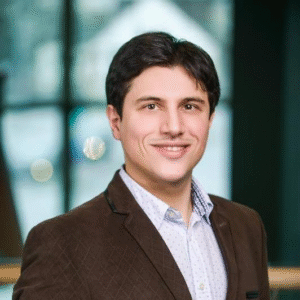
Daniel Kashnitsky is a postdoctoral researcher in sociology and demography at the Cermes3 laboratory of the CNRS. Specialising in the health of migrant populations, he devoted his doctoral thesis to analysing access to healthcare for people living with HIV in an irregular situation in Russia. He is coordinating a major research project, supported by ANRS MIE and entitled “Ukrainian refugees in host countries: barriers, coping strategies and community engagement to enable effective access to HIV and tuberculosis care”, under the supervision of Professor Laurence Simmat-Durand. The results of this research have recently been published in two open–access articles. The first article, published in Social Sciences in 2025, analyses translocal community support in Germany and Poland. The second, published in BMC Health Services Research in 2026, explores solutions to barriers to accessing HIV and tuberculosis care for forced migrants from Ukraine.

CROI, the international Conference on Retroviruses and Opportunistic Infections, will be held from February 22 to 25, 2026, in Denver. Around 20 projects supported by ANRS MIE have been accepted.
23 February 2026
Determining appropriate treatment for tuberculosis in hospitalised adults and adolescents with severe HIV-associated immune suppression
11 June 2024