Last updated on 05 August 2026
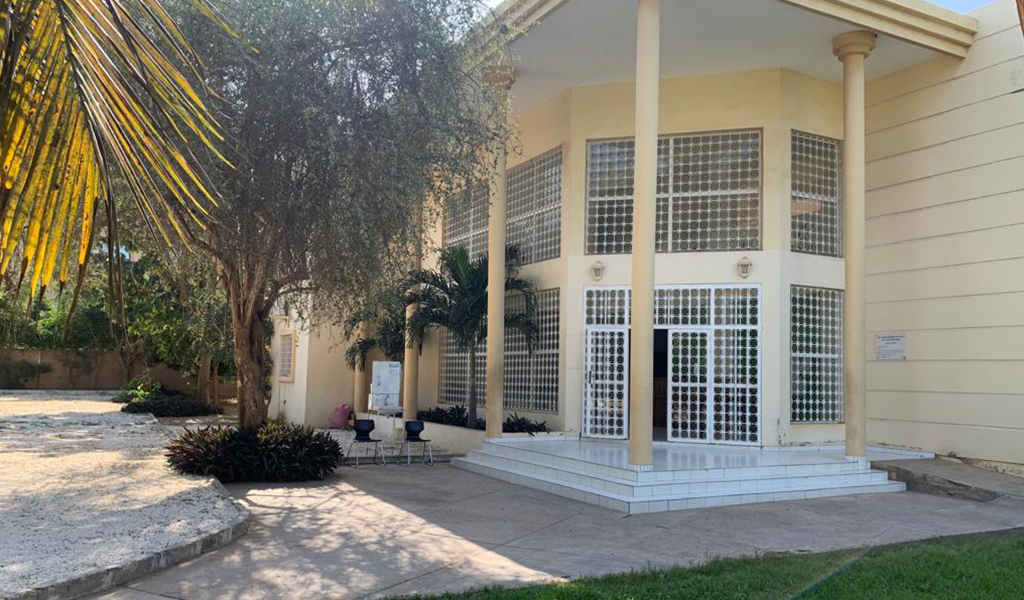
The Senegal Partner Site is primarily structured around the Regional Research and Training Centre for Clinical Care at Fann (CRCF), Dakar, Senegal.
Creation date
1994
Leads
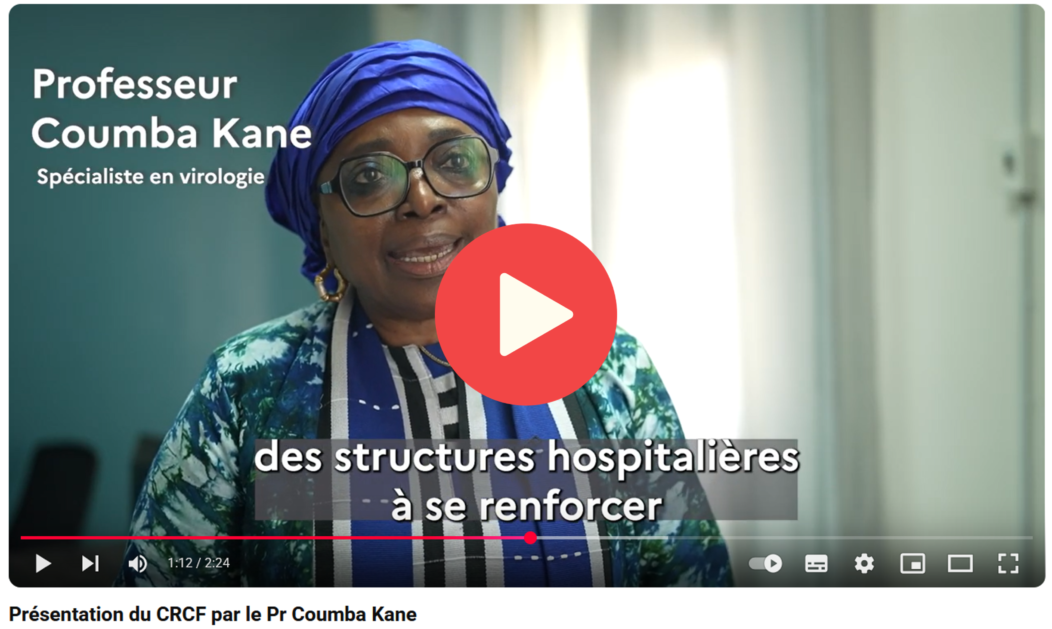
Prof. Coumba Touré Kane (Senegal Coordinator) Dr Bernard Taverne (France Coordinator)
Physical hosting of the partnership
CRCF, Dakar, Senegal
International technical expert
Dr Gabriele Laborde-Balen
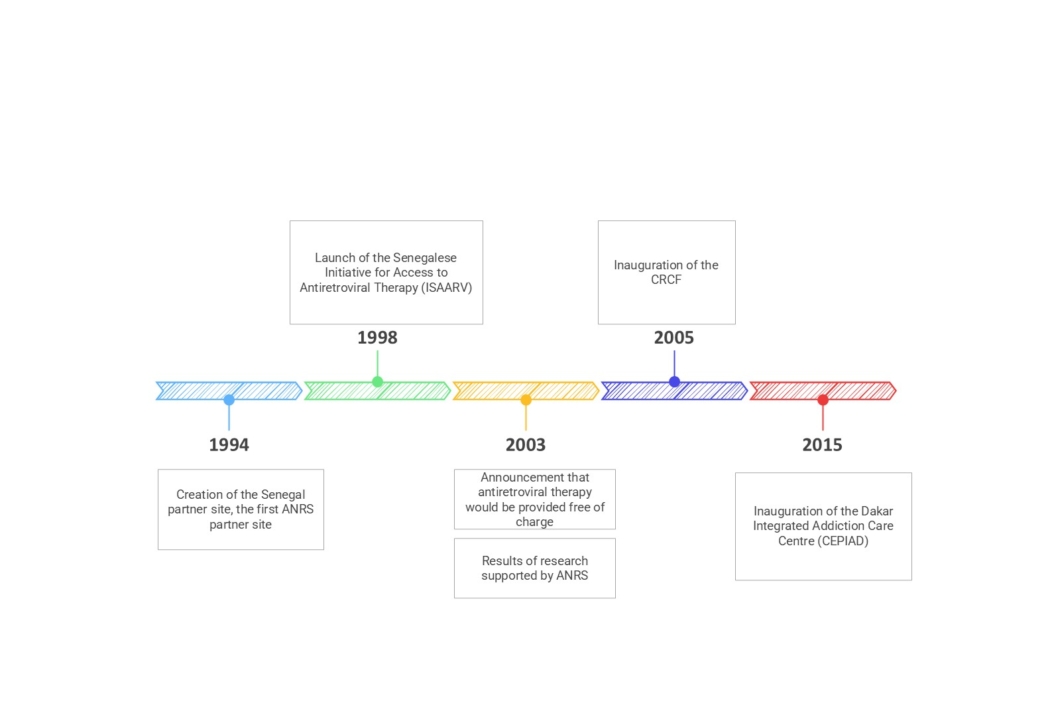
Collaborations between French and Senegalese research teams began to develop as early as 1987 around issues relating to HIV and STIs. They were formalised in 1994 with the creation of the very first ANRS MIE partner site through the SIDAK project.
The Regional Research and Training Centre for Clinical Care at Fann (CRCF) was established by five founding Senegalese and French institutions: the National AIDS Control Council (CNLS), the French National Research Institute for Sustainable Development (IRD), the Institute of Medicine and Applied Epidemiology (IMEA), Fann National University Hospital (CHNU), and the Division for the Control of AIDS and Sexually Transmitted Infections (STIs) of the Ministry of Health and Social Action (DLSI). It was inaugurated in May 2005 by the Senegalese authorities, together with their French and European partners and the United Nations.
The CRCF is a non-profit association under Senegalese law, located at Fann National University Hospital in Dakar, which serves as a research and training platform. The CRCF hosts practitioners providing healthcare and care for people living with HIV (PLHIV), as well as researchers and research assistants conducting research activities in epidemiology, virology, biology, public health and social sciences.
In recent years, its activities have expanded to include the care of other infections, particularly hepatitis B, and other types of patients, including geriatric consultations. Research areas cover infectious diseases (HIV/AIDS, hepatitis and associated diseases), emerging epidemics and healthcare systems.
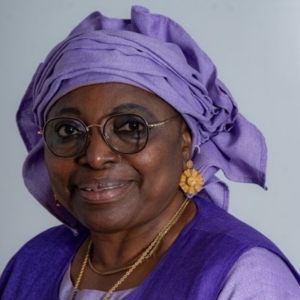
Senegal Coordinator: Prof. Coumba TOURÉ KANE
CRCF, Dakar, Senegal
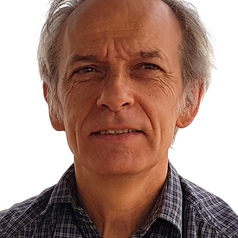
France Coordinator: Dr Bernard TAVERNE
IRD, Montpellier, France
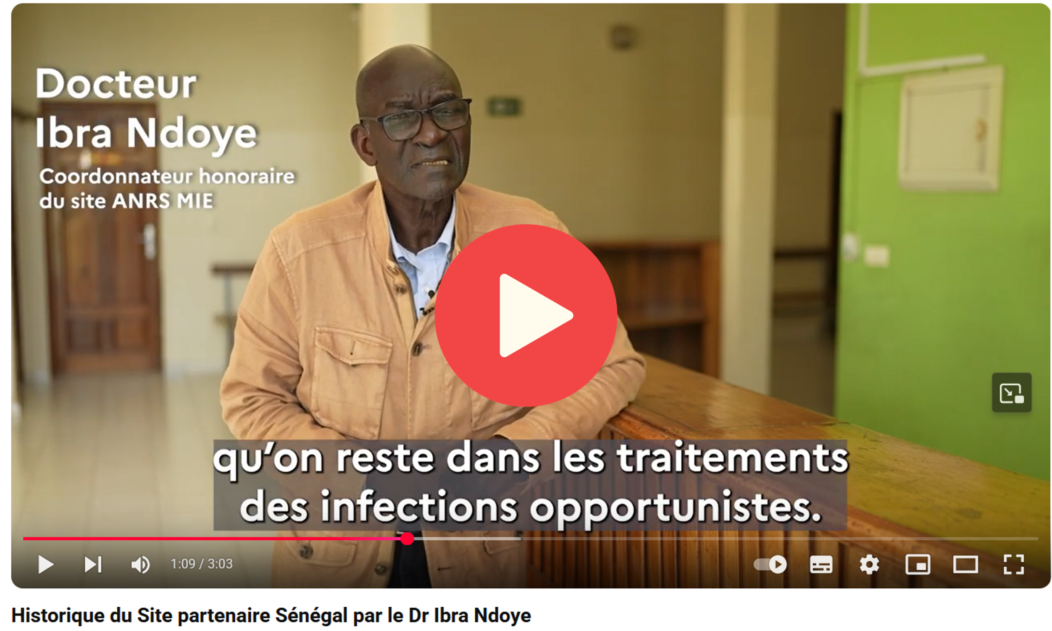
Honorary Coordinator: Dr Ibra N’DOYE
CRCF, Dakar, Senegal
The partner site was previously coordinated by Professor Jean-François COULAUD (France Coordinator), Professor Eric DELAPORTE (France Coordinator), Professor Pierre-Marie GIRARD (France Coordinator) and Dr Ibra N’DOYE (Senegal Coordinator). An international technical expert (ITE) is assigned to support the coordination of the Senegal partner site and is currently based at the CRCF in Dakar, Senegal.
Many partners, including universities, NGOs, ministries, research institutions, healthcare facilities and community stakeholders, are connected with the CRCF through the partner site. There are also other institutional, financial and project-based partnerships.
Research is organised around four major areas:
Specific priorities have recently been identified:
The first studies conducted with support from ANRS by teams of Senegalese and French researchers and clinicians date back to 1994. From 1998 onwards, a strong multidisciplinary research dynamic developed, combining virology, clinical research and social sciences.
This research supported the establishment of the Senegalese Initiative for Access to Antiretroviral Therapy — ISAARV — which was the first government programme providing triple-drug therapy in Africa. It helped improve access to antiretroviral therapy (ART) for people living with HIV (PLHIV) in Senegal. It also contributed to WHO recommendations promoting widespread, free access to ART in Africa.
Research topics subsequently diversified, focusing on innovative therapeutic strategies for HIV and hepatitis; particularly vulnerable populations (people who use drugs, MSM* and older people); the healthcare system and social protection mechanisms; emerging diseases (Ebola and COVID-19 [coronavirus disease 2019]); epidemic preparedness; and the One Health approach.
This gradual expansion contributes to the international production of scientific knowledge and addresses the specific needs of Senegal and Africa.
In recent years, HIV, the healthcare system, emerging epidemics and genomic sequencing have been areas of study that have been explored particularly extensively:
HIV research projects have focused on children and adolescents, with continued research on decentralised care, the structural and social determinants of treatment failure, strengthening the healthcare system, and support during the transition to adult care services (EnPRISE 3, ETEA-VIH and Transition).
Research has also focused on key populations, with a study on HIV self-testing, new forms of prostitution and people who inject drugs (Codisen/Codisocs). Older people living with HIV have also been studied as part of a multicentre approach to strengthening the healthcare system (VIHeillir and Grand âge). Lastly, the acceptability and feasibility of injectable ART have attracted attention: the use of these treatments is therefore being considered in a pilot trial.
A simplified model of decentralised care for patients with chronic hepatitis B has been developed in Senegal, together with cohort follow-up incorporating an anthropological approach.
Sequencing and genomic surveillance capacities for SARS-CoV-2 and other pathogens have been strengthened through the AFROSCREEN network, in collaboration with several Senegalese institutions. Research on epidemic preparedness, the role of the media and community mobilisation in response to COVID-19 is also continuing (CORAF, CORAFMOB, PPP).
Several studies have examined universal health coverage in Senegal, healthcare expenditure, the working conditions of health professionals in rural areas and strengthening the healthcare system for vulnerable populations outside Dakar.
* men who have sex with men
The collaborations established from 1987 onwards between French and Senegalese teams on HIV and STIs were formalised in 1994 with the creation of the first ANRS MIE partner site, the Senegal Partner Site. Since then, the research areas have also expanded to include emerging infectious diseases.
With support from the partner site, the CRCF has conducted health research in collaboration with various national and international partners, strengthened research and training capacities in Senegal, and contributed to national strategies, particularly regarding care for HIV, viral hepatitis and, more recently, emerging infectious diseases and the Senegalese healthcare system.
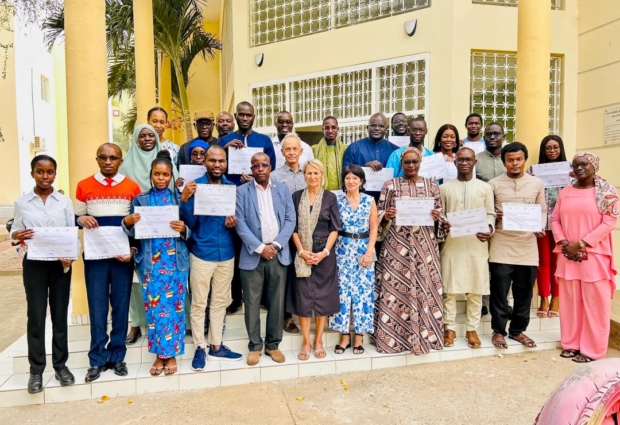
With support from the partner site, the CRCF is closely involved in strengthening research capacities, through an evolving and structured programme of professionally oriented training courses in place since 2018, covering areas that receive little or no attention in the courses offered in Senegal and the region. Clinical research training has therefore been provided for several years. For the first time, this training was incorporated into a university curriculum in 2025.
With support from the partner site, the CRCF also plays a central role in supervising students at Master’s, doctoral and postdoctoral levels, thereby contributing to the emergence of a new generation of researchers.
Recognised as a centre of expertise by the Senegalese health authorities, the CRCF actively contributes to the implementation of national strategies. For example, the VIHeillir project team contributed to the creation of the “National Strategic Plan for an integrated multisectoral response to AIDS, tuberculosis, hepatitis and STIs 2023–2030”, thereby making it possible to take ageing-related issues into account for the first time.
The CRCF and its collaborators who worked within the SONAR-GLOBAL* and RAEE** networks designed training tools that are now used in Senegal, in other English- and French-speaking African countries, and in Europe.
Through the partner site, the CRCF joined the AFROSCREEN network to support the strengthening of the Ministry of Health’s sequencing and genomic surveillance capacities, through Fann National University Hospital and Dalal Jamm Hospital, in complementarity with the institut Pasteur de Dakar, IRESSEF and the bacteriology and virology laboratory at Le Dantec Hospital.
Collaboration with community-based organisations, which has been firmly established since the beginning of the partnership, remains essential to research and care activities.
* social science network for preventing and responding to epidemic infectious threats, whose French-speaking West African component is based at the CRCF.
** West African Network for the Anthropology of Emerging Epidemics (www.raee.fr).
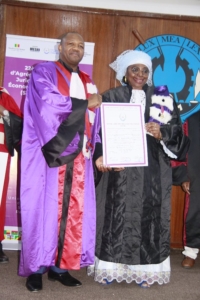 Professor Ndèye Coumba Touré Kane, former Rector of El Hadj Ibrahima Niass University of Sine-Saloum (USSEIN), was made a Knight of the International Order of Academic Palms (OIPA) of the African and Malagasy Council for Higher Education (CAMES) on 21 November 2025 at UCAD. This distinction recognises her commitment and contributions to higher education. Pictured here are Professor Coumba Kane and Souleymane Konaté, Secretary-General of CAMES and Grand Chancellor of OIPA/CAMES.
The CRCF, in collaboration with ANRS MIE and IRD-TransVIHMI, organised a scientific writing training course from Monday 10 to Friday 14 November 2025 in La Somone, Senegal. The objective of this training was to support young researchers in their writing work by providing them with a space conducive to concentration and supervision by a team of senior researchers. Following the workshop, it was agreed that a “writing club” would meet twice a month to support participants in completing their projects.
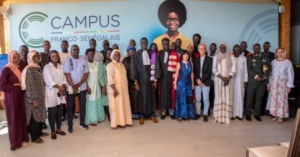
The first edition of the Professional Master’s in Clinical Research was launched on 17 November 2025 at the premises of Rose Dieng France-Senegal University. This course, jointly initiated by URDFS and the CRCF and funded by Expertise France’s Sunu Mayt programme, aims to provide health professionals with solid theoretical and practical foundations in good clinical practice and clinical research methodology.
The 15th Scientific days of the Senegal Partner Site of the ANRS Emerging infectious diseases will take place on May 13 and 14, 2025, in Dakar and online.
17 March 2025
At the end of 2023, two training courses were delivered in Senegal to enhance the skills of various healthcare professionals and research players.
23 January 2024