

Analysis of volatile organic compounds in exhaled air for rapid diagnosis of emerging respiratory infections.
Last updated on 03 April 2026
Project
Scientific study
Funding
PEPR MIE – 2023 Laureate
Amount of fund
2.418 M€
Duration
48 months
Consortium
Hospices Civils de Lyon, Univ. Lyon 1, Univ. Poitiers, ENS, Sciences Po, CNRS, CRNH
Target pathogenes
Respiratory diseases
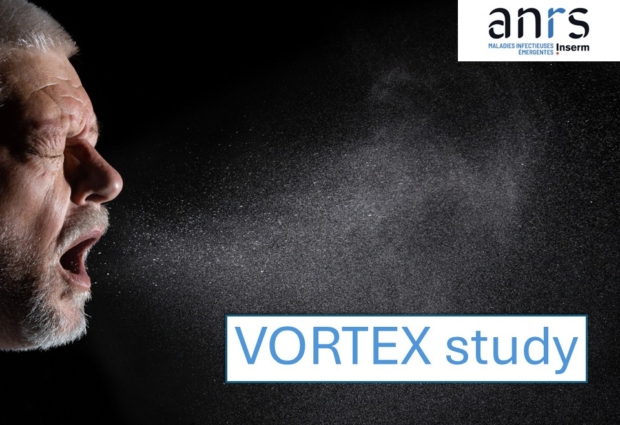
The VORTEX project aims to develop a rapid, non-invasive diagnostic tool for respiratory infections by analysing volatile organic compounds (VOCs) in exhaled air. By combining clinical studies, cellular models, cutting-edge analytical technologies and multi-omic analyses, the project will identify specific volatilome signatures capable of distinguishing between viral, bacterial and emerging pathogen infections.
VORTEX responds to the need for rapid and scalable testing in the event of a pandemic. By validating a non-invasive sampling method, this project will improve the diagnostic chain, facilitating early isolation and limiting the spread of respiratory pathogens. In addition, the project takes a transdisciplinary approach, from in–vitro analysis to clinical studies, while analysing societal acceptability to ensure the real–world deployment of innovative technology.

VORTEX aims to transform the detection of respiratory infections by harnessing the potential of the volatilome. By combining clinical data, in vitro modelling and artificial intelligence, this project paves the way for a more appropriate diagnosis for future health crises.
The VORTEX project is one of eleven winners of the call for projects 2023 of the Priority Research Programme and Equipment on Emerging Infectious Diseases (PEPR MIE).
Led and operated by ANRS MIE, the PEPR MIE responds to Measure 2 of the National Strategy for Accelerating Emerging Infectious Diseases (MIE) and Nuclear, Radiological, Biological and Chemical Threats (MN).
It has been divided into three calls for projects in 2023, 2024 and 2025. Each call focuses on three areas: accelerating the acquisition of fundamental knowledge on emerging infectious diseases; promoting innovation and developing new treatments, vaccines and other prevention, diagnostic and surveillance tools for emerging infectious diseases; and enabling public policy and society to respond to epidemic crises.
The PEPR MIE calls for projects (CFPs) target large-scale, interdisciplinary and multi-partner research projects lasting 2 to 3 years and requiring a minimum funding request of €1 million for components 1 and 2. No minimum funding amount is applied to research projects submitted under component 3. The total budget allocated by the France 2030 plan is €70 million.