Inter-platform meeting: strengthening national coordination in response to health and epidemic crises

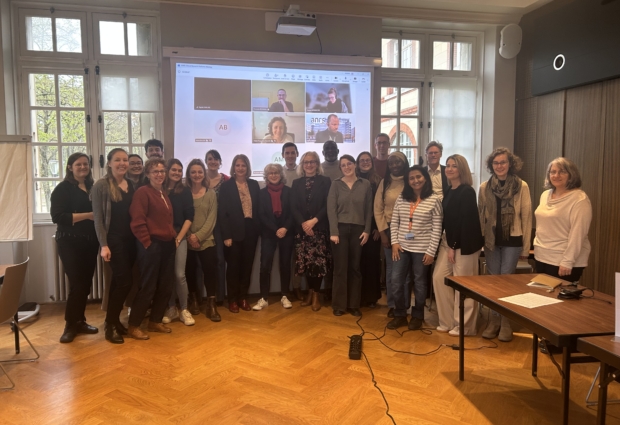
The PROACT EU-Response, Open ReMIE and STRIVE initiatives came together for the first inter-platform meeting on therapeutic clinical research.

Last updated on 10 April 2026

Main points

  • In early April 2026, the first inter-platform meeting on therapeutic clinical research brought together the PROACT EU-Response, Open ReMIE and STRIVE initiatives, three major programmes involving ANRS Emerging Infectious Diseases.
  • This meeting marks an important step in building a coordinated ecosystem capable of responding effectively to research challenges both between crises and during public health emergencies.

The main objective of this meeting was to initiate strategic discussions on how these different platforms can work together more effectively by strengthening synergies and developing shared coordination mechanisms. In a context where recent health crises have highlighted the limits of fragmented approaches, this initiative aims to promote a collective, consistent and rapid response to emerging threats.

These platforms play an essential role both between crises and during health emergencies. In anticipation of future crises, they help prepare and structure collective responses by identifying shared priorities, developing common tools and strengthening links between stakeholders at national and international levels. During a crisis, they ensure effective operational coordination, support the alignment of research priorities and enable the rapid and consistent deployment of clinical trials.

Three complementary platforms

The meeting brought together:

  • Open ReMIE, a national platform dedicated to clinical research on anti-infective and immunomodulatory therapies. Led by ANRS Emerging Infectious Diseases and Hospices Civils de Lyon, it is designed to respond rapidly to pre-pandemic, pandemic and epidemic situations. Open ReMIE also plays a key role as France’s entry point into European initiatives.
  • PROACT EU-Response, which operates precisely at this European level. Coordinated by ANRS Emerging Infectious Diseases and Inserm, this consortium aims to strengthen Europe’s capacity to respond to health emergencies through a network of adaptive clinical trials. It relies on a network of 80 centres across 21 countries, as well as a microbiology laboratory infrastructure designed to develop shared diagnostic tools. The project also includes a social sciences component, which is essential for understanding misinformation dynamics and improving health literacy.
  • STRIVE, which reflects the international dimension of this coordinated effort. Drawing on experience gained during the Covid-19 pandemic and building on the INSIGHT network, STRIVE brings together nine coordinating centres across six continents, covering more than 300 trial sites in 40 countries. ANRS Emerging Infectious Diseases plays a major role as the international coordinating centre for France and the countries within its international network, further strengthening its position on the global stage.

Structured discussions combining platform presentations and operational simulation

The meeting was organised around a programme combining presentations, discussions and practical exercises. Following an introduction and round table session where participants shared their expectations, each platform presented its operating model, progress and future outlook, particularly during the so-called “everwarm” phase — a state of continuous preparedness between crises.

A dedicated session focused on the European framework and the different levels of crisis management, highlighting the pivotal role played by ANRS Emerging Infectious Diseases in coordinating stakeholders.

One of the highlights of the day was a simulation exercise based on a fictional health crisis scenario called “Pathogen X”. This exercise provided an opportunity to test coordination capacities between platforms in concrete terms and to identify areas for improvement.

Participants were divided into three groups, each focusing on a key stage of the response to a health crisis:

  1. The first group focused on the preparedness phase. Discussions covered the sharing of weak signals, the prioritisation of research questions and the development of pre-approved protocols.
  2. The second group explored the operational phase of implementing clinical trials. The aim was to reflect on models enabling trials to be designed in a coordinated way rather than in parallel. Discussions focused on the coordination between platform, adaptive and multi-arm trials, as well as mechanisms for the rapid integration of new partners or interventions.
  3. Finally, the third group focused on the post-crisis phase, which is often less structured despite being crucial. Participants discussed ways to rapidly share results, including negative findings, and to organise collective feedback.

Towards stronger cooperation

This first inter-platform meeting laid the foundations for closer collaboration between PROACT EU-Response, Open ReMIE and STRIVE. It highlighted the need to further structure interactions between these initiatives in order to build an integrated and effective response to health crises.