

Last updated on 04 February 2026
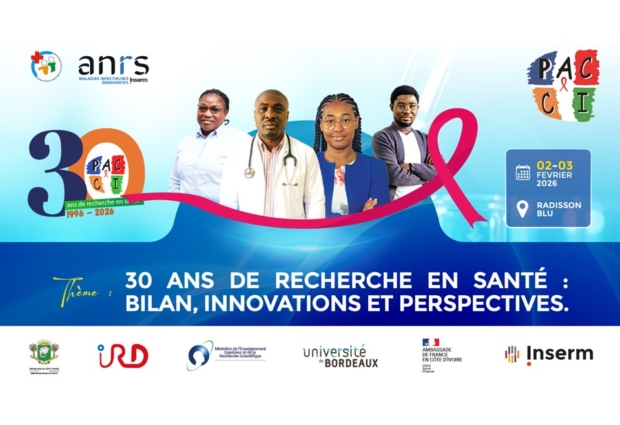
Born in 1996 out of a visionary Franco-Ivorian collaboration, the PAC-CI programme quickly positioned itself at the forefront of clinical research in Africa. From its inception, the programme has conducted innovative clinical trials, trained generations of researchers and healthcare professionals, and helped shape public health policies globally.
Over the years, the PAC-CI programme has seen its field of research expand to include all infectious diseases and the number of partners increase. At the crossroads of clinical research, epidemiology, and the human and social sciences, the programme has been built on a model of close collaboration between Ivorian and French teams.
The creation in 2023 of the Côte d’Ivoire International Research Platform in Global Health (PRISME) marked a new phase in the strengthening of the Franco-Ivorian partnership, broadening PAC-CI’s historical scope of actions to all global health issues and bringing together a larger number of Ivorian and French partners, including the Ministry of Higher Education and Research, the University of Bordeaux, Inserm and IRD.
The PRISME Côte d’Ivoire partnership, hosted by PAC-CI, aims to accelerate research, training and innovation by responding to Côte d’Ivoire’s needs and by drawing on a network of excellence and cutting-edge infrastructure.
Find out more on PRISME Côte d’Ivoire
Partners involved:
Partners involved:
Partners involved:
Partners involved:
Partners involved:
The Franco-Ivorian teams working with PAC-CI have made a decisive contribution in three key areas of HIV care:
PAC-CI was instrumental in demonstrating the effectiveness and feasibility of preventive treatment for vertical transmission of HIV in Africa.
These high level results were quickly incorporated into national and international guidelines, illustrating the direct impact of PAC-CI on public health policies.

Not only was the science produced of the highest standard with the best level of evidence available, but it was almost immediately taken into account in national and international guidelines
Together with its partners, PAC-CI has also been able to mobilise in response to other health crises. During the Ebola epidemic in West Africa, the programme managed to continue HIV trials while fully mobilising to fight the virus, in collaboration with Guinea and other partners.
The JIKI clinical trial, conducted in Guinea, enabled potential treatments to be tested. In order to improve responses to viral epidemics beyond Ebola, research is continuing on the transmission and management of other emerging infectious diseases in the region.
PAC-CI’s commitment to two issues that go far beyond HIV: at the time of the Ebola crisis in West Africa, PAC-CI was fully committed.
For nearly 20 years, PAC-CI and the GHiGS team at the Centre U1219 Bordeaux Population Health (France) have jointly coordinated the MEREVA methodology and management centre (CMG). This engineering facility supports the set-up, coordination and monitoring of international research projects, while actively contributing to the training of researchers in the field of infectious diseases. MEREVA plays a central role in the implementation of the vast majority of studies conducted by Franco-Ivorian research teams. It draws on a vast network of international partners, enabling the completion of more than 30 research projects per year in over 30 countries in Africa, Asia, Latin America and Europe.

Research and health challenges are constantly evolving. We are facing new epidemics, emerging or re-emerging diseases such as Ebola, Rift Valley fever and mpox, and new challenges for the future. Furthermore, the current political context raises fears of a resurgence of HIV cases. More than ever, we must continue to invest in research, development and partnerships.
With the creation of PRISME, organised mainly around PAC-CI, Franco-Ivorian collaboration is entering a new era. This platform, which relies on 30 years of experience, aims to broaden the scope of actions to other infectious diseases, non-communicable diseases and emerging public health issues, in response to locally identified priorities. It is part of its ongoing commitment to training and strengthening research capacities in Africa, and to regional collaborations for more equitable and inclusive research.