

Last updated on 01 October 2026
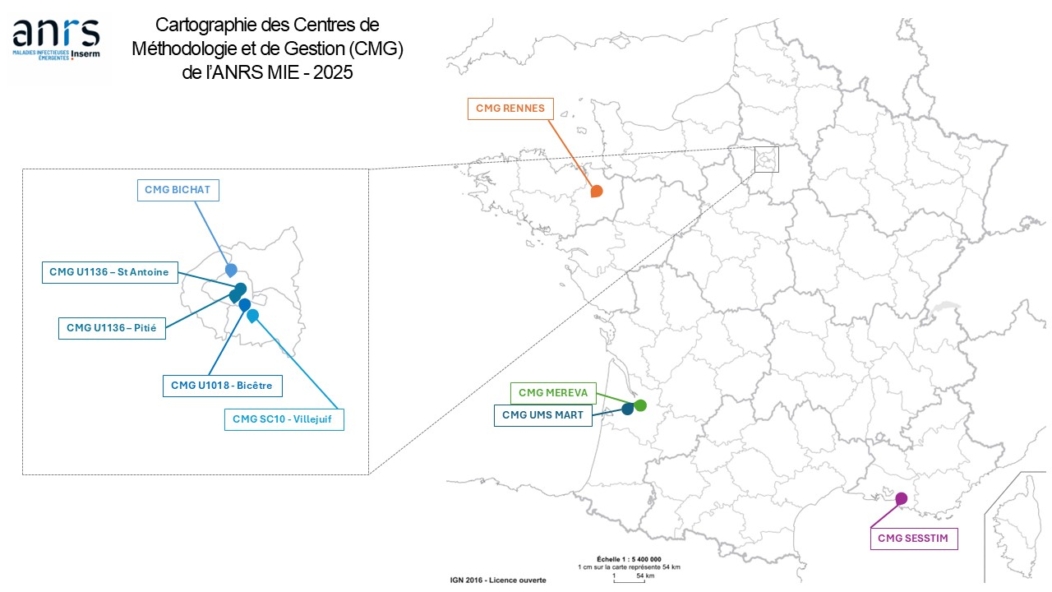
As part of the clinical research it promotes, the ANRS MIE relies on several Methodology and Management Centres (MMC) to ensure the operational coordination of the studies, as well as on a network of hospital departments responsible for the inclusion and follow-up of participants. Clinical platforms such as OPEN-ReMIE, I-REIVAC Emergence and the Strive network are concrete examples of structures supported by the MMC network.
The mission of the MMCs is to support clinical research projects from their conception through to the exploitation of the results. This support includes drafting protocols, discussing study designs and assessing feasibility, thanks to their expertise in methodology, ethics and regulations. Project management continues at a practical and operational level, in coordination with the clinical research associates (CRAs) and data managers, particularly for data management (data protection, database management and cleaning, data analysis and exploitation of results).
Some of the agency’s MMCs receive multi-annual cross-funding for some of their staff (CRAs, project managers, quality specialists, statisticians, etc.) under the ‘Clinical Research Networks’ structuring action, which contributes to the organisation of the ANRS MIE clinical research network.
The centres also benefit from common tools (electronic CRF or e-CRF) and support in terms of quality assurance and pharmacovigilance.
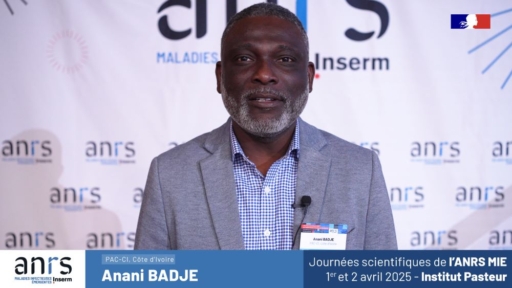
The annual network meetings enable us to meet the teams behind the MMCs, with whom we collaborate within the network or through various research projects, such as the Strive network in our case. Even if all the information presented at these meetings is not necessarily useful to us, it gives us a direction to follow, to which we can add our own specific features. It also allows us to think about how to deepen our collaborations.

These working groups supported by the MMC network enable us to get to know each other and compare our activities and procedures. Eventually, we will be able to set up joint cross-disciplinary projects, structuring or sharing skills and knowledge. The advantage of having the ANRS MIE as a common promoter will enable stronger actions to be put in place, because they will be carried and supported by the ANRS MIE.
One concrete example is the launch of the ‘Decarbonisation of research’ working group. Its aim is to identify the MMG activities that have the greatest impact on the carbon footprint of clinical trials, in order to find ways of decarbonising the activity. These changes could then be implemented across all MMCs, for example at the request of ANRS MIE as sponsor.
The members of the MMC network meet several times a year to discuss their experiences, share their skills and harmonise their practices. These exchanges take place in a variety of complementary formats:
The objectives of the MMC network are to harmonise practices, and to strengthen the skills of certain centres by drawing on the expertise of other network members in order to facilitate a rapid response and efficient implementation of studies in the event of an epidemic.
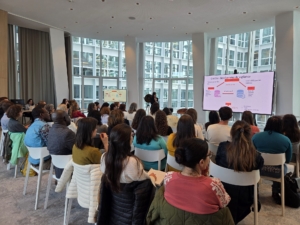
The 2026 MMC Plenary Meeting took place on 11 June at PariSanté Campus. The meeting provided an opportunity to review the progress of several working groups coordinated by MMG members, including the “Budget”, “Carbon Footprint” and “SNDS” working groups, and to discuss the outlook and next steps for their activities.
Discussions also focused on operational challenges encountered by teams at the end of research projects, particularly regarding the closure of investigator sites and document archiving procedures. These exchanges enabled participants to compare practices, share feedback and lessons learned, and identify common avenues for reflection aimed at improving the harmonisation of procedures.
The latest Pharmacovigilance / MMC 2026 seminar took place on 12 May 2026 at PariSanté Campus. This edition provided an opportunity to share two case studies on the automation of pharmacovigilance processes and to discuss the challenges associated with monitoring and collecting safety data during clinical trials.
The discussions highlighted the need to harmonise practices and provide support to the teams involved. With this in mind, working groups will be set up to support the implementation of the new data collection forms in eCRFs.
The launch of the I-REIVAC-Emergence platform is a decisive step forward for French clinical research in vaccinology against emerging infectious diseases.
06 May 2025