This network brings together dozens of laboratories in France and abroad, and works at the interface between scientific coordination, monitoring and project development.
Last updated on 17 September 2025
The ANRS MIE virology and clinical pharmacology network brings together more than 250 members and dozens of laboratories throughout France, including in the overseas departments, as well as internationally, with partner laboratories in low- and middle-income countries (LMICs).
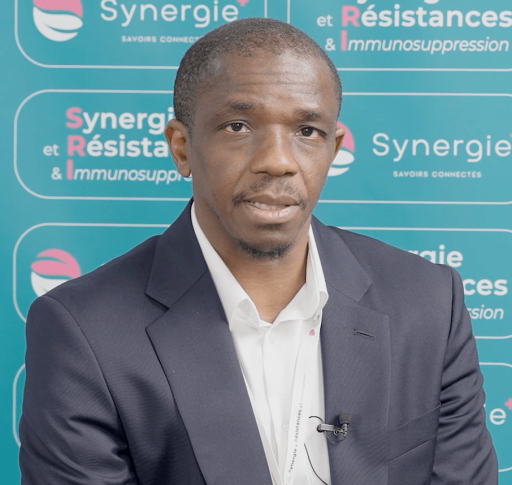
“The virology network was created a few months after the ANRS was founded. The idea was to develop and coordinate the clinical virology studies conducted by the agency. Very quickly, around forty laboratories joined the initiative, and they are still there today. This has resulted in the creation of an extremely powerful national network: virtually all sites involved in hospital-based and academic virology in France are part of it.” Pr. Vincent Calvez, co-coordinator of the network
The ANRS Emerging infectious diseases virology and clinical pharmacology network aims to strengthen surveillance of emerging and re-emerging infectious diseases while developing international collaborations to respond to global challenges in infectious health.
It also works to promote scientific research, epidemiological surveillance and the development of research projects in the field of infectious diseases, in particular through the characterisation of resistance to antiretroviral drugs (ARVs), the evaluation of the pharmacology of existing or innovative treatments, and the development of recommendations for clinical practice.
Originally, the investigation models mainly focused on HIV and viral hepatitis, but also other viruses similar to STIs. More recently, the SARS-CoV-2 crisis has demonstrated the network’s ability to mobilise around new viral pathogens that pose a risk to our societies, and this experience has led to the expansion of the network to include respiratory viruses.
The network is organised around five thematic groups, each with specific missions:
One of the network’s most notable achievements was the creation, in the 1990s, of an algorithm for interpreting resistance tests. At that time, resistance to treatment was a major problem in virology. This system uses the results of a resistance test to determine whether a viral strain is sensitive, intermediate or resistant to a given treatment for HIV-1, in order to guide doctors in their choice of antiretroviral treatment.
“At the time, nothing like this existed. Today, this algorithm is one of only two in the world—along with the one developed by Stanford University—and is used in many countries. It enables the interpretation of HIV, hepatitis and respiratory infection resistance tests, and is updated twice a year by a committee of experts based on an exhaustive literature review and data produced by our own studies to answer unresolved questions.
This gives the network considerable international scientific visibility, as this tool is consulted and used all over the world, including by teams that rely on our protocols to start their own resistance tests.” Pr. Vincent Calvez, co-coordinator of the network
The same methodology for interpreting resistance tests has been extended to respiratory viruses. Sequencing of viral genomes, particularly those of respiratory viruses such as SARS-CoV-2, respiratory syncytial virus (RSV) and influenza viruses, is now routinely performed in clinical laboratories. Thanks to numerous studies, the correlation between genotypes and phenotypes is now known, and sequences can be analysed using algorithms to identify mutations associated with reduced sensitivity to antiviral treatments or monoclonal antibodies.
Find the algorithms developed by the virology and clinical pharmacology network on the Viral resistance interpretation algorithms website.
HIV-1 genotypic drug resistance interpretation’s algorithms Viral resistance interpretation algorithmsSince the early 2000s, the network’s scope, which was initially French, has expanded with the addition of sites in Central Africa, West Africa and Southeast Asia. The network also actively participates in European projects with England, Spain, Switzerland, Belgium, Denmark, Portugal and Germany.
“The network enables expertise from the North and South to be pooled, thereby contributing significantly to reducing the gap between these two contexts, particularly in its early stages with the transfer of skills and technology.
Today, much of the work combines sites and laboratories in the North and South, with the same requirements in terms of quality and results. It is also a powerful lever for seeking funding, which is much more difficult to find for many teams in the South. Finally, the network has contributed to and continues to support the training of young researchers from the South, many of whom are now involved in the running and coordination of this network.”
Dr Avelin Aghokeng, co-coordinator of the network

Vincent Calvez: Initially, it was a virology network focused on HIV, created shortly after the ANRS was founded. It then expanded to include viral hepatitis and, more recently, respiratory infections and emerging diseases, in line with the agency’s priorities. At each stage, new members joined us, bringing their specific expertise.
Over the past five or six years, the pharmacological dimension has been added, with the structuring of a network dedicated to the clinical pharmacology of antivirals led by Caroline Solas in Marseille and Gilles Peytavin in Paris. Before that, around fifteen centres were working independently. Today, this network meets every month, conducts multicentre studies and publishes its recommendations online. This integration with virology greatly enhances our ability to analyse new treatments in real time.
V.C.: It is a unique network in the world, which allows multicentre studies to be conducted quickly. If you want to study resistance to a new drug, you immediately have 40 sites ready to work in parallel, with a collaborative spirit that has existed since the beginning. This allows us to achieve things that almost no other country can do, and it is one of the reasons why we are recognised internationally.
V.C.: When the COVID-19 pandemic struck in 2020, the network immediately mobilised. We took charge of all virological aspects: testing, resistance analysis, vaccine evaluation, etc. The network sprang into action immediately, in a coordinated manner at the national level. This prevented efforts from being scattered and supported research, while maintaining a strong link between teams. No other structure in France was able to do this at the time.
V.C.: We are working on new antiviral molecules in all areas—HIV, hepatitis, respiratory infections—to understand their resistance mechanisms and update our algorithms. We are also developing and evaluating new diagnostic tests, thanks to the Technologies group, which adapts its solutions to the needs and constraints of countries with limited resources. Finally, we participate in numerous European studies, often at the initiative of the French network.