

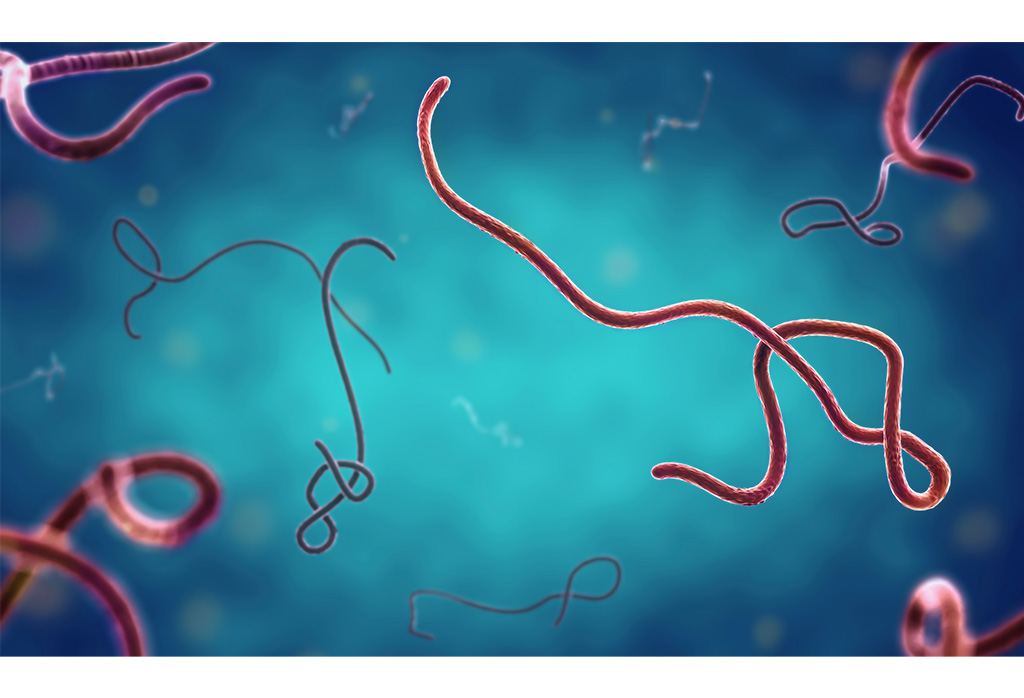
Ebola disease is a severe viral haemorrhagic fever caused by viruses of the genus Orthoebolavirus.
Last updated on 30 September 2026
A severe viral haemorrhagic fever with a case fatality rate ranging from 25 to 90% (average case fatality rate of 50%) depending on the outbreak,¹˒² Ebola virus disease is caused by viruses of the genus Orthoebolavirus, of which only four (Bundibugyo, Sudan, Taï Forest and Zaire) have been associated with Ebola virus disease.³
Ebola first emerged in 1976 in outbreaks in South Sudan and the Democratic Republic of the Congo. Since then, 42 outbreaks have been reported in Africa, of which 31 were caused by Ebola virus (EBOV), also known as Ebola Zaire, resulting in 23,045 cases, including 14,885 deaths.⁴ The sporadic nature of outbreaks suggests a probable zoonotic origin, although human-to-human transmission is possible.⁴
This is a zoonotic disease, with fruit bats of the family Pteropodidae serving as the natural reservoir of the virus. Bats transmit the virus to mammals, particularly non-human primates, through contaminated fruit and their faeces.² The virus can also infect chimpanzees, gorillas, forest antelopes and porcupines.² Animal-to-human transmission occurs through contact with infected animals, whether alive or dead.²

Human-to-human transmission occurs through direct contact with the bodily fluids of an infected person, or indirectly through contaminated bedding, clothing or syringes.²˒⁵˒⁶ The virus can enter the body through broken skin or mucous membranes.⁷ Healthcare workers are particularly at risk when providing care. Appropriate personal protective equipment must be worn.² Pregnant women with acute Ebola who recover from the disease may still carry the virus in breast milk or pregnancy-related fluids and tissues.⁸ Breastfeeding should therefore be avoided.⁹
Sexual transmission has been observed but is extremely rare.³
The disease can be diagnosed using several methods: ELISA, antigen-capture detection, serum neutralisation, RT-PCR, electron microscopy and virus isolation in cell culture. These tests should be performed on blood samples, or oral fluid samples when blood collection is not possible.¹⁰
Several challenges affect diagnosis:
The incubation period ranges from 2 to 21 days, and the virus cannot be transmitted before symptoms appear. Symptoms develop suddenly in two phases: the dry phase and the wet phase. The dry phase includes symptoms such as fever, fatigue, muscle pain, headaches and a sore throat. The wet phase, which is the most contagious, is characterised by vomiting, diarrhoea, skin rashes, multiple organ failure, particularly kidney failure, and sometimes internal and external bleeding.⁵ Miscarriages may occur during pregnancy.⁸
Ebola survivors may experience persistent symptoms for two years or more, including vision problems, loss of appetite, weight gain, depression and anxiety, memory loss and fatigue.¹¹
Infected people cannot transmit the disease before developing symptoms, and they remain infectious for as long as their blood contains the virus.²
Patient management consists of supportive care, including oral or intravenous rehydration and symptomatic treatments.⁵ Unlike other subtypes responsible for Ebola disease, approved treatments and vaccines are available against the Ebola Zaire subtype.
There are currently two treatments, approved by the FDA in 2020,¹² with similar efficacy for treating infection in adults and children, infants born to people with confirmed Ebola, and pregnant and breastfeeding women:
Compared with a combination of several monoclonal antibodies, a single monoclonal antibody is simpler and less expensive to develop, but is more vulnerable to viral escape and the emergence of resistance. The PREVAIL II and PALM clinical trials demonstrated the efficacy of both treatments compared with ZMapp (a combination of three monoclonal antibodies) and remdesivir (a nucleotide analogue and RNA polymerase inhibitor).¹⁵ They were used during the 2018–2020 outbreak in the Democratic Republic of the Congo.
Two vaccines were approved by the FDA and EMA: Ervebo® (rVSV-ZEBOV) and Zabdeno®/Mvabea® (Ad26.ZEBOV/MVA-BN), in 2019 and 2020, respectively.¹⁶˒¹⁷
Zabdeno®/Mvabea® was withdrawn from the European market by the EMA on 1 May 2026.²⁴
WHO’s Strategic Advisory Group of Experts on Immunization (SAGE) recommends using the licensed Ervebo® vaccine during outbreaks and maintaining a global stockpile of 500,000 doses.²⁵

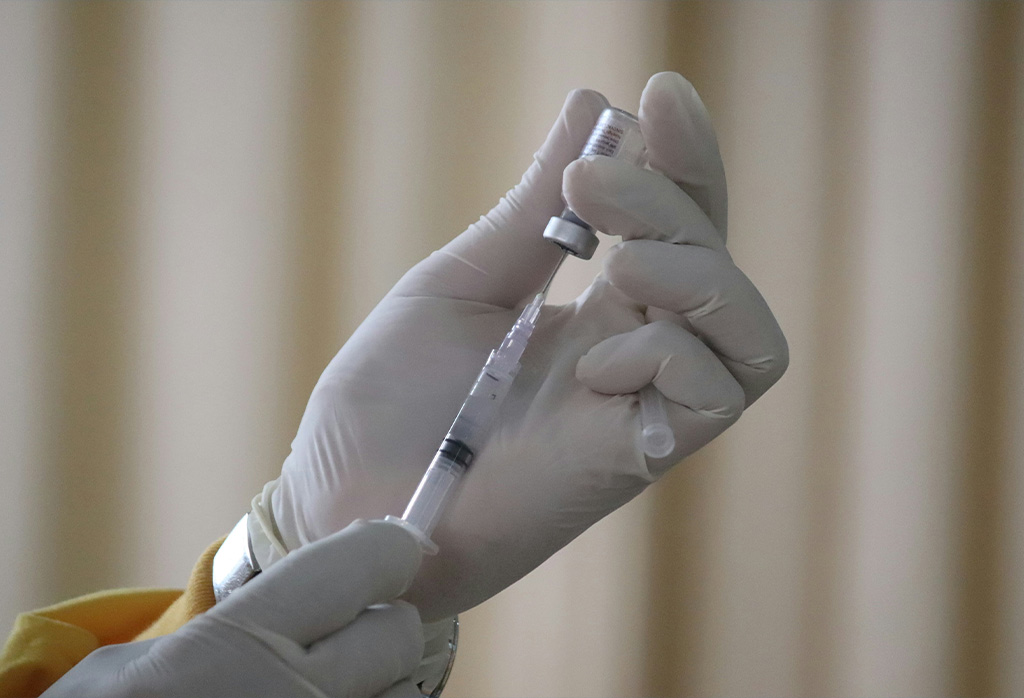
Extensive research into the genome and structure of EBOV has identified several proteins essential for viral replication that could be targeted for treatment development.
A preclinical study showed that MBP134AF, a cocktail of two broad-spectrum human monoclonal antibodies (ADI-15878 and ADI-23774) derived from an Ebola virus disease survivor, provided greater protective efficacy than the ADI-15878 antibody alone.²⁶ The broad-spectrum antiviral galidesivir demonstrated antiviral activity against EBOV in mice, and recent clinical trials have shown good tolerability in healthy adults. However, it has not yet been evaluated in infected individuals.²⁷˒²⁸
One of the therapeutic approaches prioritised by WHO was convalescent plasma. However, a non-randomised comparative study conducted in Guinea involving 99 patients with Ebola showed that this therapy did not significantly improve survival.²⁹
WHO is also organising the SOLIDARITY clinical trials, which aim to develop better vaccines and treatments against filoviruses, particularly the virus responsible for Ebola disease. Current priorities are remdesivir and low-dose corticosteroids in combination with monoclonal antibodies, with 28-day mortality selected as the primary endpoint.³⁰
Adenoviral vector vaccine candidates ChAd3-EBOZ (chimpanzee vector, phase I/II)³¹˒³² and Ad5-EBOV (human vector, phase I/II)³³ have shown promising immunogenicity, sometimes in combination with Mvabea® (MVA-BN-Filo).
The bivalent ChAdOx1 biEBOV vaccine, based on a non-replicating adenoviral vector, demonstrated good tolerability and a strong immune response after a single dose, with 100% seropositivity against Ebola virus in a phase I clinical trial.³⁴
The Russian GamEvac-Combi vaccine, which combines VSV and Ad5 vectors, has also been evaluated in phase I/II trials, illustrating the potential of heterologous strategies to enhance the immune response.³⁵
Finally, several alternative approaches, including subunit, nanoparticle and virus-like particle vaccines, are being evaluated, mostly at the preclinical or phase I stage. Their potential advantages include improved tolerability and a strong humoral response.³⁶
Vaccine platforms are becoming increasingly diverse. However, challenges remain, including broadening protection against different Ebola subtypes, the duration of vaccine-induced immunity, and adapting vaccination strategies to settings with logistical constraints.
In early 2025, ANRS MIE was appointed to lead the Collaborative Open Research Consortium (CORC) on filoviruses and is set to become a WHO Collaborating Centre.
CORCs are international networks of research institutions whose mission is to strengthen global pandemic preparedness through collaborative research, knowledge sharing and the rapid development of countermeasures. An initial meeting, held on 13 February 2025, focused on therapeutic trials and priority research on medical countermeasures. Within the CORC, research priorities have been defined by ANRS MIE and WHO, and work is under way with all experts from the “CORC on filoviruses” to update the research priorities and gaps identified in the MARVAC consortium roadmap.
In response to the new outbreak of Ebola disease caused by Zaire virus in the Democratic Republic of the Congo, an initial international meeting was held on 5 September 2025. Three further research meetings are planned on diagnostics, treatments and vaccines, as well as a meeting to present their findings.
The ten research priorities for EBOV Zaire, established within the Filovirus CORC on 5 September 2025³⁷
A multidisciplinary approach involving virology, epidemiology and the social sciences is essential to address gaps in Ebola research, particularly in identifying mechanisms of cross-species transmission and understanding viral persistence.
In March 2025, the ANRS MIE “Epidemic Monitoring and Response” division activated a level 1 Outbreak Response unit on filoviruses. On 1 September 2025, the Democratic Republic of the Congo reported an outbreak of Ebola virus disease in Kasai Province, in the south-west of the country. As of 13 September 2025, 81 suspected cases, including 28 deaths, had been reported, with initial healthcare-associated transmission followed by community transmission.
In 2024, ANRS MIE established a coordinated action on viral haemorrhagic fevers chaired by Sylvain Baize, Marie Jaspard and Abdoulaye Touré. This group for discussion and strategic reflection focuses particularly on scientific research on filoviruses and aims, through its working groups (therapeutics, wildlife, vaccines), to generate research projects through international collaborations, primarily with our partners in Africa.