


Supporting the involvement of patient associations, mentoring the new generation of scientists, promoting quality and ethical research practices, and committing to open science.
Publié le 24 February 2023 (dernière mise à jour le 30 September 2025)
Since its creation, ANRS MIE has worked closely with patient associations, convinced that no research can be built without the involvement of those affected. The agency also supports the next generation of scientists through the Start programme, preparing the future of research. True to its heritage, ANRS MIE implements a rigorous quality approach that ensures both the protection of study participants and the integrity of the results produced. Finally, it actively promotes open science in collaboration with its partners within the network of French funding agencies.
The historical mode of operation of ANRS MIE is based on close collaboration between researchers and patient associations. For the agency, no research can take place without the involvement of affected individuals, who must be engaged from the design stage through to the conduct and analysis of the research. ANRS MIE favours a collaborative approach, in which patient associations are involved at every stage of the research and in all governance bodies of the agency. This practice represents a key factor in advancing research in the field of emerging infectious diseases. In 2024, more than 20 patient associations are collaborating with researchers within the agency’s scientic facilitation groups.

ANRS MIE is part of a Health Democracy approach. The approach recognises the capacity of each individual to know about, decide and act for his or her own health and for the health of the population. This is made possible by pooling knowledge and practices, enabling participative and constructive…
In 2024, the ANRS MIE launched the Start programme to support junior researchers (particularly Masters students, PhD students and post-doctoral fellows) working on the agency’s research topics (HIV/AIDS, viral hepatitis, tuberculosis, STIs, emerging infectious diseases).
This support has been defined as a strategic priority (Objective 7 of the ANRS MIE 2023-2027 Strategic Framework and is based on three areas of support:

The aim of the Start programme is to support the next generation of scientific researchers in the agency’s research areas.
The agency inherits a quality approach that structures the measures taken to ensure the protection of individuals involved in the research it supports and the integrity of research results. It continues to develop this approach while its activities have expanded to include emerging infectious diseases since 1 January 2021.
The research ethics charter for developing countries is the result of multiple consultations, exchanges at ANRS sites with various research partners from the Global North and South, and collaboration with external experts. The charter establishes both a conception of North–South partnership ethics and a set of guidelines aimed at protecting individuals participating in HIV/AIDS and viral hepatitis research supported by ANRS MIE. First drafted in 2002 and revised in 2008 and 2017, a new version is currently in preparation.

The agency inherits a quality approach that structures the measures taken to ensure the protection of individuals involved in the research it supports and the integrity of its results. It continues to develop this approach while taking into account the growth of its activities, which, since 1…
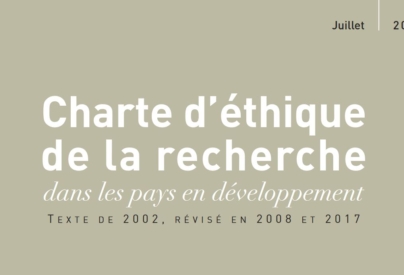
The research ethics charter for developing countries is the result of multiple consultations, exchanges at ANRS sites with various research partners from both the Global North and South, and collaboration with external experts.
In line with Inserm’s policy, ANRS emerging infectious diseases develops and implements an open science strategy that complies with the principles and recommendations set out in national open science plans and the framework for data, algorithms, and source code policies. ANRS MIE contributes to the development of open science together with its partners in the network of French funding agencies (ANR, Anses, INCa, Ademe, and the Fondation pour la Recherche Médicale). Open science is a scientific commitments of ANRS MIE. The agency raises awareness among granted researchers and engages them on the issues and best practices to:
Access to samples and biological data: In its promotion role, the agency facilitates access to data and biological samples from clinical studies it implements.
Opening research data is a priority for the agency, in line with France’s commitments and the National Open Science Plan (PNSO) launched by the Ministry of Higher Education, Research, and Innovation.
The objective is to ensure that data produced by French public research are progressively structured according to the FAIR principles (Findable, Accessible, Interoperable, Reusable), preserved, and, whenever possible, made open to foster innovation. While these measures are legitimate, they require significant changes in practice, and even a true paradigm shift. Accordingly, ANRS emerging infectious diseases has initiated a first transition phase to achieve this goal, gradually implementing tools and supporting researchers. In line with its mission to promote clinical research, the agency already facilitates access to data and biological collections from its research and participates in large-scale national initiatives such as France Cohorts.

Open science refers to the unhindered dissemination of results, methods and products from scientific research.