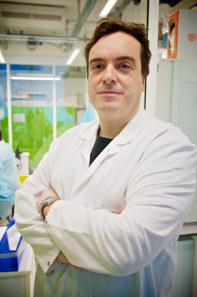
Professor Asier Saez Cirion, associate professor at the Pasteur Institute and coordinator of the Rhiviera consortium, discusses the latest scientific advances in curing HIV.
Last updated on 17 June 2026
 Prof Asier Saez Cirion: Several therapeutic approaches and clinical results offer hope for a cure for HIV. There are now more than ten cases of probable cure in people who have undergone a bone marrow transplant: this procedure remains complex and risky, and is hardly suitable for routine use. A further hundred or so people are now considered to be in sustained remission thanks to early treatment or various immunotherapies. This state of remission appears to be a more achievable goal in the short to medium term for people living with HIV. In addition to ‘natural or post-treatment controllers’ of HIV – those rare individuals living with HIV who control the virus without treatment – there is now also talk, for the first time, of ‘post-intervention controllers’, who control the virus after receiving immunotherapy specifically targeting HIV.
But whilst hopes of a cure are emerging, there remain several challenges to overcome. Some obstacles are biological and clinical: the virus uses our immune system as a Trojan horse and persists in reservoir cells that evade the immune response. Others are structural: a lack of or reduction in funding, particularly in Europe and the United States. Whilst certain immunotherapies already approved – particularly in oncology – can be repurposed to assess their potential in treating HIV, there is little funding for the costly development of new molecules specifically designed to treat HIV infection.
The unique feature of Rhiviera, established by the ANRS Emerging Infectious Diseases Unit (ANRS MIE), is that it draws on the study of ‘controllers’ – individuals capable of controlling the virus without treatment – to understand the mechanisms associated with remission, identify predictive markers of viral control and develop new therapeutic strategies. After more than ten years of work, we have identified several promising avenues, and three concepts are currently being evaluated in the Rhiviera 01, 02 and 03 clinical trials. The aim is to mimic the immune responses we have identified in natural or post-treatment HIV controllers, in order to propose approaches with proven physiological relevance.
ANRS MIE is involved at various levels: firstly, through the cohorts that have enabled us to identify and study these extraordinary cases of infection control; and secondly, through coordinated initiatives that have facilitated interdisciplinary collaboration. The launch of Rhiviera in 2014–2015, with the support of ANRS MIE, helped to give our ambitious projects a clear identity and credibility, and to foster public-private partnerships. ANRS MIE also directly funds several of our projects through calls for proposals and provides us with structural support for our translational research efforts. Finally, ANRS MIE acts as a valuable advocate at European level, promoting collaborative research and securing European funding to accelerate progress towards a cure for HIV infection.
 The Rhiviera Consortium (standing for ‘Remission of HIV Infection Era’) is a multidisciplinary project launched in 2014 following on from the former ANRS MIE Coordinated Action ‘HIV Reservoirs’ (AC32) and the ANRS EP47 VISCONTI study.
It aims to coordinate the efforts of the French research community by establishing a public–private partnership to develop new tools and strategies with a view to achieving sustained remission of HIV infection. The consortium focuses on developing innovative strategies and tools to achieve this remission.