

The ANRS Rhiviera consortium: basic and clinical research towards control of reservoirs and HIV remission
Last updated on 28 September 2026
ANRS Rhiviera (Remission of HIV Infection Era) is a multidisciplinary initiative that emerged in 2014 from the former ANRS Coordinated Action “HIV reservoirs” (AC32) on the steps of the ANRS EP47 VISCONTI study.
The objective of Rhiviera was to prioritize and synergize efforts of the French research community through the establishment of a public-private initiative aiming the development of new tools and strategies pursuing durable remission of HIV infection.
The overarching goal of the consortium is to develop new tools and strategies in the search of a scalable sustained remission of HIV.
https://rhiviera.com/The objectives of ANRS Rhiviera are to :
To fulfil these goals and objectives ANRS Rhiviera is conducting ambitious translational projects, through public and private partnerships, to gain knowledge on the establishment of cellular HIV reservoirs and body sanctuaries, to develop technologies and markers to identify and evaluate the reservoirs, as well as to characterize immune responses able to control or eliminate the infected cells. ANRS RHIVIERA focuses on the benefits achieved through early cART initiation, and also tries to identify optimal drug combinations ensuring optimal diffusion in tissues that may further limit the establishment and replenishment of the reservoir and preserve immune responses. These studies rely on the combination of basic and clinical research and the access to unique cohorts of HIV-infected individuals and equivalent models on non-human primates.
ANRS Rhiviera is now engaging in pre-clinical and clinical proof of principle studies to explore some of the potential clues arising from the overall research program.
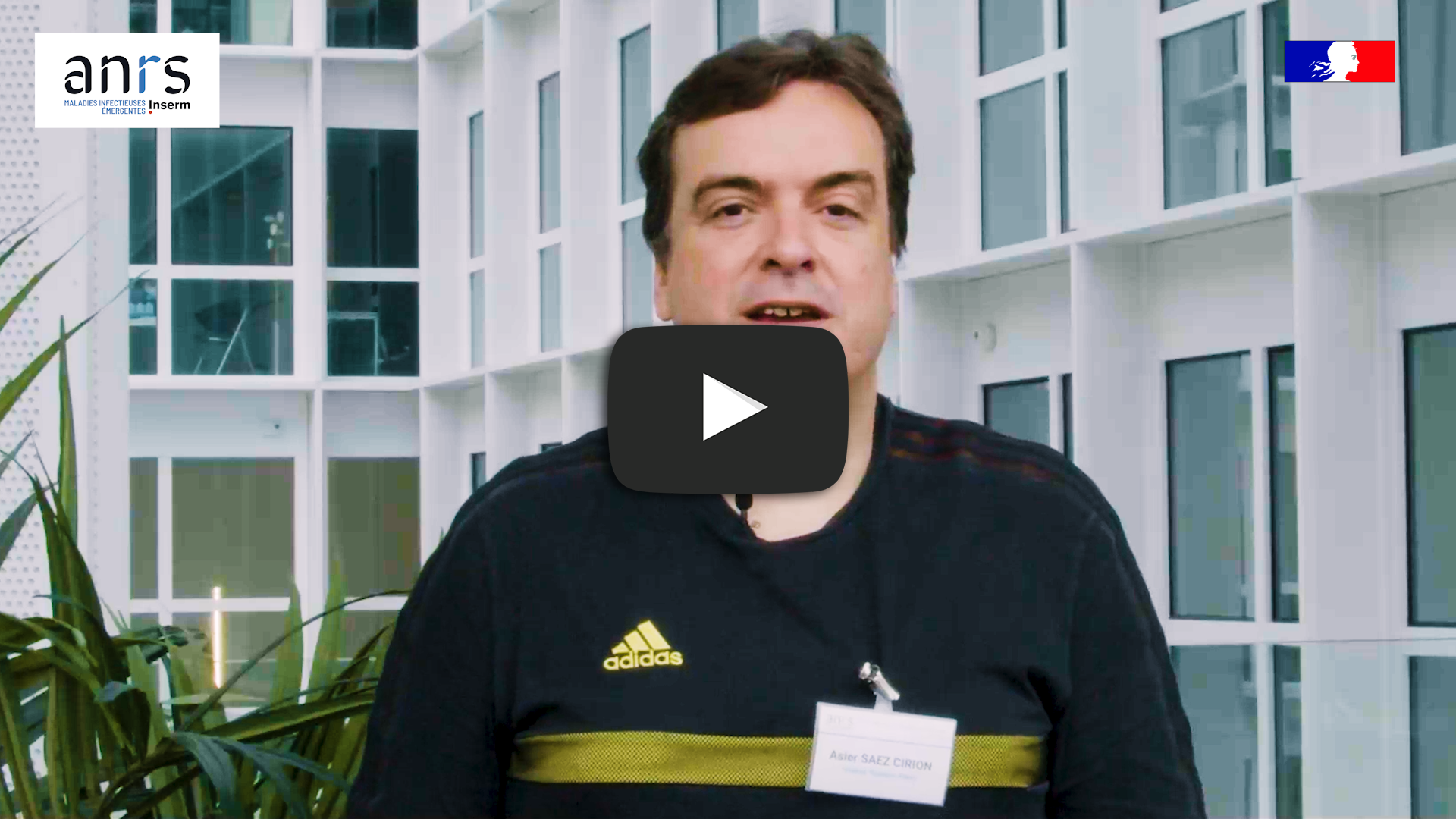
Watch the Rhiviera consortium presentation by its principal investigator, Asier Saez-Cirion, associate professor at Institut Pasteur Paris :
February 2026 – Nature Communications. Two new studies published in Nature Communications, several of whose authors are involved in the Rhiviera consortium, have now followed up on the pVISCONTI cohort study promoted by ANRS MIE.
As a reminder, the latter study demonstrated, using a primate model of SIV infection (simian immunodeficiency virus, i.e. non-human), that the early initiation of antiretroviral treatment within four weeks of infection strongly promotes viral control and a reduction in viral load even after treatment is discontinued. However, starting antiretroviral treatment too early or too late can subsequently prevent viral control due to an excessively high viral load, not in the blood, but in certain tissues known as ‘reservoirs’.
The first study, through the analysis of macaques infected with the SIVmac251 strain and characterised by either effective or ineffective viral control following treatment interruption, identifies biological markers capable of predicting the extent of viral control or viral rebound even before treatment is interrupted. Indeed, in treated individuals, the level of HIV provirus is already lower in their lymph nodes prior to treatment interruption than in others, and this coincides with a higher level of anti-SIV CD8+ T-lymphocytes.
Another study, also published in Nature Communications in February 2026 and involving some of the same authors, further refines the characterisation of post-treatment viral control. Again drawing on the primate model of SIV infection from the pVISCONTI study, it identifies the intestinal CX3CR1 macrophage as another potential biomarker of viral control in the regulation of mucosal immunity.
August 2026 – Nature Communications. A new study, published on 22 August 2026 in Nature Communications and again drawing on the pVISCONTI study sponsored by ANRS MIE, also confirms the key role of NK cells in viral control following SIV infection after an antiretroviral therapy.
February 2026. Carine Van Lint, an FNRS Research Director in molecular virology at the Université libre de Bruxelles, has been honoured by the journal Retrovirology with an award established in 2005 in tribute to the researcher Kuan–Teh Jeang, for her work on HIV–1 latency and its reactivation.
January 2026 – Communications Medecine. Although antiretroviral therapy is able to block HIV-1 transcriptional activity in people living with HIV, it is unable to eradicate the virus due to the establishment of the HIV-1 reservoir. ANRS MIE implemented in 2022 the DOLUVOIR study to better understand mechanisms underlying the establishment of this reservoir.
The ANRS EP64 DOLUVOIR team investigated HIV-1 persistence across five anatomical compartments in 20 men living with HIV receiving a successful modern first-line antiretroviral regimen including dolutegravir.
The results showed that HIV-1 persistence remains detectable in several tissues despite long-term viral suppression. No evidence of ongoing selection of dolutegravir resistance mutations was observed.
The RHIVIERA Consortium is pleased to invite you to a scientific webinar with Prof. Mathias Lichterfeld (Harvard Medical School) focusing on NK cells as key drivers of HIV reservoir cell selection.
Date & time: May 12, 2026 – 6:00 PM (Paris time)
Format: Online webinar
A connection link will be sent to registered participants. Registration is free but mandatory.
Registration
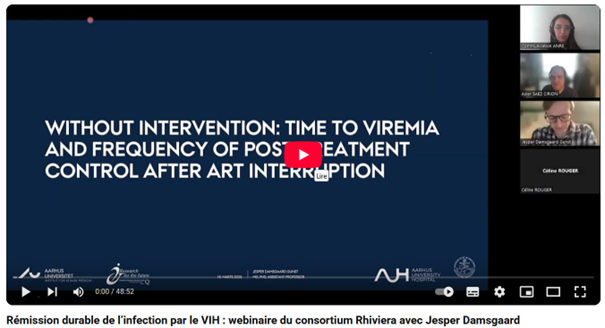
The Rhiviera consortium is organising a series of webinars on scientific advances aimed at achieving lasting remission of HIV infection. These events bring together renowned international researchers who share their recent work and perspectives in the field of HIV cure.
You can find the replays of the last webinars below and on our Youtube channel.
Françoise Barré-Sinoussi
( Institut Pasteur, Paris)
Christine Rouzioux
(CHU Necker, Université Paris Descartes, Paris)
Michaela Müller-Trutwin
( Institut Pasteur, Paris)
Roger Le Grand
(Idmit, CEA, Paris)
Jean-Michel Molina
(AP-HP, Université de Paris)
Hugo Mouquet
(Institut Pasteur, Paris)
Victor Appy
(Université de Bordeaux)
Véronique Avettand-Fènoel
(CHU d’Orléans)
Olivier Lambotte
(AP-HP, Université de Paris-Saclay)
Carine Van Lint
(ULB, Belgique)
Laurence Meyer
(AP-HP, Université de Paris-Saclay)
Laurent Hocqueloux
(CHU d’Orléans)
Hughes Fischer
(Défenseur/activiste des personnes vivant avec le VIH (PLHIV)
Cécile Goujard
(AP-HP, Université Paris-Sud)
Jérémie Guedj
(Hôpital Bichat, Université de Paris)
Christel Protière
(INSERM, SESSTIM, Marseille)
Charre, C., Melard, A., Chaillon, A. et al. Post-treatment SIV control is associated with specific features of viral persistence before and after treatment interruption. Nat Commun (2026). https://doi.org/10.1038/s41467-026-69720-6
Hua, S., Benmeziane, K., Desjardins, D. et al. Maintenance of intestinal CX3CR1+ macrophage homeostasis defines post-treatment control in SIV-infected macaques. Nat Commun 17, 3111 (2026). https://doi.org/10.1038/s41467-026-69848-5
Mchantaf, G., Melard, A., Da Silva, K. et al. HIV persistence in tissues on dolutegravir-based therapy is not associated with resistance mutations to dolutegravir. Commun Med 6, 130 (2026). https://doi.org/10.1038/s43856-026-01405-z
Nuclear retention of unspliced HIV-1 RNA as a reversible post-transcriptional block in latency. Agnieszka Dorman , Maryam Bendoumou, Aurelija Valaitienė, Jakub Wadas, Haider Ali, Antoine Dutilleul, Paolo Maiuri, Lorena Nestola, Monika Bociaga-Jasik, Gilbert Mchantaf, Coca Necsoi, Stéphane De Wit, Véronique Avettand-Fenoël, Alessandro Marcello, Krzysztof Pyrc, Alexander O Pasternak, Carine Van Lint, Anna Kula-Pacurar. Nat Commun 2025;16:2078.
Unbiased and comprehensive identification of virus-derived circular RNAs in a large range of viral species and families. Alexis S. Chasseur, Maxime Bellefroid, Mathilde Galais, Meijiao Gong, Pierre Lombard, Sarah Mathieu, Amandine Pecquet, Estelle Plant, Camille Ponsard, Laure Vreux, Carlo Yague-Sanz, Benjamin G. Dewals, Nicolas A. Gillet, Benoît Muylkens, Carine M. Van Lint, Damien Coupeau. PLoS Pathog 2025;21(9):e1013448.
Inhibition of ALKBH5 demethylase of m6A pathway potentiates HIV-1 reactivation from latency. Ali H, Wadas J, Bendoumou M, Chen HC, Maiuri P, Dutilleul A, Selberg S, Nestola L, Lalik K, Avettand-Fenoël V, Necsoi C, Marcello A, Kankuri E, Karelson M, De Wit S, Pyrc K, Pasternak AO, Van Lint C, Kula-Pacurar A. Virol J 2025;22:124.
Early antiretroviral therapy favors post-treatment SIV control associated with the expansion of enhanced memory CD8+ T-cells. Passaes C, Desjardins D, Chapel A, Monceaux V, Lemaitre J, Mélard A, Perdomo-Celis F, Planchais C, Gourvès M, Dimant N, David A, Dereuddre-Bosquet N, Barrail-Tran A, Gouget H, Guillaume C, Relouzat F, Lambotte O, Guedj J, Müller-Trutwin M, Mouquet H, Rouzioux C, Avettand-Fenoël V, Le Grand R, Sáez-Cirión A.Nat Commun. 2024 Jan 11;15(1):178. doi: 10.1038/s41467-023-44389-3.
Anti-V1/V3-glycan broadly HIV-1 neutralizing antibodies in a post-treatment controller. Molinos-Albert LM, Baquero E, Bouvin-Pley M, Lorin V, Charre C, Planchais C, Dimitrov JD, Monceaux V, Vos M; ANRS VISCONTI Study Group; Hocqueloux L, Berger JL, Seaman MS, Braibant M, Avettand-Fenoël V, Sáez-Cirión A, Mouquet H. Cell Host Microbe. 2023 Aug 9;31(8):1275-1287.e8. doi: 10.1016/j.chom.2023.06.006.
In-Depth Characterization of Full-Length Archived Viral Genomes after Nine Years of Posttreatment HIV Control. Trémeaux P, Lemoine F, Mélard A, Gousset M, Boufassa F, Orr S, Monceaux V, Gascuel O, Lambotte O, Hocqueloux L, Saez-Cirion A, Rouzioux C, Avettand-Fenoel V. Microbiol Spectr. 2023 Feb 14;11(1):e0326722. doi: 10.1128/spectrum.03267-22.
Prolonged Antiretroviral Treatment Induces Adipose Tissue Remodelling Associated with Mild Inflammation in SIV-Infected Macaques. Mausoléo A, Olivo A, Desjardins D, Sáez-Cirión A, Barrail-Tran A, Avettand-Fenoel V, Noël N, Lagathu C, Béréziat V, Le Grand R, Lambotte O, Bourgeois C. Cells. 2022 Oct 2;11(19):3104. doi: 10.3390/cells11193104.
EACS 2025 will be held from 15 to 18 October 2025 in Paris, France.
07 July 2025

The 25th International AIDS Conference, organized by the International AIDS Society and with financial support from ANRS Emerging Infectious Diseases, will be held from July 22 to 26, 2024 in Munich, Germany. The conference can also be attended online by registering.
07 June 2024
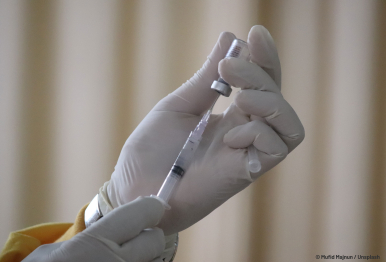
Using an animal model, researchers have identified a window of opportunity for introducing a treatment that promotes remission of HIV infection.
23 January 2024