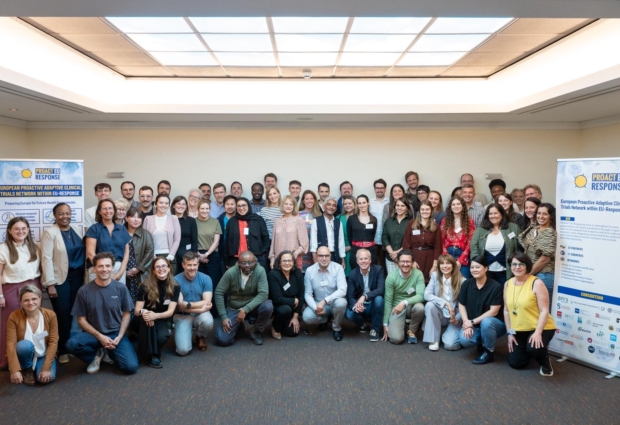
4-5 June 2026, Brussels, Belgium
Last updated on 08 June 2026
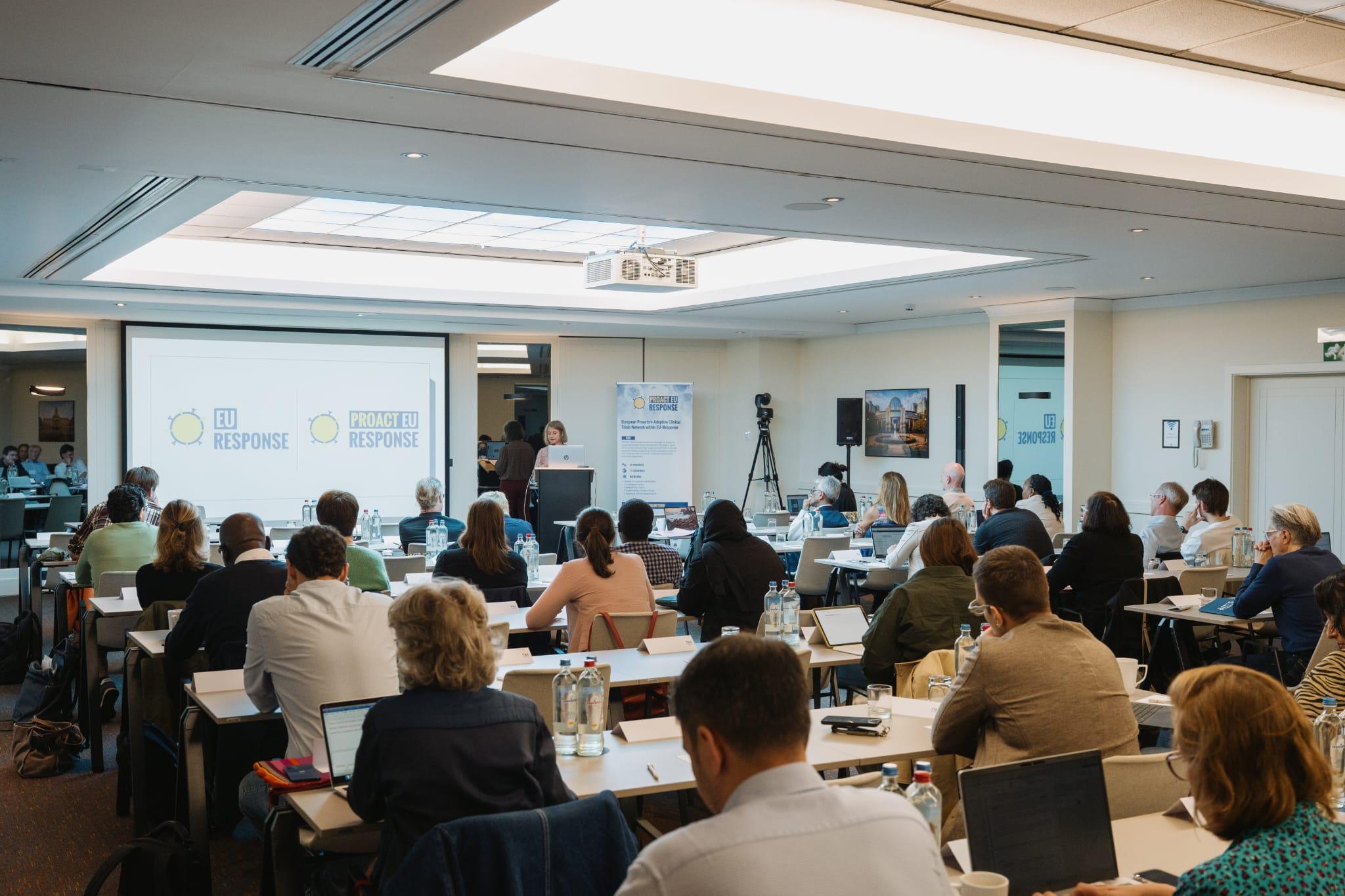
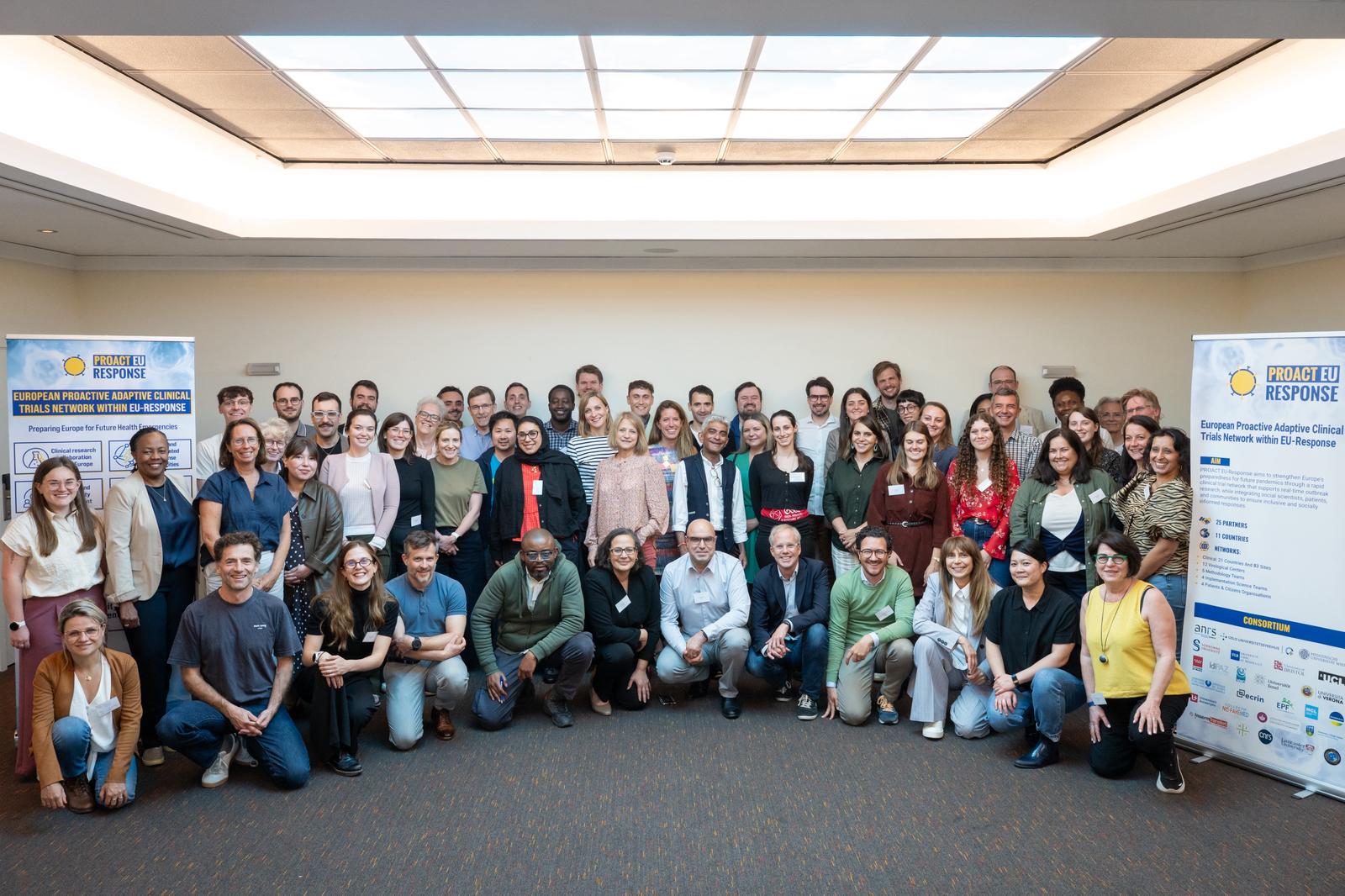
Held in Brussels on 4 and 5 June 2026, the first annual meeting of PROACT EU-Response brought together researchers, clinicians, patient representatives, public health experts and policymakers from across Europe. After 18 months of implementation, the meeting marked an important milestone in assessing the project’s progress and defining priorities for the years ahead.
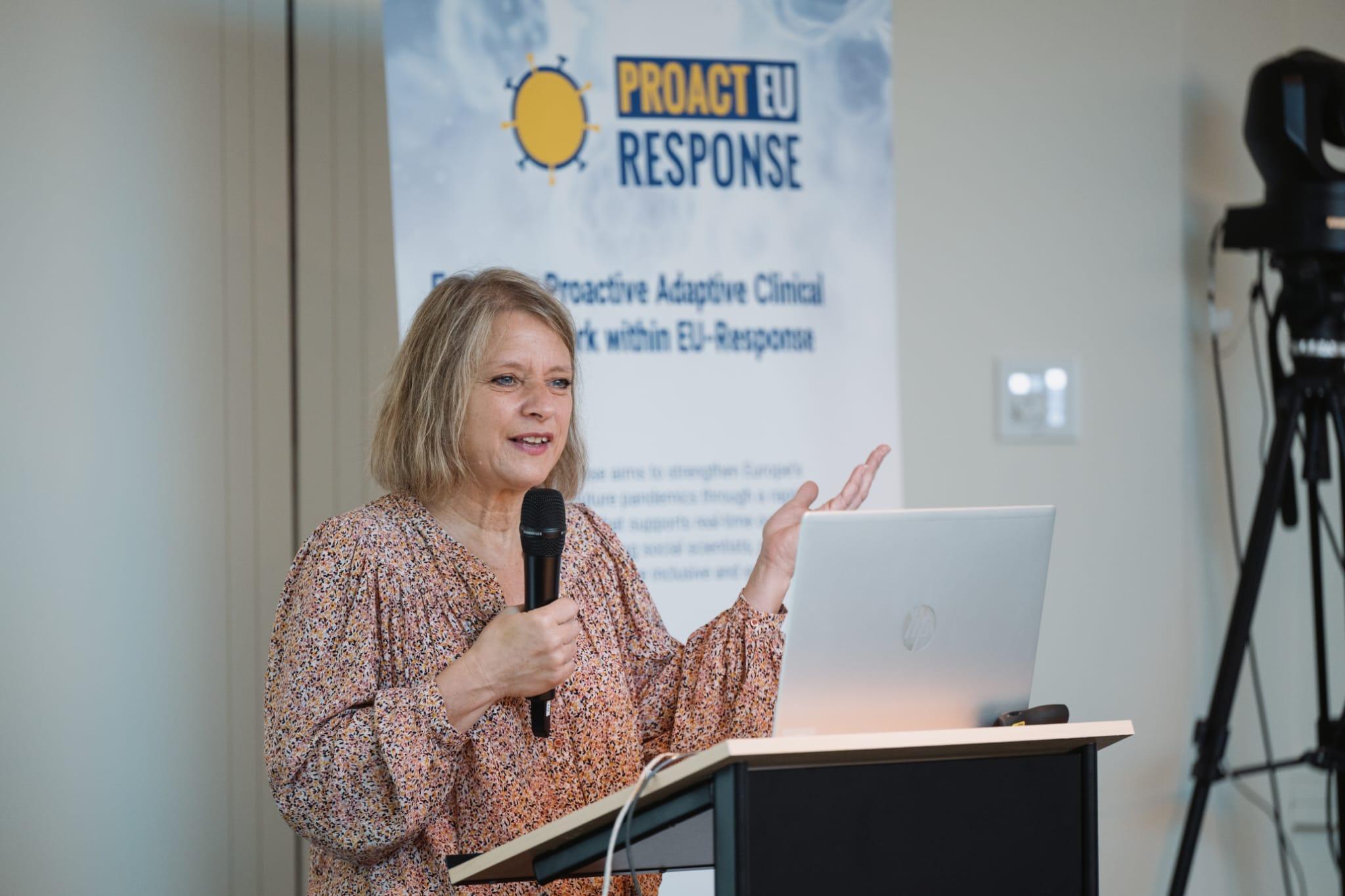
The first day was notably marked by a handover ceremony between EU-Response and PROACT EU-Response, featuring contributions from Professor Yazdan Yazdanpanah, coordinator of EU-Response, and Professor Karine Lacombe, coordinator of PROACT EU-Response. This key moment highlighted the continuity between the two projects, with PROACT EU-Response building on and expanding the achievements of EU-Response.
On this occasion, Karine Lacombe emphasised that this transition represented not simply the conclusion of one project and the launch of another, but rather a new stage in a collective effort to build a Europe that is scientifically ready, operationally prepared and socially engaged in the face of future pandemics.
Discussions focused on several core areas of the project, including adaptive platform trials, clinical trial networks, laboratory preparedness, social sciences, capacity building and community engagement. The central role of social sciences, community participation and capacity building was also highlighted as an essential component of European preparedness for future health emergencies.
To underline the continuity between EU-Response and PROACT EU-Response, the first day also included joint workshops with EU-Response partners. These sessions provided an opportunity to share lessons learned from the previous project and strengthen collaborations across the European infectious diseases research landscape. The workshops focused in particular on the operational virology laboratory network for drug testing, VIRvOLT, as well as methodological approaches for the design of future respiratory virus trials.
The remainder of the meeting was dedicated to reviewing the first achievements of PROACT EU-Response, structured around the project’s seven workstreams. Partners discussed the initial results generated by the 31 work packages, particularly regarding governance frameworks, methodological approaches and contractual arrangements that have now been established.
These two days were marked by rich exchanges between consortium partners. They highlighted the complementarity of the different workstreams and the collective momentum driving the ambition of PROACT EU-Response: to contribute to stronger European preparedness for future pandemics.
Recent health crises, particularly the Covid-19 pandemic, have highlighted the need for clinical research infrastructures capable of responding rapidly, in a coordinated manner and at a European scale, to emerging infectious threats.
PROACT EU-Response was established in this context. Coordinated by ANRS Maladies infectieuses émergentes and Inserm, the consortium aims to prepare Europe for future pandemics by developing a network of adaptive clinical trials capable of evaluating the effectiveness of new therapeutics against emerging pathogens within short timeframes.
Running for five years, from January 2025 to January 2030, PROACT EU-Response brings together 25 partners from 11 countries and benefits from a €17 million budget funded through the European Union’s Horizon Europe research and innovation programme.
The project is built around several complementary pillars: the expansion of a European clinical trial site network, the development of a microbiology laboratory network, the implementation of an adaptive therapeutic trial platform, and dedicated activities focusing on social sciences, community engagement and combating misinformation during health crises.