


Every year, the WHO designates January 30th as World Neglected Tropical Diseases Day. A look back at the ANRS MIE's contribution to this fight.
Last updated on 30 January 2026
On 31 May 2021, at the 74th World Health Assembly, the WHO designated 30 January as World Day Against Neglected Tropical Diseases (NTDs).
Each year, this day is intended to be ‘a day to raise awareness of the devastating impact of NTDs on the world’s poorest populations’ and ‘call on everyone to support the growing momentum to combat these diseases with a view to their elimination and eradication’.
This date was not chosen at random: it commemorates the adoption of the London Declaration on NTDs on 30 January 2012, supporting the first WHO roadmap for the partial or total eradication of at least 17 NTDs by 2020. In 2020, a second roadmap clarified and supplemented the objectives, this time until 2030, focusing on 22 NTDs and incorporating the United Nations Sustainable Development Goals. The slogan is simple: ‘Unite, act and eliminate.’
By 2030, the WHO aims to reduce the number of people requiring treatment for an NTD by 90% and the years of life lost due to NTDs by 75% of the average life expectancy of exposed populations. It is also aiming for the total eradication of yaws (treponemal disease caused by Treponema pallidum pertenue) and dracunculiasis (parasitic disease caused by Guinea worm or Dracunculus medinensis) and at least one NTD in at least 100 countries around the world.
According to the latest WHO report on the subject, 58 countries had already eradicated at least one NTD by 1 January 2026. And approximately 690 million fewer people are exposed worldwide (a 36% decrease since 2010). However, NTDs are still responsible for approximately 120,000 deaths per year, out of 1.5 billion people requiring prevention or treatment.
Unfortunately, financial aid to curb this phenomenon is only decreasing: -41% between 2018 and 2023. This decline is likely to worsen since the dismantling of the United States Agency for International Development (USAID), which was involved in numerous programmes targeting NTDs, and the recent withdrawal of the United States from the WHO. According to the UN organisation, these decisions have already suspended ‘47 treatment campaigns against NTDs affecting 143 million people worldwide.’
Buruli ulcer; Chagas disease; dengue and chikungunya; dracunculiasis; echinococcosis; foodborne trematodiases; human African trypanosomiasis; leishmaniasis; leprosy; lymphatic filariasis; mycetoma, chromoblastomycosis and other deep mycoses; noma; onchocerciasis; rabies; scabies and other ectoparasitoses; schistosomiasis; soil-transmitted helminthiases; snakebite envenoming; taeniasis/cysticercosis; trachoma; and yaws.
Source: https://www.who.int/health-topics/neglected-tropical-diseases#tab=tab_1
Since 2021 and the Covid-19 crisis, ANRS MIE’s mission has been to combat emerging infectious diseases. It is responsible for supporting, coordinating and funding research in this field.
Among the pathogens prioritised by its Emergence epidemic response system, it is closely monitoring the evolution of two NTDs targeted by the WHO roadmap: dengue and chikungunya.
These two arboviruses are among the most prevalent in the world (approximately 96 million cases per year for dengue and 693,000 cases for chikungunya). Originating mainly in sub-Saharan Africa, they also affect or have affected mainland France.
In January 2025, faced with an increase in the number of chikungunya cases in Réunion and then in mainland France from the summer of 2024 onwards, ANRS MIE set up a dedicated emergency unit. Through this unit, it coordinated exchanges between researchers and the medical community and monitored the latest scientific advances on the subject. The unit has been discontinued as of January 2026.
ANRS MIE supports numerous fundamental and clinical research projects targeting dengue, chikungunya and leishmaniasis.
The LSDengue research project, which won the 2023 Priority Research Programme and Equipment for Emerging Infectious Diseases (PEPR MIE) award, led by ANRS MIE and funded as part of the France 2030 plan, aims to identify new determinants of severe dengue fever in order to optimise patient care.
The ARBOGEN project, funded by ANRS MIE and the MSDAVENIR endowment fund of the American pharmaceutical company MSD, aims to establish a trans-territorial network of public and private actors to collect dengue virus genomes. The objective? To increase knowledge about the genomic diversity of the virus and, ultimately, to identify new therapeutic targets.
ANRS MIE is also involved in the DENGAGE study, funded by the French Ministry for Europe and Foreign Affairs and the NGO SCDI, which is collecting data on the seroprevalence of dengue in Vietnam.
Winner of the ANRS MIE’s ‘Émergences PRFI’ call for projects, the DENGAFRICA project, linking the University of Bordeaux and the Pasteur Institute in Bangui in the Central African Republic, is also involved in the surveillance and management of dengue cases in sub-Saharan Africa.
Finally, also funded by ANRS MIE as part of its ‘Émergences PRFI’ call for projects, the LEISHNEW project is studying the possibility of a new single-dose intralesional treatment for human cutaneous leishmaniasis.
As a reference in France and Europe on emerging infectious diseases, ANRS MIE plays a key role in numerous international networks focusing on NTDs.
ANRS MIE is heavily involved in the direction and operationalisation of Global Health EDCTP3, a public-private partnership launched in 2003 between European and sub-Saharan African countries to conduct clinical trials. Several research projects resulting from this partnership are directly co-funded by ANRS MIE, particularly those concerning opportunistic infections in people living with HIV.
ANRS MIE is also one of nine international coordination centres for the STRIVE network (Strategies and Treatments for Respiratory Infections and Viral Emergencies). Created in 2023, this network links more than 300 clinical trials conducted in 40 countries around the world. The whole network is managed by a highly specialised statistics and data management centre based at the University of Minnesota in the United States. Its objective? To rely on high-quality methodological therapeutic clinical trials, quickly and efficiently, in response to infectious emergencies, particularly in countries affected by MTNs.
In addition, created in 2019 under the former REACTing consortium (whose work has been continued by ANRS MIE since 2021), the Arbo–France network coordinates the circulation of information and data on arboviruses. It also participates in the development of research programmes, in conjunction with Santé publique France and the French Agency for Food, Environmental and Occupational Health & Safety (ANSES), particularly in overseas territories.
In addition, ANRS MIE maintains constant links with Inserm’s Immunology, Inflammation, Infectiology and Microbiology (I3M) Thematic Institute, which hosts the Francophone Network on NTDs. The network aims to bring together French and French–speaking institutions working in this field, promote research support from public and private actors, and develop collaborative research programmes.
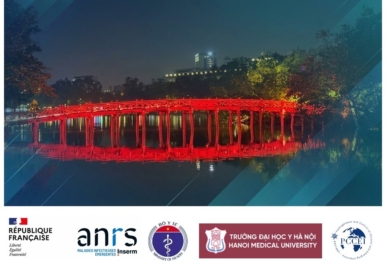
The next Scientific Days of the ANRS MIE’s Vietnam Partner Site will be held on March 10 and 11, 2026 in Hanoi, and online.
18 December 2025
27 December is the International Day of Epidemic Preparedness. ANRS MIE is at the frontline of this mission.
26 December 2025
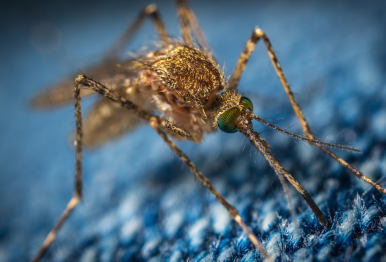
20 August marks World Mosquito Day, commemorating a critical discovery made by Dr Ross in 1897, who first made the link that female mosquitoes transmit malaria between humans. Above all, it is an opportunity to raise public awareness of the health risks associated with mosquitoes and the diseases…
20 August 2025
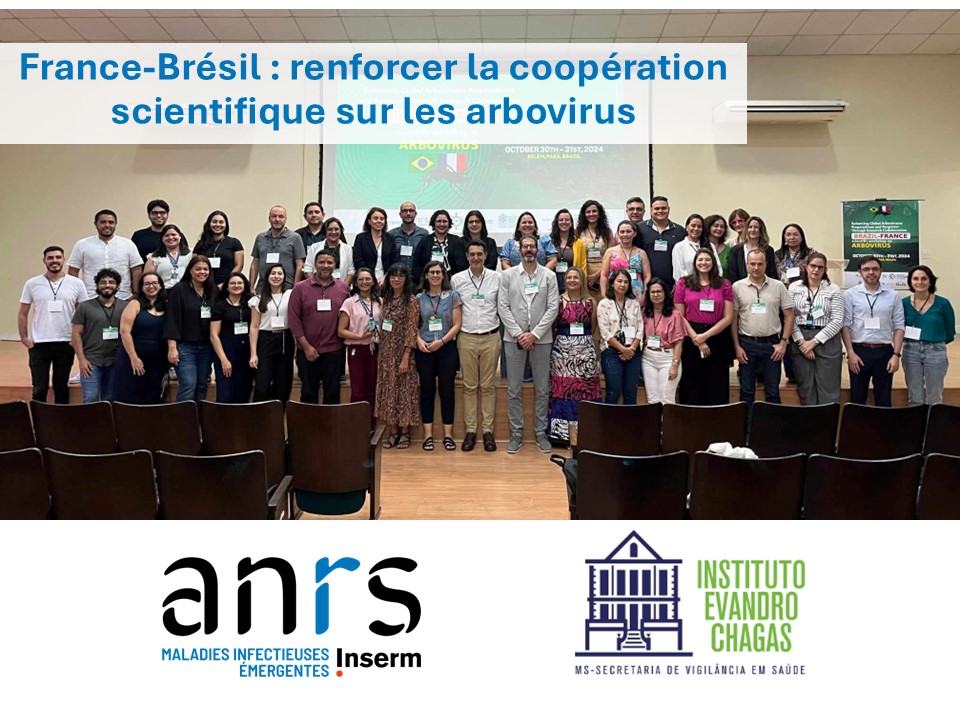
On October 30 and 31, 2024, a Franco-Brazilian workshop on “Enhancing Global Arboviruses Preparedness and Response Through Research Collaboration” was held in Belém, Brazil.
04 December 2024