Last updated on 05 August 2026
The Burkina Faso Partner Site is structured mainly around the Centre Muraz of the National Institute of Public Health (INSP) in Bobo-Dioulasso and the International Research Centre for Health (CRIS/UO) of Joseph Ki-Zerbo University in Ouagadougou.
Creation date
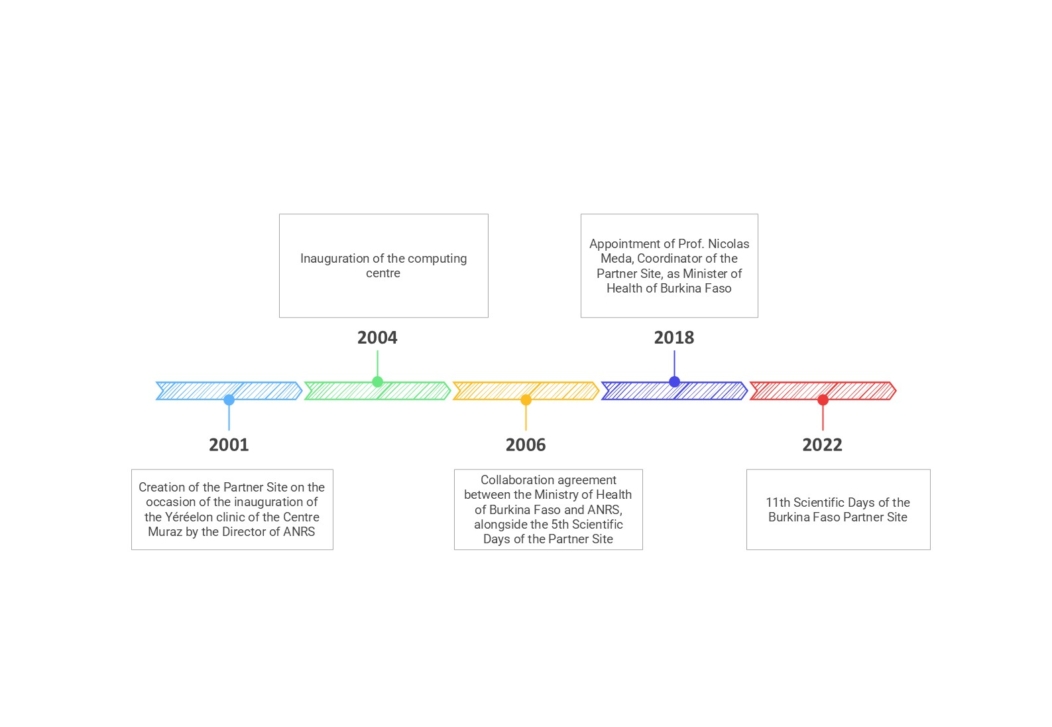
2001
Leads
Dr Dramane Kania (Burkina Faso Coordinator), Prof. Nicolas Nagot (France Coordinator)
Physical hosting of the partnership
Centre Muraz/INSP, Bobo-Dioulasso, and CRIS/UO, Ouagadougou, Burkina Faso
The first Franco-Burkinabe collaborations began in 1999. The partnership was set up in 2001 and was made official in 2006 through the signing of a framework agreement between ANRS and the Ministry of Health, around the Centre Muraz in Bobo-Dioulasso.
The collaboration then developed around a second research centre, the International Research Centre for Health (CRIS/UO), located at Joseph Ki-Zerbo University (UJKZ) in Ouagadougou.
In recent years, the collaborations and fields of action of the Burkina Faso Partner Site have been expanded to emerging and re-emerging infectious diseases in order to better address the public health and scientific challenges of Burkina Faso and the region. Their study is conducted according to a One Health approach, in a global health context.
The Centre Muraz, in Bobo-Dioulasso, is a technical directorate of the National Institute of Public Health (INSP). Its missions are research, training and expertise in connection with four major research programmes: infectious diseases, diseases with epidemic potential, sexual and reproductive health, health systems policy and management, and capitalisation. The Centre has a laboratory with a high-level technical platform for the diagnosis and diagnostic innovation of infectious diseases, as well as a methodology and research data management centre.
The International Research Centre for Health (CRIS/UO) is a research and training structure within Joseph Ki-Zerbo University (UJKZ) in Ouagadougou. Its ambition is to foster the creation of an international research platform for health at UJKZ and to train young health professionals in medical research. Its research activities concern various public health issues related to HIV/AIDS and global health.
Burkina Faso Coordinator: Dr Dramane KANIA
Centre Muraz/INSP, Bobo-Dioulasso, Burkina Faso

France Coordinator: Prof. Nicolas NAGOT
PCCEI/UMR1058, Inserm, EFS, University of Montpellier, University of the Antilles, France

Deputy Coordinator: Dr Désiré DAHOUROU
Health Sciences Research Institute (IRSS), Bobo-Dioulasso, Burkina Faso

Honorary Coordinator: Prof. Nicolas MEDA
CRIS/UO, Ouagadougou, Burkina Faso
The Partner Site was previously coordinated by Prof. Nicolas MEDA (Burkina Faso Coordinator) and Prof. Philippe VANDE PERRE (France Coordinator).
Many partners such as universities, NGOs, ministries, research institutions, healthcare facilities and community stakeholders are connected with the Centre Muraz and the CRIS through the partner site. There are also other institutional, financial or project-based partnerships.
Research on HIV, STIs and co-infections with tuberculosis and viral hepatitis
Since the 1990s, Franco-Burkinabe collaboration in health research has focused on the prevention, diagnosis and care of HIV.
Therapeutic trials have been conducted and are still continuing today on the prevention of mother-to-child transmission (Kesho-Bora, Promise PEP, PREVENIR PEV, TRI MOM); the strengthening of adherence and antiretroviral therapy (ART) (THILAO, MOBIDIP, 2LADY); and the diagnosis of tuberculosis in children infected with HIV (PAANTHER).
Research on HIV and STI prevention in key populations (Yérélon cohorts for sex workers and CohMSM for MSM) has made it possible to assess the feasibility and operational effectiveness of behavioural and biomedical strategies.
Social sciences have explored patients’ experiences and access to care for seropositive women.
Biological research has analysed HIV transmission (sexual and mother-to-child), resistance to treatment, the genetic diversity of the virus and the impact of HIV-tuberculosis co-infection.
Studies on viral hepatitis, revealing a high prevalence of HBV and HCV with a heterogeneous distribution across the country, have proposed the implementation of specific intervention strategies (REVERSO).
New areas of research have emerged more recently, particularly on arboviruses (ARBOFASO) or COVID-19, with studies on the assessment of treatments (COVERAGE Africa), diagnosis, and understanding of the virus and its impact, according to a One Health approach.
Research activities conducted and supported by the main stakeholders of the Burkina Faso Partner Site and their collaborators focus on HIV, viral hepatitis, human papillomavirus (HPV), tuberculosis, COVID-19 and arboviruses. Various areas of research are called upon, such as innovation, diagnosis, clinical research, basic research, public health and social sciences. More specifically:
* MSM (men who have sex with men)
** PrEP – pre-exposure prophylaxis
*** sexually transmitted infections
The partnership has helped strengthen the research capacities of the Centre Muraz and other research teams in Burkina Faso, fostering scientific innovation, the training of young researchers, the development of health policies and community engagement.
The partnership has made it possible to strengthen the Centre Muraz, leading to its national recognition and its integration in 2018 as a technical research directorate of the National Institute of Public Health (INSP). ANRS MIE supported its equipment, particularly with a reception structure for cohorts, a P2 molecular virology laboratory, an immunology laboratory and a computing centre.
In 2021, thanks to the Partner Site, the Centre Muraz joined the AFROSCREEN network for the sequencing of SARS-CoV-2 variants and other pathogens, with the installation of a genomics platform and the acquisition of an Illumina MiniSeq sequencer.
The Partner Site also enabled the creation of the CRIS/UO, facilitating the coordination of research in Ouagadougou.
The Burkina Faso Partner Site collaborates with Nazi Boni University (UNB) and UJKZ to support the training of Master’s and doctoral students. This support has fostered the emergence of young researchers who are the main drivers of research and of the orientation of health policies on infectious diseases in Burkina Faso.
Associated researchers participate in various national and international technical groups for the development of recommendations. Among these groups are the national committees for surveillance of SARS-CoV-2 variants and validation of HIV screening algorithms, and WHO reflection groups on HIV/hepatitis/STI therapeutics and breastfeeding.
The partnership also makes it possible to support associations and community committees engaged in the fight against HIV and viral hepatitis in Burkina Faso. These stakeholders contribute to scientific facilitation and research projects, thereby enabling projects to be carried out particularly among vulnerable populations.
Despite geopolitical challenges, the Partner Site continues to bring together research stakeholders, promoting the research conducted and exploring new perspectives for Burkina Faso and the region.
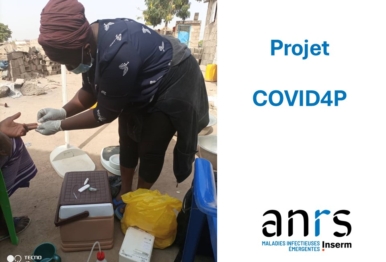
Analysis of the relationship between poverty, pollution, prevention and the spread of COVID-19
31 March 2025
13th AFRAVIH 2026 International Francophone Conference on HIV, Sexual Health, Hepatitis, and Emerging Infections
12 May 2026