

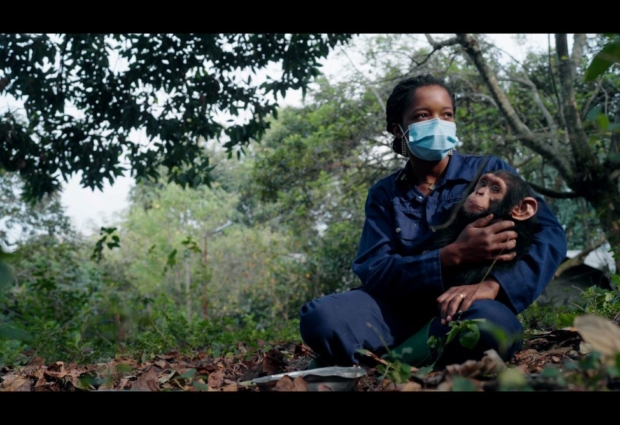
A research project, funded by the ANRS MIE, mapping the zoonotic transmission of tuberculosis in the Democratic Republic of the Congo.
Last updated on 18 May 2026
Type of project
Epidemiological study
Duration
2023-2025
Funding
ANRS MIE
Partners
AP-HP, CRSN, CRPL, CHL, DGOS, IMEA, ANRS MIE
Principal investigators
Dr Frédéric Le Gal (Hôpital Avicenne) et Dr Luis Flores Giron (CRSN Lwiro / CRPL)
Promotion
IMEA
Pathology
Tuberculosis
The TTHALESS research project (standing for ‘Transmission of Human and Animal Tuberculosis in Lwiro: Study of Mycobacterial Sources”) was launched in 2023 to study the epidemiology of zoonotic tuberculosis in a rural area on the outskirts of Kahuzi–Biega National Park, in the east of the Democratic Republic of the Congo (DRC). The aim was to estimate the prevalence of tuberculosis among human and animal populations in the area surrounding the Lwiro Primate Rehabilitation Centre (CRPL) and to explore possible interspecies transmission through the genetic characterisation of isolated mycobacterial strains. “We wanted to gain a better understanding of the circulation dynamics of the Mycobacterium tuberculosis complex in this rural region of eastern DRC and to identify factors favouring transmission”, says Dr Frédéric Le Gal, one of the project’s principal investigators.
The region in question is characterised by close proximity between human populations, domestic animals (mainly cattle) and wildlife, including primates such as chimpanzees and the endangered Grauer’s gorilla. This close proximity creates a context conducive to potential cross-species transmission of tuberculosis. This is compounded by the ongoing armed conflict (known as the “M23 conflict”) in the region since 2021, which has turned it into a transit point for many forcibly displaced people.
Funded over two years by ANRS MIE and promoted by the Institute of Applied Medicine and Epidemiology (IMEA), a foundation active in Francophone Africa, the project stems from a partnership agreement between Avicenne Hospital (AP-HP) and the Lwiro Centre for Natural Sciences Research (CRSN). Signed in 2018, this agreement receives funding from the Directorate-General for Healthcare Provision (DGOS) to develop or renovate local infrastructure, provide training and carry out research projects using a ‘One Health’ approach.
Led by Dr Frédéric Le Gal of the Clinical Microbiology Laboratory at Avicenne Hospital and Dr Luis Flores Giron of the CRSN and CRPL, the TTHALESS project screened 576 patients with clinically suspected tuberculosis in the study region (known as the “Miti Murhesa health zone”) between May 2023 and June 2024. Nearly 15% of them – three-quarters of whom were young men – tested positive for mycobacteria of the Mycobacterium tuberculosis complex. Only a very small number of cattle, chimpanzees (wild or in captivity at the CRPL) or wild gorillas tested were also positive.
Genomic analysis of the strains isolated retrospectively in the L3 laboratory at Avicenne Hospital showed that only one strain exhibited resistance to rifampicin and that all the characterised isolates belonged to the species Mycobacterium tuberculosis, suggesting a predominance of human strains in this ecosystem. “The project also included a significant public health component involving awareness-raising and community-based screening for tuberculosis and HIV,” adds Dr Frédéric Le Gal.
With the research now complete, “we have obtained the whole-genome sequences (WGS) of 56 strains of Mycobacterium tuberculosis (55 of human origin and one from a chimpanzee at the CRPL),” explains Dr Frédéric Le Gal. Phylogenetic analysis revealed high genetic variability, characterised by a predominance of line 4 strains, the presence of a few line 3 strains — including the one isolated from the chimpanzee — as well as one line 1 strain. Furthermore, clustering analyses incorporating patients’ GPS coordinates and the chimpanzee’s origin are currently underway to explore the transmission dynamics and spatial structure of tuberculosis within this ecosystem.