Last updated on 03 August 2026
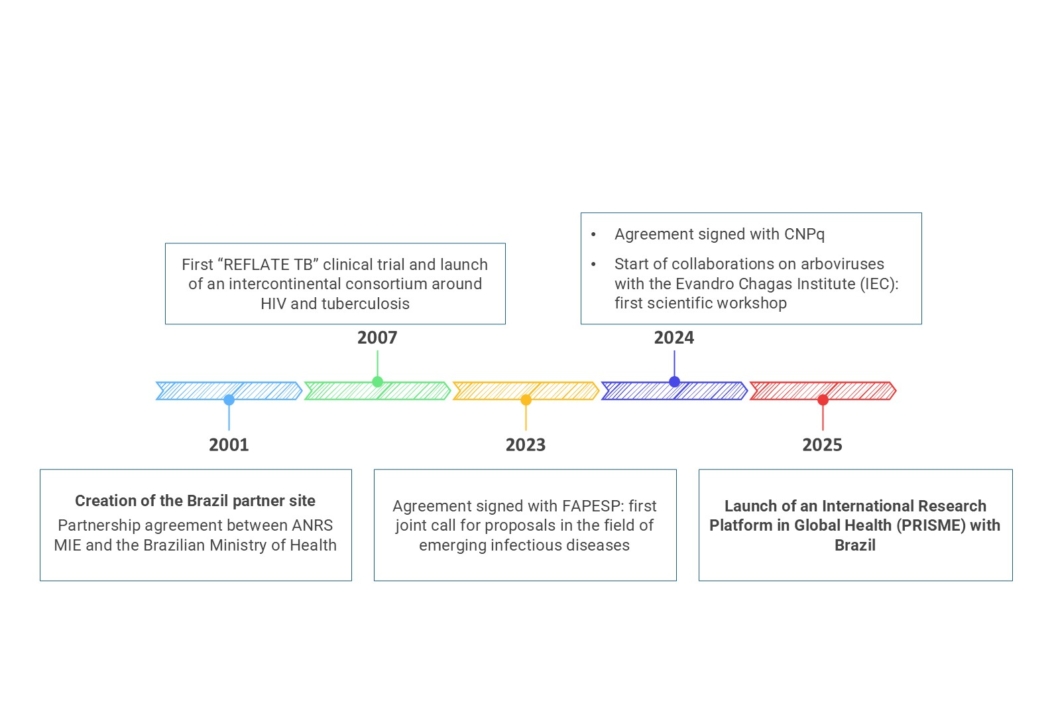
Since its creation, the Brazil Partner Site has been structured mainly around a framework agreement between ANRS MIE and the Brazilian Ministry of Health.
On 1 October 2025, in order to strengthen scientific collaboration, France and Brazil announced the launch of the France–Brazil International Research Platform in Global Health (PRISME France–Brazil), an international consortium bringing together several key stakeholders from the two countries. This initiative will enable the partnership to evolve towards multi-institutional cooperation fostering scientific collaborations across a broader spectrum of scientific priorities for both countries.
Find out more about the International NetworkCreation date
2001
Leads
Dr Daniel Moreira Alves da Silva (Brazil Coordinator), Dr Nathalie de Castro (France Coordinator)
Physical hosting of the partnership
Cooperation programme with DATHI/Ministry of Health and the French Embassy, Brasilia, Brazil
International technical expert (ITE)
Dr Erica Telford
The Franco-Brazilian scientific partnership officially began in 2001 with the signing of a framework agreement between ANRS and the Brazilian Ministry of Health. Unlike the other partner sites and PRISMEs, this partnership is not structured around a physical structure made up of specifically established teams, but focuses on setting up research projects and scientific facilitation activities between pre-existing Brazilian and French teams. Since its creation, the partnership has relied on the scientific and technical cooperation programme between DATHI* of the Ministry of Health and the French Embassy, and on funding for international France–Brazil projects by ANRS MIE.
Among the other key stakeholders in the partnership is the Oswaldo Cruz Foundation (Fiocruz), one of the essential partners in research supported by ANRS MIE and conducted in Brazil, which also hosts an international technical expert (ITE) from the agency within its Vice-Presidency for Global Health and International Relations since 2025.
In order to broaden the reach of the ANRS MIE partnership in Brazil, collaborations have also been initiated since 2023 with other Brazilian institutions such as the São Paulo Research Foundation (FAPESP), the National Council for Scientific and Technological Development (CNPq) in Brasilia and the Evandro Chagas Institute (IEC) in Belém.
The signing of the PRISME made it possible to initiate the consolidation of scientific collaborations between stakeholders from the two countries: on the Brazilian side, the Ministry of Health, the Oswaldo Cruz Foundation (Fiocruz), the Ministry of Science, Technology and Innovation (MCTI) and the National Council for Scientific and Technological Development (CNPq); and, on the French side, Inserm (French National Institute of Health and Medical Research) and its autonomous agency, ANRS MIE, the Institut Pasteur in Paris, the institut Pasteur de la Guyane, the French National Research Institute for Sustainable Development (IRD), and the French Embassy in Brazil.
* Department of Chronic Diseases and Sexually Transmitted Infections
DATHI of the Brazilian Ministry of Health coordinates policies for the prevention, diagnosis and treatment of chronic diseases and sexually transmitted infections (STIs). It implements national strategies, ensures free access to care and treatment through the public health system and develops awareness-raising campaigns. DATHI monitors the epidemiological evolution of these infections and supports research in collaboration with national and international institutions in order to improve patient care and strengthen the fight against these diseases.
Technical and scientific cooperation between DATHI and the French Embassy in Brazil aims to strengthen the fight against chronic diseases and STIs through exchanges of expertise and the development of joint projects. This collaboration takes the form of organising seminars, supporting Franco-Brazilian research and promoting training programmes for healthcare professionals. It also facilitates the mobility of researchers and encourages the sharing of good practice in prevention, diagnosis and patient care, thereby contributing to a more effective response to public health challenges.
Cooperation with ANRS MIE fits naturally within the context of this institutional technical and scientific cooperation. ANRS MIE and DATHI implement the partnership’s activities through financial support, particularly through the funding of projects as part of ANRS MIE calls for proposals. This system is complemented by scientific facilitation actions aimed at fostering the emergence of new collaborations, strengthening existing partnerships and supporting the mobility of young scientists. To this end, common scientific priorities have been identified.
DATHI’s strategy is part of the programme launched in April 2023, “Brasil Saudavél” (“Healthy Brazil”), which arose from the creation of the Interministerial Committee for the Elimination of Tuberculosis and Other Socially Determined Diseases (CIEDDS).
It includes 14 diseases: tuberculosis (TB), leprosy, malaria, Chagas disease, trachoma, lymphatic filariasis, schistosomiasis, onchocerciasis, helminthiases and five vertically transmitted infections: syphilis, hepatitis B, Chagas disease, HIV and HTLV*.
More specifically, the identified research priorities concern:
A number of the objectives of this programme cover ANRS MIE research themes.
* human T-cell lymphotropic virus
** PrEP – pre-exposure prophylaxis
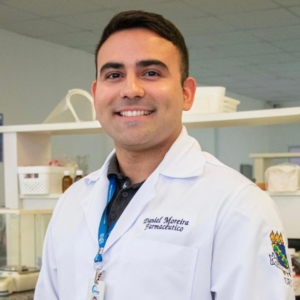
Brazil Coordinator: Dr Daniel MOREIRA ALVES DA SILVA
DATHI/Ministry of Health, Brasilia, Brazil

France Coordinator: Prof. Nathalie DE CASTRO
Saint-Louis Hospital, Paris, France

International technical expert (ITE): Dr Erica TELFORD
Fiocruz, Rio de Janeiro, Brazil
The partner site was previously coordinated by: Dr Cristina POSSAS (Brazil Coordinator), Dr Cristina PIMENTA (Brazil Coordinator), Dr Bernard LAROUZÉ (France Coordinator). An international technical expert (ITE), Dr Erica TELFORD, has been mandated since March 2025 to support the coordination of the Brazil Partner Site and is based within the Centre for International Health Relations (CRIS) at Fiocruz, in Rio de Janeiro.
Many partners such as universities, NGOs, ministries, research institutions, healthcare facilities and community stakeholders are connected with the technical and scientific cooperation programme through the partner site. There are also other institutional, financial or project-based partnerships.
In view of the partnership’s objectives and the complementary scientific expertise of Brazil and France, the main activities implemented aim to:
In Brazil, the main public health challenges in the area of infectious diseases concern HIV and sexually transmitted infections (STIs), tuberculosis, viral hepatitis and arboviruses such as dengue, Zika and chikungunya, as well as certain neglected tropical diseases. These issues arise in regional contexts and often against a backdrop of strong socio-economic disparities, which influence exposure to infections as well as access to prevention and care, and call for responses adapted to local realities.
The research priorities of the ANRS MIE partner site in Brazil were initially defined mainly according to the shared research areas of DATHI and ANRS MIE, which focus in particular on HIV, tuberculosis, STIs and viral hepatitis.
However, since 2020, and with the creation of the new ANRS MIE, new areas of research on infectious diseases have been developed. Research on SARS-CoV-2/COVID-19 has expanded particularly as a result of the pandemic. The same is true of research on arboviruses, given their significant impact on public health in Brazil and the risk of new epidemics caused by this category of pathogens emerging in France and its overseas territories.
Brazil’s public health system has an expanded policy of access to treatment and local production capacity for generic medicines; in this context, the first Franco-Brazilian studies supported by ANRS MIE focused on socio-economic issues relating to health, access to care and antiretroviral therapy (ART), and on the analysis of public policies, particularly on HIV.
The clinical research component took shape through the conduct of two initial therapeutic trials on the treatment of HIV/TB co-infection (REFLATE TB and REFLATE TB2), in close collaboration with the National Institute of Infectious Diseases within Fiocruz, in Rio de Janeiro. This collaboration continued with the development of other clinical trials such as Doxy-4C on STIs and UNITY on mpox. All of these projects were conducted in collaboration with other countries, particularly those in the ANRS MIE International Network.
At the same time, ANRS MIE supported other research teams studying the characterisation of HIV epidemics in Brazil and viral hepatitis B and D in the Amazon region (Delta Amazonia).
Since ANRS MIE expanded its scope to include emerging infectious diseases, supported research projects have mainly focused on SARS-CoV-2, addressing immunity, health policies and the impacts on the sexual and mental health of vulnerable populations living with HIV, particularly in the context of PrEP cohorts.
Research is now tending to broaden to other emerging infections, particularly arboviruses.
The mobilisation of partner site stakeholders has made it possible to structure and strengthen Franco-Brazilian scientific relations through the regular organisation of thematic meetings and the creation of a lasting collaborative network to support research and the fight against infectious diseases.
The partner site has supported the establishment of several initiatives and the development of institutional relations between ANRS MIE and Brazilian partners, making it possible to create and strengthen Franco-Brazilian scientific relations.
Since the creation of the partnership, scientific meetings have been organised every year to bring together French and Brazilian stakeholders engaged in the fight against infectious diseases. The Franco-Brazilian Seminar on Technical and Scientific Cooperation organised by DATHI, the French Embassy and ANRS MIE, as well as the scientific days of the ANRS MIE partner site in Brazil, help to foster the sharing of expertise, bring out new ideas for collaboration and strengthen existing partnerships.
During the 2000s, the partnership led to the creation of a strong, lasting and readily mobilisable network of clinical partners, particularly with clinical projects conducted in collaboration with Fiocruz and partners in the ANRS MIE International Network based in France, Africa and Asia.
More recently, institutional relations have been developed with national bodies for coordinating and funding research in Brazil. This is the case of a memorandum of understanding between ANRS MIE, Inserm and FAPESP (Fundação de Amparo à Pesquisa do Estado de São Paulo), signed in 2022, aimed at strengthening cooperation and links between the French scientific community and that of the State of São Paulo.
In 2023, a memorandum was signed between ANRS MIE and CNPq (Conselho Nacional de Desenvolvimento Científico e Tecnológico) to facilitate the organisation of events, cross-expertise and the development of joint projects.
Finally, a scientific partnership was formalised with the Evandro Chagas Institute (IEC) in Belém on arboviruses, with the organisation of a first scientific meeting conducted in collaboration with the Arbo-France network. This meeting enabled the development of collaborative projects and the emergence of an active cooperation dynamic, all the more important because of its regional grounding in the Amazon region, an area at high risk for arboviruses.
The presence, since March 2025, of an ITE on site and the launch of PRISME Brazil–France will make it possible subsequently to energise institutional cooperation and multilateral scientific collaborations, fully integrating One Health and global health approaches at the heart of scientific priorities.
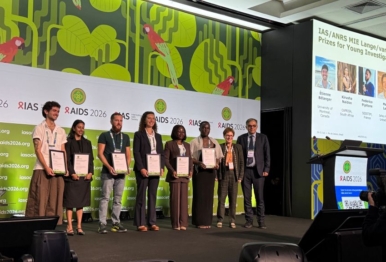
Every year, the IAS and ANRS MIE recognise the work of young researchers in the field of HIV/AIDS.
29 July 2026
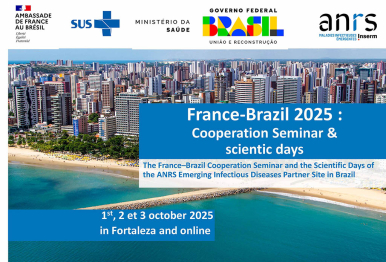
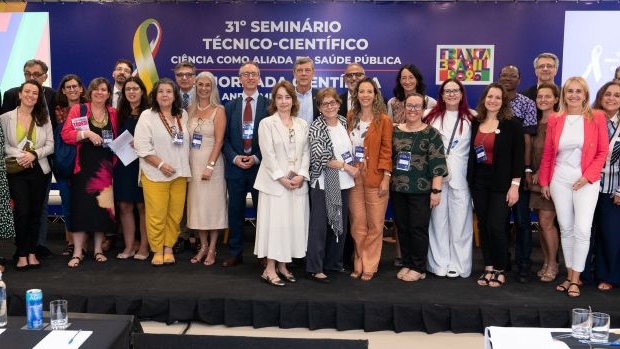
France–Brazil 2025: seminar on Franco-Brazilian cooperation and scientific days of the ANRS MIE partner site in Brazil.
01 September 2025
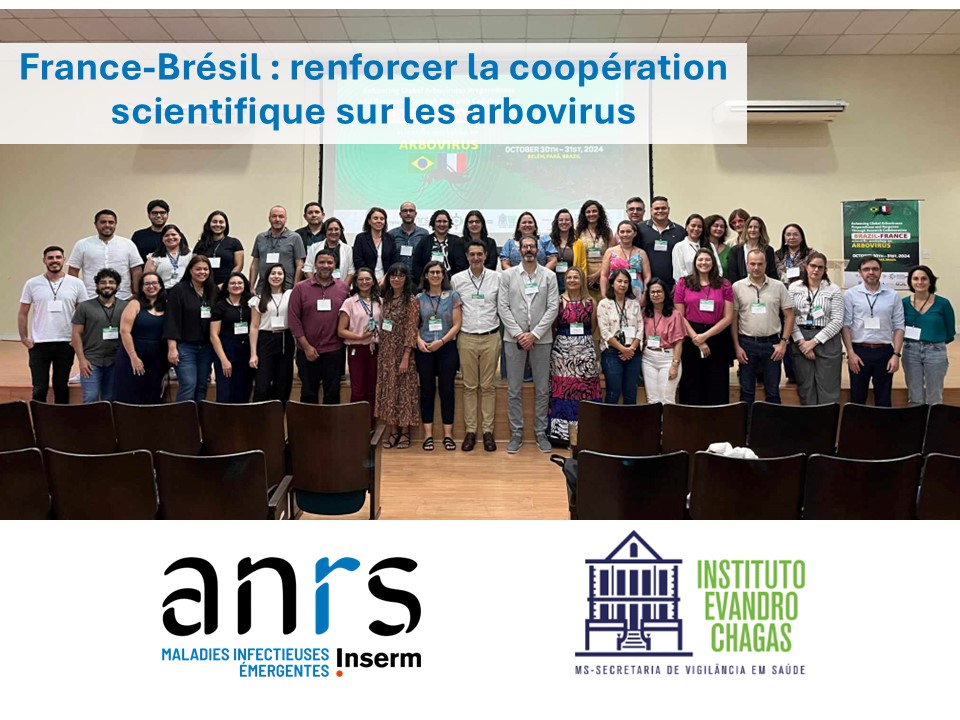
On October 30 and 31, 2024, a Franco-Brazilian workshop on “Enhancing Global Arboviruses Preparedness and Response Through Research Collaboration” was held in Belém, Brazil.
04 December 2024