Last updated on 14 July 2026
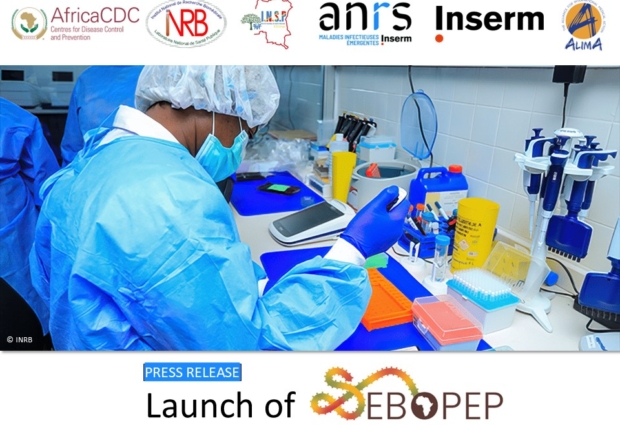
The National Institute for Biomedical Research (INRB) in Kinshasa, the ANRS Emerging infectious diseases / Inserm and the NGO ALIMA, alongside all their partners, are launching EBO-PEP, the first clinical trial to assess the efficacy of post-exposure prophylaxis (PEP) with the antiviral obeldesivir against the current Bundibugyo Ebola virus outbreak. The trial begins on 14 July 2026 in the Democratic Republic of the Congo and Uganda.
On 17 May 2026, the World Health Organisation (WHO) declared that the current Ebola virus disease outbreak caused by the Bundibugyo virus in the Democratic Republic of the Congo (DRC) and Uganda constitutes a ‘public health emergency of international concern’. As of 9 July, 600 people had died and 1,759 had been infected, according to figures from the DRC’s National Institute of Public Health (INSP). Unfortunately, no effective treatment or vaccine against the Bundibugyo virus is currently available.
To address this health crisis, WHO experts have recommended evaluating the effectiveness of several therapeutic and preventive measures. In order to prevent the onset of the disease among high-risk contacts and to strengthen protection for the population, priority has been given to the antiviral obeldesivir. This experimental drug, administered orally and developed by Gilead Sciences, has shown efficacy against several filoviruses, including the Bundibugyo virus, in pre-clinical models.
The EBO-PEP platform trial, which has been in preparation since 2024, aims to assess the efficacy of various drugs used as a post-exposure prophylaxis (PEP) strategy among high-risk contacts of filovirus disease – a family of viruses that includes the Bundibugyo virus – in various countries in Sub-Saharan Africa (DRC, Uganda, Guinea, Liberia, Sierra Leone). Its first implementation (or ‘sub-protocol’) focuses on evaluating obeldesivir as PEP against the Bundibugyo virus in the DRC and Uganda.
Recruitment of participants for this first clinical trial begins on 14 July 2026 in Ituri province in the DRC, the epicentre of the outbreak, with on-the-ground support from the humanitarian organisations ALIMA (The Alliance for International Medical Action) and Médecins Sans Frontières. The first patients are being recruited at PEP centres set up adjacent to the Ebola treatment centres operated by ALIMA in Bunia and Rwampara. The recruitment phase, which aims to enrol a total of nearly 1,000 participants, will conclude depending on the dynamics of the outbreak. Participants, adults or children over the age of 12, must have been in direct contact with a confirmed case (a sick person shedding the virus, a corpse, or a needle-stick injury caused by a contaminated syringe) within the preceding five days, and must not be showing any signs or symptoms of the disease. Each participant will be monitored daily for 21 days, with a final visit at 42 days.
A second sub-protocol is also planned to administer, on a compassionate use basis, another antiviral drug, remdesivir, to children under 12 and pregnant or breastfeeding women who have had high-risk contact. This is because the available data on obeldesivir in these specific populations are insufficient to permit its use.
The NGO ALIMA is responsible for the overall coordination of the EBO-PEP trial alongside numerous national and international partners. The principal investigators for the trial are Professor Pauline Byakika-Kibwika of Mbarara University of Science and Technology (MUST) in Uganda, Dr Marie Jaspard of Saint-Antoine Hospital / Inserm in France and Professor Placide Mbala of the National Institute for Biomedical Research (INRB) in the DRC. The trial is being conducted by the INRB and the ANRS Emerging infectious diseases (ANRS MIE), an autonomous agency of the French National Institute of Health and Medical Research (Inserm).
The Global Health EDCTP3 partnership supported by the European Commission has granted an initial funding of EUR 3.4 million to EBO-PEP. Africa CDC has pledged USD 1 million in direct financing for EBO-PEP. Its advocacy helped mobilise a further USD 2 million from South Africa and USD 3 million from DRC during the high-level meeting held in Kinshasa on 2 July 2026 between President Félix Tshisekedi and President Cyril Ramaphosa, African Union Champion for Pandemic Prevention, Preparedness and Response. Africa CDC is also contributing to the study’s scientific coordination through Dr Mosoka P. Fallah, working alongside Professor Placide Mbala of INRB, a co-principal investigator, and is providing direct technical support to the field team in Bunia, including trial simulations and the identification of high-risk contacts.
“Prevention is essential to stopping this outbreak and protecting those at highest risk of infection. If successful, the EBO-PEP trial could establish post-exposure prophylaxis as a game-changing approach for preventing Ebola disease among people who have been exposed to the virus. Combined with strong community engagement and effective contact tracing, it could provide an important new way to save lives and help bring outbreaks under control,” says Dr Tedros Adhanom Ghebreyesus, WHO Director-General.
“An Ebola exposure is a moment of fear for a health worker, a family and a community. EBO-PEP gives us a critical opportunity to act before exposure becomes disease. Africa CDC has pledged USD 1 million to the trial. The further USD 5 million committed by DRC and South Africa during the 2 July meeting in Kinshasa between President Félix Tshisekedi and President Cyril Ramaphosa, African Union Champion for Pandemic Prevention, Preparedness and Response, shows what African political leadership can deliver. Our scientists are supporting the study’s coordination and field teams in Bunia. We now call on partners to close the remaining financing gap and prepare for rapid, equitable access if obeldesivir proves safe and effective. Those carrying the greatest risk must be among the first to benefit,” said H.E. Dr Jean Kaseya, Director General of Africa CDC.
“The EBO-PEP project arose from observations that Marie Jaspard and I made in the field, where we noted that certain treatments used to treat patients suffering from a filovirus disease might perhaps be used in exposed individuals – namely family members and health personnel in contact with infected people – to prevent the development of the disease,” explains Professor Placide Mbala, a virologist at the INRB and co-principal investigator of the trial.
“The EBO-PEP project aims to evaluate therapeutic strategies that can prevent people in close contact with a filovirus, such as the Bundibugyo Ebola virus, from becoming infected via a close contact – for example, a patient or a carer. If the evaluation proves successful, this strategy would help prevent further infections during an outbreak,” says Doctor Marie Jaspard, an infectious disease specialist in the Department of Infectious and Tropical Diseases at Saint-Antoine Hospital, a researcher at Inserm and co-principal investigator of the trial.
“In the absence of a vaccine against Bundibugyo Ebola Virus, effective outbreak response requires more than treatment of diseased patients. Protection of exposed individuals at high risk of developing disease, such as health workers, is crucial to stopping transmission and ending the outbreak. EBO-PEP is designed to generate the evidence for post exposure prophylaxis. Through collaboration between African and international partners, we are building the scientific knowledge and preparedness to respond more effectively to future outbreaks,” says Professor Pauline Byakika-Kibwika, an epidemiologist at Mbarara University of Science and Technology and co-principal investigator.
“EBO-PEP fills a major gap in the response to filovirus diseases. Beyond vaccines and curative treatments, it is essential to evaluate a post-exposure prophylaxis strategy to protect those most at risk and better anticipate future outbreaks,” emphasises Professor Yazdan Yazdanpanah, Director of ANRS MIE, co-sponsor of the EBO-PEP trial.
“Clinical research is essential for improving medical care, but it remains underdeveloped on the African continent. As an emergency medical organisation on the front line of outbreaks, we know just how vital it is to innovate. EBO-PEP illustrates the importance of an integrated response combining research and humanitarian action on the ground. ALIMA is committed to the coordination and operational implementation of this trial, under challenging conditions, alongside national and international teams and partners, in order to contribute to concrete progress in preventing future similar epidemics, but also to help localise research efforts ”, adds Doctor Moumouni Kinda, Director-General of ALIMA, the organisation coordinating the EBO-PEP trial.
EBO-PEP also aims to strengthen the skills of African researchers in all aspects of the clinical trial process, notably through a training programme in the countries concerned.
Preparatory work carried out in 2025 enabled the rapid organisation of a specialised training course, held from 30 June to 4 July 2026 in Bunia, Ituri (DRC), covering drug safety, trial data management, medical and paramedical care for participants, clinical monitoring, and the collection, processing and management of biological samples.
The EBO-PEP project also aims to promote wider adoption of the PEP strategy, in particular by helping to facilitate access to medicines.
Institutional partner supporting the trial
presse@anrs.fr / tel. : +33 (0)6 98 92 15 42
Africa Centres for Disease Control and Prevention (Africa CDC) is the autonomous continental public health agency of the African Union. It supports African Union Member States in strengthening public health institutions, detecting and responding to disease threats, and advancing health security across the continent.
Further information is available at africacdc.org
The National Institute for Biomedical Research (INRB), founded in 1984 in Kinshasa, is the leading institution for biomedical research in the Democratic Republic of the Congo. Operating under the supervision of the Ministry of Health, the INRB plays a key role in the fight against emerging and re-emerging diseases such as Ebola, mpox, Covid-19, measles and various neglected tropical diseases.
Further information is available at inrb.cd
The National Institute of Public Health (INSP), established in the Democratic Republic of the Congo (DRC) in 2008, is an autonomous public scientific and technical institution responsible for the prevention, detection and response to epidemics and public health emergencies. Its main objective is to provide information, expertise and an effective framework for tackling health challenges, in collaboration with programmes, civil society and decision-makers.
Further information is available at insp.cd
The ANRS Emerging Infectious Diseases (ANRS MIE), established in 2021, is an autonomous agency of Inserm that leads, evaluates, coordinates and funds research into HIV/AIDS, viral hepatitis, sexually transmitted infections, tuberculosis and emerging and re-emerging infectious diseases. It prepares the response to the scientific challenges posed by emerging diseases and ensures its deployment in times of crisis.
Further information is available at anrs.fr
ALIMA (The Alliance for International Medical Action) is an international medical NGO founded in 2009 that provides high-quality healthcare to the most vulnerable people. ALIMA has treated more than 43 million people in over 16 countries, mainly in Africa. It is recognised for its expertise in malnutrition, paediatrics, women’s health and responding to epidemics and emerging diseases. Through research and innovation informed by experience in the field, and by strengthening local capacity in the countries where we operate, ALIMA strives to transform humanitarian medicine and better protect populations from future health crises.
Further information at alima.ngo
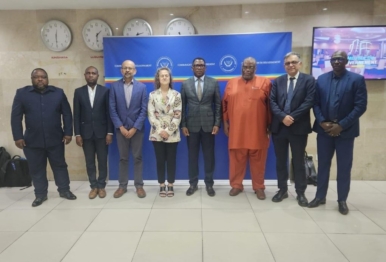
A mission to coordinate filovirus research in the Democratic Republic of the Congo
10 June 2026