


Federico Pipitone, a research engineer and winner of the 2026 IAS/ANRS MIE “Joep Lange & Jacqueline van Tongeren” Prize, talks about his unconventional career path and the mutual benefits of community involvement and research in the context of his work on the PrEP à Porter project.
Last updated on 07 September 2026
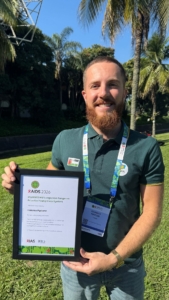 At the age of 28, Federico Pipitone is a research engineer at SESSTIM (Economic and Social Sciences of Health and Medical Information Processing, UMR Inserm / IRD / Aix-Marseille University) in Marseille.
He is working on the sociological aspects of two studies on the implementation of pre-exposure prophylaxis for HIV (PrEP) in France, based on a community-led approach: PrEP à Porter and CaboPrEP.*
His work on PrEP à Porter led to him being awarded the ‘Joep Lange & Jacqueline van Tongeren’ prize by the ANRS Emerging Infectious Diseases Unit (ANRS MIE) and the International AIDS Society (IAS) at the AIDS 2026 conference in Rio de Janeiro.
He talks to us about his career path, from his involvement in community organisations to his research.
I am Italian and hold a degree in international relations and social sciences, specialising in political science and sociology. My Erasmus Mundus LAGLOBE Master’s degree (standing for Latin America and Europe in a Global World), delivered by the Sorbonne Nouvelle University and several European institutions, focused on cooperation and development aid, with a particular emphasis on Latin America.
Alongside my studies, I became involved in sexual and reproductive rights through voluntary work in France (with the organisation Checkpoint), in Belgium (with the sex workers’ network, ESWA) and in Italy (with the organisation PrEP in Italia). For my dissertation, I researched HIV in Brazil and undertook a work placement in Rio de Janeiro with the organisation ABIA. That’s where it all began.
Following a placement at the European Parliamentary Forum on Sexual and Reproductive Rights (EPF) in Brussels and another at the French National Research Institute for Sustainable Development (IRD) in Marseille, I joined SESSTIM, where I now contribute directly to the collection and analysis of qualitative data from research projects on PrEP.
Taking part today in the largest international conference on HIV, presenting findings that I co-produced with a multi-stakeholder team including the Acceptess-T organisation and Bichat Hospital, represents for me a full circle – a complete cycle – that began for me here in Rio five years ago.
I work mainly on the PrEP à Porter project. I conduct individual interviews and focus groups, then analyse and interpret the data collected. The work on the PrEP à Porter project is carried out in partnership with the Acceptess-T association and Bichat Hospital, working with Latin American trans migrant women.
I’m also involved in another PrEP project, CaboPrEP, with eight AP-HP hospitals. This project is evaluating the effectiveness of injectable cabotegravir PrEP amongst men who have sex with men.
PrEP à Porter is a research project led by the Infectious Diseases Department at Bichat Hospital in partnership with the Acceptess-T association and SESSTIM, and funded by ANRS MIE as well as ViiV Healthcare and Gilead Sciences. It aims to evaluate an adaptive, multidisciplinary, community-based support programme designed to facilitate access to PrEP and improve retention within the healthcare system among trans women at high risk of HIV infection.
The study is structured in two phases. It combines a cohort study (100 trans women on PrEP) with a sociological analysis (questionnaires, individual interviews and focus groups) to identify barriers to PrEP in this population and adapt the intervention strategy. The aim is to promote a holistic approach to sexual health, encourage treatment adherence and strengthen the inclusion of trans women in the care pathway.
This is community-based research. In other words, it is a collaborative scientific approach carried out with, for and by the community concerned. It is research that brings together researchers and grassroots members or organisations on an equal footing, at every stage: from design and data collection and analysis, right through to the dissemination of results. The aim is therefore to address real needs in order to promote action and social change.
The fact that PrEP à Porter focuses more on trans women from South America (mainly Brazil and Peru) is largely due to its partnership with Acceptess–T. This organisation was founded by a Colombian trans woman, Giovanna Rincon, and has always been successful in reaching out to a wider audience of Latin American trans women. It should not be forgotten that the migration of Latin American trans women to France dates back to the last century. France, and Paris in particular with its drag cabarets, became a popular destination during the second half of the 20th century, driven by the hope of leading a dignified life there.1,2
The study’s target population is one of the groups most marginalised by the healthcare system. Despite high rates of HIV prevalence, few preventive efforts or interventions have targeted the transgender women’s population. Transgender women are under-represented in research on PrEP. Sociological studies have shown that the main barriers to PrEP amongst the trans population are: fear of adverse events, difficulty taking pills, prioritising hormone therapy, stigma associated with taking antiretrovirals, the lack of trans-inclusive marketing for PrEP, and mistrust of the medical system due to transphobia.1,2
The PrEP à Porter project specifically targets trans migrant women, as this population is even more affected by HIV than the general population – and indeed even more so than other key populations – because these individuals often live in extreme economic precarity, struggle with administrative barriers, and face multiple forms of discrimination and violence that impact their access to care.
Looking back on my own journey, I would say that there is no single path to research. After a research-based Master’s degree, a PhD is often presented as the only following option. However, a role as a research engineer also allows you to contribute fully to scientific projects, without necessarily having written a thesis.
This role gives me the time to build up my experience, whilst benefiting from a collaborative environment. I never work alone: I am supported by Gabriel Girard, my scientific supervisor, my colleagues, and our partners in civil society organisations and hospitals, whilst retaining genuine autonomy and seeing my work valued.
Ultimately, I hope to maintain strong links with international cooperation and Latin America, particularly on issues relating to sexual and reproductive health. Working on the PrEP à Porter project, which primarily targets a trans migrant population from South America, is a way of putting this commitment to sexual rights into practice by putting my expertise on Latin America at the service of a particularly vulnerable population from this region, which is close to my heart. My experience at SESSTIM has given me a better understanding of how research works and, in the future, perhaps enabled me to better support researchers in setting up community-based research, whether on regional development projects in France or international cooperation projects.
I dedicate this award to the people who bring the ‘PrEP à Porter’ project to life on a daily basis: health mediators, nurses and doctors. I have chosen to donate the entire prize money to the Acceptess-T association, so that it directly benefits those who need it most.
This award shows that projects carried out with marginalised groups, particularly trans people, are recognised and valued by the ANRS MIE and the IAS. To make the French healthcare system truly equitable, there is an urgent need to roll out multidisciplinary interventions for trans women. Promoting PrEP, improving retention in care and providing comprehensive healthcare are concrete areas for improvement for the well-being of this population – a priority that is all the more crucial for trans migrants, who are particularly vulnerable to HIV. Receiving this award is therefore an honour and a source of great pride for me.
*: The ‘PrEP à Porter’ and ‘CaboPrEP’ projects are both co-funded by the ANRS MIE. The agency also works with the Acceptess-T association as part of the Trans&HIV survey.
The annual IAS/ANRS MIE ‘Joep Lange & Jacqueline van Tongeren’ awards form part of the range of support and mentoring schemes for the next generation of researchers that make up the ANRS MIE’s Start Programme.
Launched in 2024, this programme brings together all the funding, training and support schemes offered or coordinated by ANRS MIE, including:
Contact: start@anrs.fr
More on the Start programme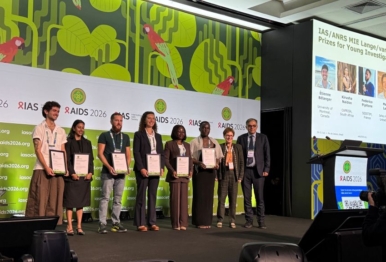
Every year, the IAS and ANRS MIE recognise the work of young researchers in the field of HIV/AIDS.
29 July 2026

The authorisation and availability in France of cabotegravir (Apretude®) in injectable form represent a major innovation in pre-exposure prophylaxis (PrEP) and the prevention of HIV/AIDS.
10 April 2026
National survey on the pathways and living conditions of HIV-positive trans people in France
29 October 2024