

Last updated on 23 September 2026
Developing a preventive HIV vaccine remains a major research challenge. Despite more than 40 years of research, no vaccine is currently being tested in a phase III trial, as all trials have been discontinued due to a lack of efficacy.
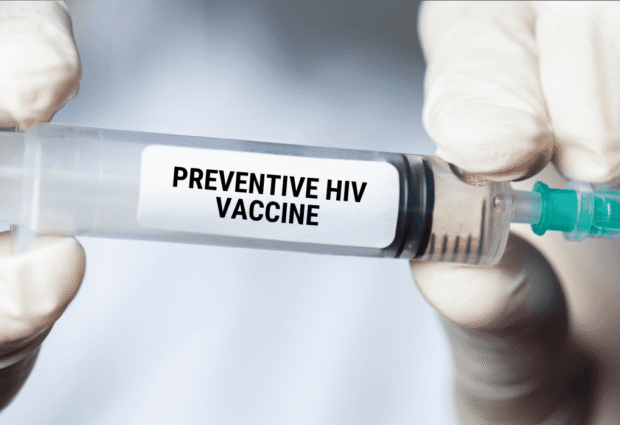
The CD40.HIVRI.Env vaccine candidate is based on a French vaccine technology developed by the Vaccine Research Institute (VRI)*. It consists of a monoclonal antibody targeting CD40 — a receptor found on the surface of dendritic cells — fused to an HIV envelope protein (gp140). This technology enables direct antigen presentation to dendritic cells to generate a strong immune response.
ANRS VRI06 is a phase I, randomised, placebo-controlled, dose-escalation trial conducted in France and Switzerland. It enrolled 72 healthy HIV-negative volunteers. This vaccine, formulated with an adjuvant (Hiltonol®), was administered alone (at doses of 0.3 mg, 1 mg or 3 mg) or alongside another vaccine candidate, DNA-HIV-PT123, at weeks 0, 4 and 24.
The results, published in October 2024 in eClinicalMedicine, showed that CD40.HIVRI.Env was safe and well tolerated, with no serious vaccine-related adverse events, and could induce early, strong and durable cellular and humoral immune responses.¹
Read the press releaseThe question remaining after 2024 concerned the long-term persistence of these responses and the effect of a late booster. The ANRS VRI06 trial protocol was therefore amended to offer an extension of follow-up.² After week 48, 45 volunteers from the active vaccine arms were randomised to receive a late booster injection of 0.3 mg of CD40.HIVRI.Env, with or without the Hiltonol® adjuvant. The booster was administered at a median interval of approximately one and a half years (80 weeks) after enrolment. Tolerability and immunogenicity were assessed two and 24 weeks after this booster.
The booster dose was well tolerated and markedly enhanced immune responses. In particular:
A single low-dose booster of CD40.HIVRI.Env administered at a one-year interval therefore strongly reactivated the immune response, with or without an adjuvant.
These results represent an encouraging step in the development of the VRI’s anti-CD40 vaccine platform. They show that the CD40.HIVRI.Env vaccine candidate can induce durable immune memory that can be strongly reactivated by a booster dose administered several months after primary vaccination. Further development will need to determine, in particular, whether these immune responses can translate into protection against HIV infection and whether this approach can be incorporated into broader vaccination regimens capable of targeting the virus’s extensive genetic diversity.