WHO - partnership on HIV, hepatitis, STIs, tuberculosis, and filovirus

Since 2022 ANRS Emerging Infectious Diseases and WHO have been working together to strengthen their scientific and technical cooperation in low- and middle-income countries in the field of viral infections.

Last updated on 29 September 2025

In brief

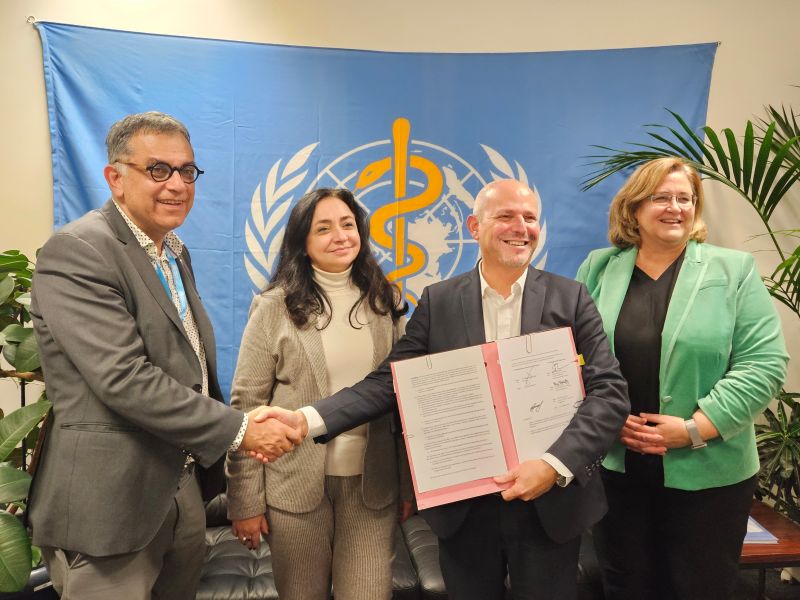
  • WHO and ANRS MIE have formalised a partnership through a memorandum of understanding to improve their scientific and technical cooperation on HIV, hepatitis and STIs in low- and middle-income countries (LMICs), particularly in West and Central Africa.
  • Since 2023, the scope of the partnership has been extended to tuberculosis.
  • In 2025, ANRS MIE was appointed by the WHO to coordinate the Filovirus CORC. As such, the agency became a WHO Collaborating Centre.
  • In 2025, ANRS signed a joint statement with the world’s largest funders of medical research to strengthen clinical trials worldwide based on WHO guidelines.

In the fields of HIV, hepatitis, STIs and tuberculosis

This cooperation, initiated in June 2022 with the WHO’s Department of HIV, hepatitis and STIs (WHO/HHS), then extended to tuberculosis in November 2023 with the Department of the Global Tuberculosis Programme (WHO/GTP), aims to facilitate dialogue on research conducted in the LMICs and national and global public health policies on a number of pre-identified priority themes.

This cooperation is based around three specific objectives:

  1. Linking science and epidemiology to improve the impact of research in LMICs;
  2. Generating scientific evidence to support the development of WHO standards for the achievement of three global HIV, hepatitis, and STIs strategies for 2022-2030, as well as the tuberculosis control strategy;
  3. Identifying and addressing important issues in the response to public health threats related to HIV, hepatitis and STIs, and tuberculosis through priority research programmes.

The filovirus CORC

CORCs (Collaborative Open Research Centres) are open and collaborative research consortia aimed at strengthening research and preparedness for epidemics and pandemics.

Their main objective is to ensure a rapid and effective response to emerging health threats. To this end, they:

  1. coordinate scientific efforts
  2. promote open data sharing, co-creation of knowledge and accelerated development of interventions such as vaccines and treatments

In 2025, the WHO entrusted ANRS MIE with the coordination of the CORC dedicated to filoviruses. The agency thus became a WHO Collaborating Centre.

Joint statement to strengthen clinical trials worldwide

In September 2025, ANRS MIE signed a joint declaration with other medical research funders to strengthen clinical trials worldwide based on WHO guidelines.

The aim of this statement is to:

  1. embed clinical trials in a sustainable national infrastructure
  2. improve trial design
  3. ensure that trial populations are representative
  4. establish best practices on transparency, data management and public engagement

These two MoU between WHO/HHS, WHO/GTB and ANRS Emerging Infectious Diseases are part of the general framework for cooperation between France and WHO, signed on 31 December 2019 on the establishment of a strengthened partnership for the period 2020-2025.

For further information

Our selection

News

Joint statement by core funders of medical research to strengthen clinical trials worldwide

Some of the world’s largest funders of medical research, including ANRS MIE, committed to implementing WHO standards to strengthen clinical trial systems and ensure that research better serves patients and communities.

25 September 2025