

HIV prevention in the Paris Region
Last updated on 10 March 2026
The main objective of the cohort is to significantly reduce the number of new HIV infections in the region by facilitating access to PrEP, a strategy for preventing HIV infection, for high-risk populations.
To achieve this, the cohort recruited participants who were not infected with HIV but were at high risk of contracting the virus. A total of 3,057 HIV-negative volunteer participants at high risk of HIV infection were included.
The PrEP administered is the antiretroviral treatment combination Tenofovir/emtricitabine TDF/FTC, in accordance with the indications and conditions of use defined by the French Marketing Authorisation (MA), the French National Recommendations and the European MA for medicines.
Principal investigator
Pr. Jean-Michel Molina
Co-investigators
Pr. Jade Ghosn, Mme Daniela Rojas (AIDES/ Coalition plus)
Pathology
Prevention of HIV infection
Sponsoship
ANRS MIE
The ANRS Prevenir cohort is essential to the development of effective public health policies, making it possible to curb the spread of HIV in France and to support the most vulnerable populations with appropriate and accessible means of prevention.
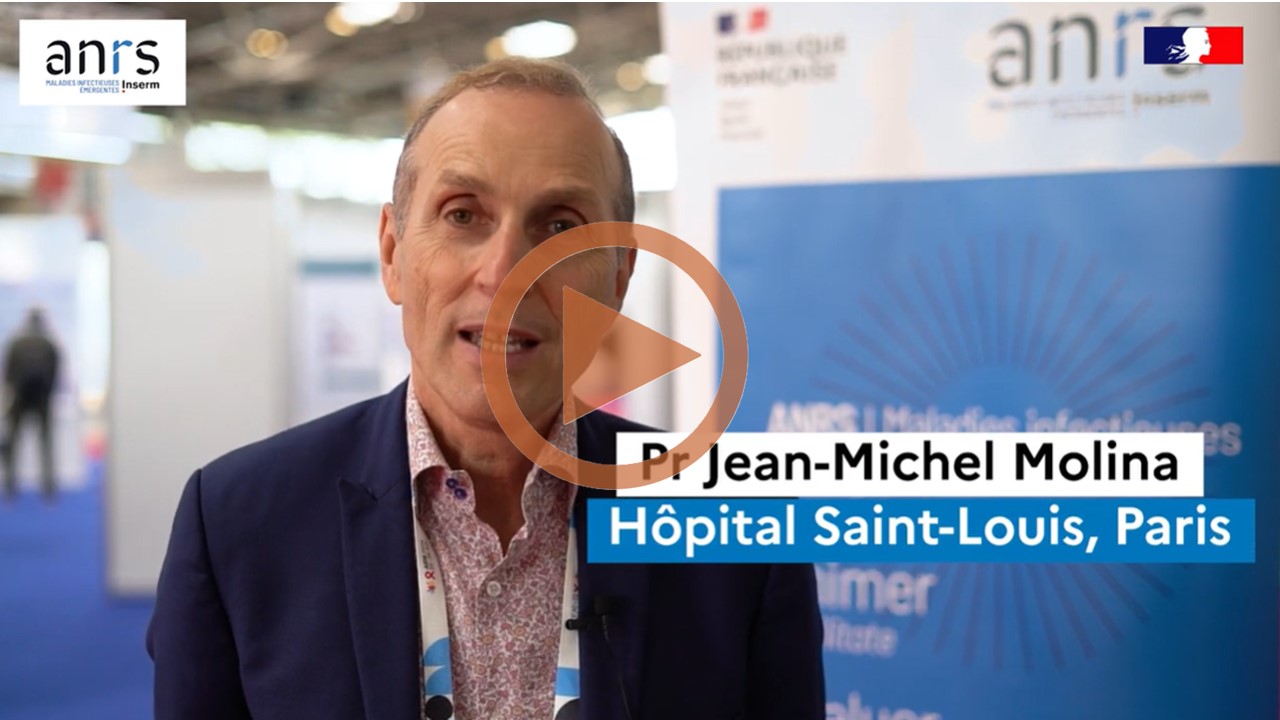
Watch the ANRS Prevenir presentation by Pr Molina, Saint-Louis and Lariboisière hospitals, AP-HP and Université Paris Cité
On-demand PrEP with TDF/FTC is now recommended as an alternative to daily PrEP for men who have sex with men (MSM). However, long-term experience is lacking.
Jean-Michel Molina presented at CROI 2026 the final results of the prospective cohort study Prevenir comparing the two modalities.
Individuals at high risk for HIV infection (MSM and transgender individuals) individuals at high risk for HIV infection using PrEP. MSM could opt for either daily or on-demand PrEP with TDF/FTC and could switch. The main objective was to assess the overall HIV incidence in the study. From May 3rd 2017 to May 2nd 2025, 3 209 subjects were enrolled across 22 sites in the Paris region, and medical monitoring and PrEP use trajectories were analysed.
The results showed that HIV incidence (< 1/1000 person/years) was low despite increasing rates of condomless sex. Rate of study discontinuation was lower in participants who switched between PrEP regimens.
Several studies have been set up as part of the ANRS Prévenir research programme and major publications have been produced based on the cohort:

The SHIELD JA project aims to make it easier to get vaccinated, tested and treated in order to prevent infections from developing into cancer.
16 March 2026