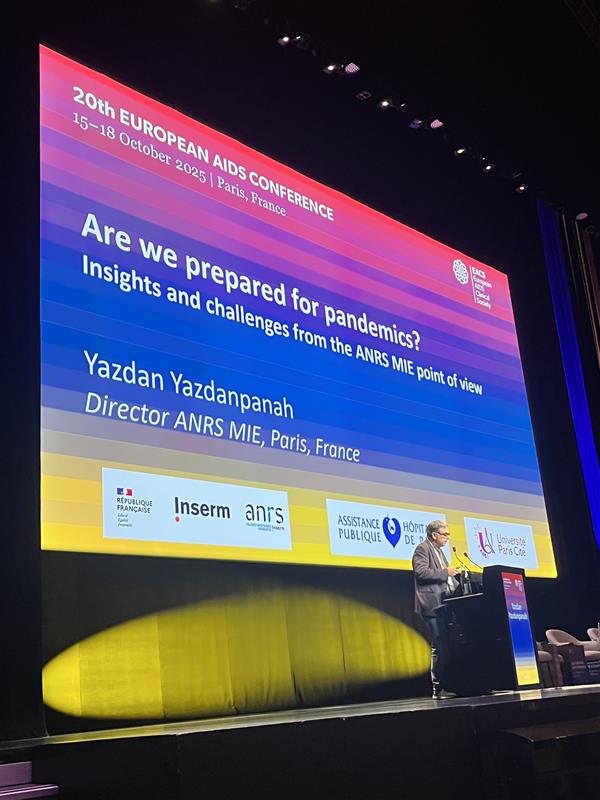
EACS 2025 will be held from 15 to 18 October 2025 in Paris, France.
From 15 to 18 October 2025
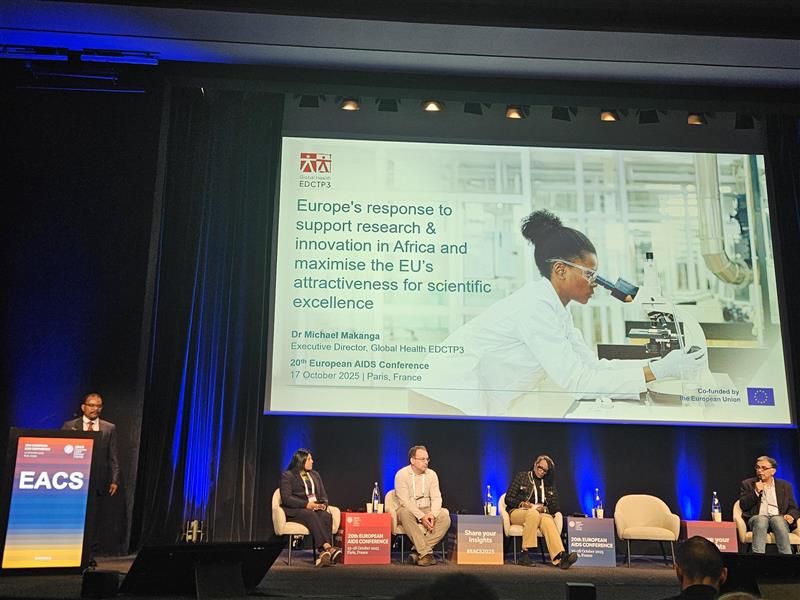
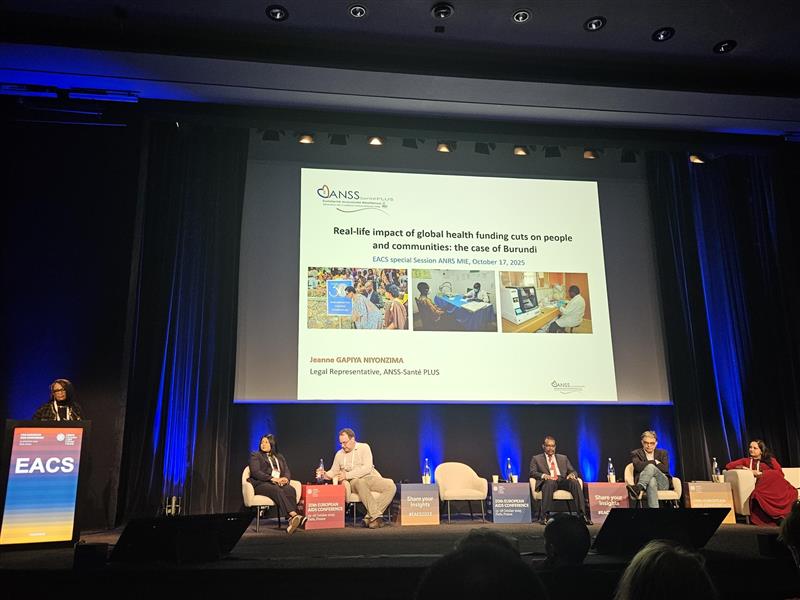
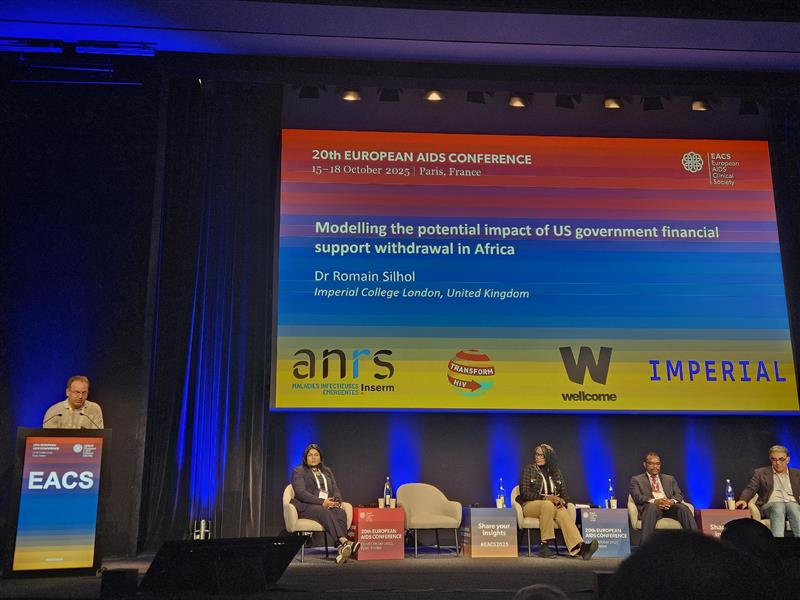
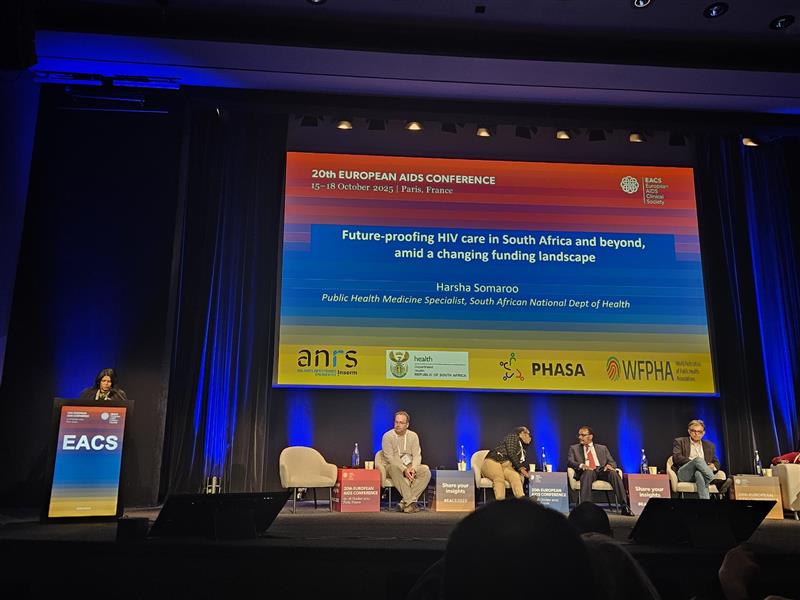
An ANRS MIE session, co-organised with the TRT-5 CHV, will be held on 17 October from 4.15pm to 5.15pm on the theme of ‘Global public health funding cuts: a new challenge for HIV in Africa’. TRT-5 CHV is a group of associations working to combat HIV, hepatitis and STIs, focusing on clinical research and therapeutic advances to defend the interests of those affected.
|
Barré T, et al. |
Barriers to tobacco smoking cessation support during hospital follow-up of adult people living with HIV/AIDS: a clinicians’ perspective |
|
Charpentier C, et al. |
A French national real-world survey of people initiating a lenacapavir-based treatment during the post-approval period |
|
Charre C, et al. |
Lymph nodes play a central role in SIV persistence compared to gut (P-VISCONTI study) |
|
Deghmane A-E, et al. |
The Impact of 4CMenB Vaccination and Doxycycline post-exposure prophylaxis on Pharyngeal Meningococcal Carriage among MSM using HIV PrEP |
|
Di Nunzio F. |
HIV Capsid Dynamics and Lenacapavir’s Role in Remodeling Viral Replication |
|
Faua C, et al. |
Lenacapavir directs specific immunoproteasome-mediated degradation of Gag proteins and increases the killing of HIV-infected cells |
|
Ghosn J, et al. |
Systematic molecular screening for mpox in anal/pharyngeal swabs in high-risk MSM on PrEP: a substudy of the ANRS-DOXYVAC trial |
|
Ghosn J, et al. |
Bacterial Sexually Transmitted Infections over a 4-year-period of follow-up in MSM on PrEP enrolled in the prospective ANRS-PREVENIR cohort |
|
Gilbert M, et al. |
How Should APOBEC3-induced Resistance Mutations be Considered in the Management of Antiretroviral Therapy? |
|
Goldwirt L, et al. |
Impact of doxycycline adherence on bacterial STI incidence in the ANRS 174 DOXYVAC trial |
|
Hemery J, et al. |
Comparison of the Time to Reach Viral Suppression after ART Initiation Between Transgender Women and Other PWH in France: Results from the ANRS CO4 FHDH |
|
Le Hingrat Q, et al. |
Nucleocapsid mutations at time of virological failure with an integrase inhibitor |
|
Leye E, et al. |
Evolving cancer incidence in persons with HIV in France between 2014-2023: A nationwide study using the French National Health Data System |
|
Mafuta C, et al. |
Factors associated with loss to follow-up among PWH-1: Analysis through linkage of the ANRS PRIMO, CODEX, and COPANA to the ANRS CO4 FHDH: the PDVCOH study |
|
Mchantaf G, et al. |
HIV persistence in deep tissues on dolutegravir based antiretroviral therapy is not associated with the selection of drug resistance mutations to second generation INSTI (ANRS EP64 DOLUVOIR) |
|
Molina J-M, et al. |
Doxycycline prophylaxis to prevent bacterial STIs: Results of the open-label extension phase of the ANRS 174 DOXYVAC trial |
|
Paucard L, et al. |
Bacterial STIs incidence among MSM with HIV in France: the ANRS PRIMO cohort |
|
Van Huizen R, et al. |
Multidimensional gender affirmation among transgender women living with HIV: an indicator of engaging in transactional sex? |
Charlotte Charpentier, et al : A French national real-world survey of people initiating a lenacapavir-based treatment during the post-approval period
Lenacapavir, which is used in people living with HIV (PLHIV) harboring multidrug-resistant viruses, is the only capsid inhibitor on the market to date. Until now, no data were available on its use in real-world settings, with the exception of the early access programme in France.
Charlotte Charpentier’s team, in collaboration with other French research teams, conducted a real-world study. Its objective was to describe immunovirological characteristics and virological outcome in PLHIV initiating a lenacapavir-based treatment.
Findings from the survey show specificities compared to clinical trials. Unexpectedly, half of the 94 participants were virologically-suppressed at treatment initiation. In cases of failure, emergence of resistance was also lower.
These results come from the largest real-world use of lenacapavir in the world, made possible thanks to the ANRS MIE Virology-PK network.
Jade Ghosn, et al : Systematic molecular screening for mpox in anal/pharyngeal swabs in high-risk MSM on PrEP: a substudy of the ANRS-DOXYVAC trial
Mpox, a zoonotic disease related to human smallpox, emerged in non-endemic countries in 2022, disproportionately affecting men who have sex with men (MSM). Recent data suggest that asymptomatic viral shedding may contribute to transmission dynamics. As shown by the ANRS-DOXYVAC cohort, the incidence rate is high (49.3 per 1,000 person-months) among MSM on pre-exposure prophylaxis (PrEP) with a history of sexually transmitted infections (STIs).
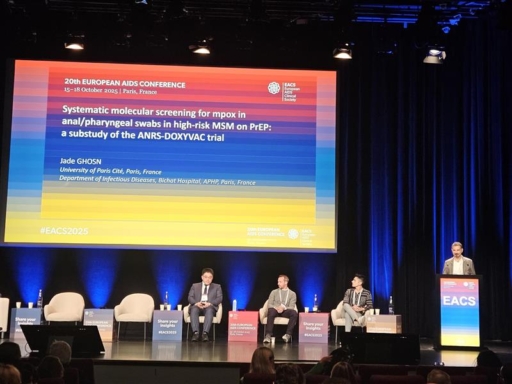 The aim of the ANRS-DOXYVAC trial sub-study, conducted by Jade Ghosn and hir fellow researchers, was to quantify the proportion of participants with asymptomatic Mpox shedding in anal or pharyngeal swabs, and to identify viral subtypes and transmission clusters.
Retrospective PCR tests for Mpox were conducted on 2,980 samples (1,451 anal and 1,529 pharyngeal swabs) collected quarterly between March 2022 and January 2023. The findings revealed the existence of asymptomatic carriage among high-risk MSM, with a prevalence of 8.4%. Asymptomatic carriers were significantly more likely to have been vaccinated against smallpox during childhood than symptomatic participants, highlighting that vaccine-induced immunity, while protecting against symptomatic forms, does not prevent asymptomatic viral shedding. Furthermore, the discovery of a large transmission cluster (13 cases) including 9 asymptomatic cases suggests that asymptomatic carriers play a crucial role in virus transmission chains. The next step in this project will be to study correlates of cellular immune response and Mpox virus-specific antibody kinetics.
The findings from the ANRS-DOXYVAC trial sub-study pave the way for a better understanding of Mpox epidemiology and highlight the need to consider asymptomatic carriage in control strategies.
Charlène Mafuta, et al : Factors associated with loss to follow-up among PWH-1: Analysis through linkage of the ANRS PRIMO, CODEX, and COPANA to the ANRS CO4 FHDH: the PDVCOH study
People living with HIV (PWH) who interrupt their medical follow-up are at increased risk of viral rebound. Identifying them is a major challenge, even in high-income countries.
Better understanding risk factors for loss to follow-up is essential to strengthen retention in care.
The authors of the PDVCOH study linked three cohorts (ANRS PRIMO [HIV-1 primary infection], ANRS CODEX [HIV-1 controllers], and ANRS COPANA [recent HIV-1 diagnosis], to the national hospital cohort ANRS-CO4 FHDH (French Hospital Database on HIV Infection) in order to combine data from 2,935 PWH.
Their findings showed that migration background, unemployment and poor mental health were associated with an increased risk of loss to follow-up. This highlights the need for targeted support for vulnerable groups to promote long-term engagement in care.
By linking clinical and social data, we are taking an important step towards identifying and supporting those most at risk of dropping out of healthcare. For our team, this study is an important step towards a deeper understanding of social determinants of retention in care.
Jean-Michel Molina : Doxycycline prophylaxis to prevent bacterial STIs: Results of the open-label extension phase of the ANRS 174 DOXYVAC trial
Three randomised trials have demonstrated the effectiveness of post-exposure prophylaxis with doxycycline (DoxyPEP) on the incidence of bacterial sexually transmitted infections (STIs) in men who have sex with men (MSM) and transgender people using pre-exposure prophylaxis (PrEP) or living with HIV.
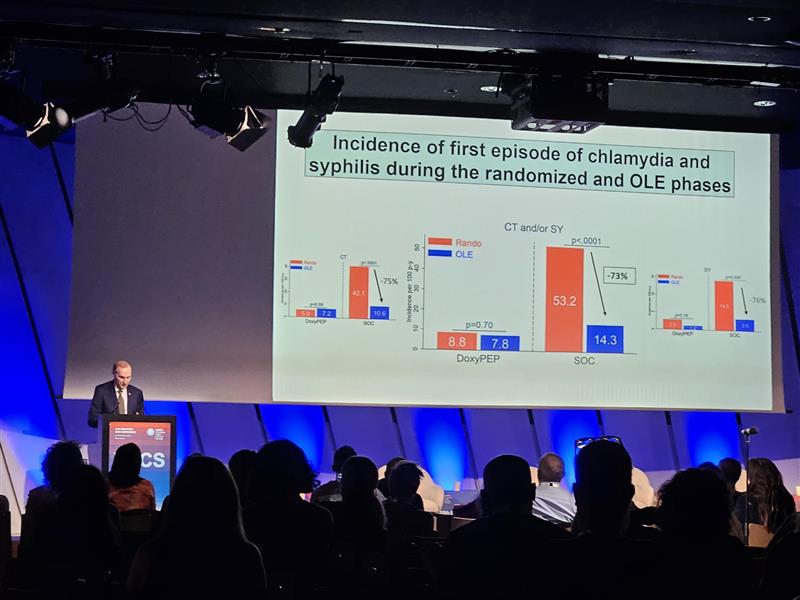
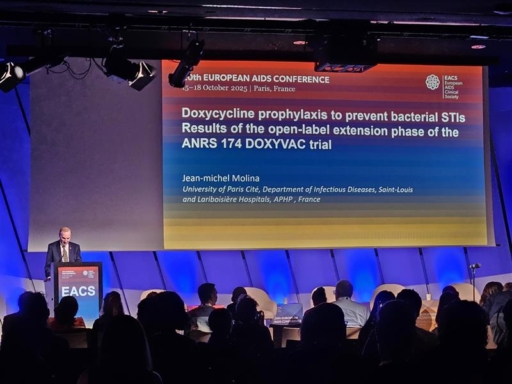 Jean-Michel Molina and the ANRS 174 DOXYVAC study group conducted an open-label extension study of the ANRS 174 DOXYVAC trial to evaluate the sustainability of this strategy in the post-randomisation phase, where all participants had access to DoxyPEP. The other objective was to study the effect of this approach on antimicrobial resistance (AMR) for Neisseria gonorrhoeae between the randomised and the open-label extension phase.
The results confirmed the sustained efficacy and excellent tolerability profile of DoxyPEP in reducing the incidence of STIs. In the initial DoxyPEP group, the incidence of STIs remained stable and low between the randomised and post-randomised phases. In the initial control group, the incidence of chlamydia, syphilis, and gonorrhoea decreased significantly after the introduction of DoxyPEP following the post-randomisation follow-up period. However, DoxyPEP was associated with the selection of Neisseria gonorrhoeae strains carrying tetM and PenA 34007 resistance markers (genes conferring resistance to tetracycline and to penicillin, respectively). Monitoring antimicrobial resistance is therefore essential during widespread use of DoxyPEP in people frequently exposed to STIs, both for gonorrhoea and other species of bacteria.
In addition, based on these results, the team plans to contribute to the development of recommendations aimed at influencing national and international guidelines on the use of DoxyPEP. They also prepared to explore ways of integrating this strategy into healthcare, which will require research into long-term patient adherence and the cost-effectiveness of the DoxyPEP approach.
The DOXYVAC study highlights the urgent need to monitor the evolution of antimicrobial resistance beyond gonococcus alone, in particular the potential impact on the resistant microbiome and other pathogens such as S. aureus.
|
Annequin M, et al. |
Structural factors associated with viral suppression among transgender women living with HIV in France, ANRS-Trans&HIV: a nationwide retrospective life-event survey |
|
Burns F, et al. |
Differences in ART regimen initiation among people with recently acquired HIV: 2015-2021 |
|
Castry M, et al. |
Risk Factors Associated with Bacterial Sexually Transmitted Infections (STIs) Among Men Who Have Sex with Men (MSM) During the Pre-Exposure Prophylaxis (PrEP) era: a Systematic Review and Meta-Analysis in High-Income Countries |
|
Coste M, et al. |
Coverage and determinants of prenatal screening for HIV, syphilis and hepatitis B: a cross-sectional survey in Burkina Faso and The Gambia (TRI-MOM project) |
|
Gay L, et al. |
Would infant lamivudine prophylaxis during breastfeeding be an option to prevent vertical transmission of drug-resistant HIV strain? |
|
Leleux O, et al. |
Cognitive and locomotor disorders in people living with HIV between 2007 and 2023: outcomes of the ANRS CO3 AQUIVIH-NA cohort |
|
Pantazis N, et al. |
Elite controllers in a cohort of people with well-estimated dates of HIV seroconversion: characteristics, time to lose elite status and natural CD4 evolution |
|
Stefic K, et al. |
A French national real-world survey of people with multi-resistant HIV-1 viruses treated with an antiretroviral regimen including fostemsavir |
|
Yahyaoui W, et al. |
Meaningful changes in [health-related] quality of life in people living with HIV in Nouvelle Aquitaine, France (2018-24): AQUIVIH-NA-QuAliV Study |
Professor Yazdan Yazdanpanah, Director of the ANRS Emerging infectious diseases, will be taking part in a conference for the general public on HIV on 14 October from 4.30pm to 6.30pm at the Université Paris Cité. You can download the flyer below.
The EACS 2025 conference will close with a 5km run entitled ‘Living Free with HIV’ on 18 October, with the aim of combating HIV-related stigma and discrimination. More information below.
As part of the conference, the ANRS MIE prize honoring the best basic or translational research article on HIV was awarded on Thursday, 16 October 2025. This peer-reviewed award, worth €20,000, was given this year to Dr Philippe Schommers for his article entitled: ‘Dynamics and durability of HIV-1 neutralisation are determined by viral replication.’


From 7 to 9 October 2026, the 99th Scientific Meeting of the French Association for the Study of the Liver (AFEF) and the 27th Continuing Medical Education Days in Hepatology will take place at the Palais des Congrès in Strasbourg.
03 July 2026