Last updated on 19 November 2026
First Franco-Cambodian research projects on HIV/AIDS, focusing on the prevention of mother-to-child transmission.
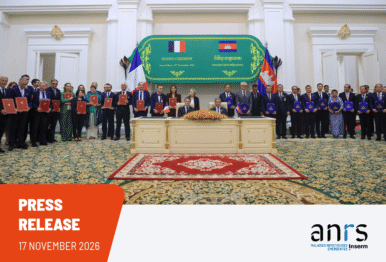
Signing of the framework agreement between the Cambodian Ministry of Health, the French Embassy and ANRS. Establishment of the ANRS Cambodia Partner Site, centred around the Institut Pasteur du Cambodge and the University of Health Sciences.
Development of new research projects, including the TA PROHM project on the prevention of mother-to-child transmission of hepatitis B virus (HBV).
Strengthening of research on sexually transmitted infections, prevention, and social sciences and humanities, alongside an increased focus on emerging infectious diseases, antimicrobial resistance, and the One Health approach.
Establishment of the Global Health Research Center at UHS.
A new phase of cooperation with the establishment of a long-term, multilateral global health research platform. [Link]
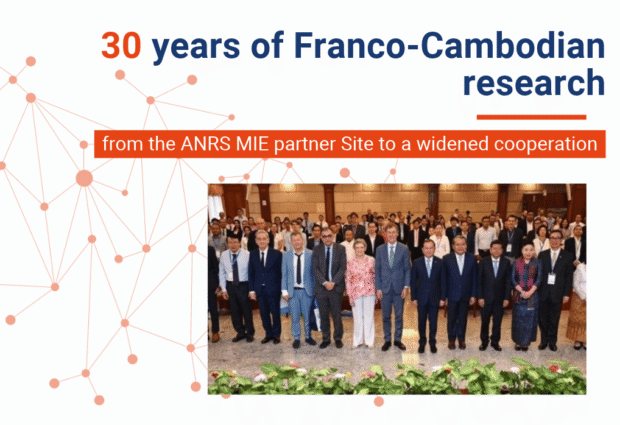
Initiated in 1995, notably with the involvement of Professor Françoise Barré-Sinoussi, Franco-Cambodian scientific cooperation was formalized in 2000 through a framework agreement between the Cambodian Ministry of Health, the French Embassy and ANRS. Initially, the collaboration focused on tackling HIV/AIDS, particularly the prevention of mother-to-child transmission.
Over the years, research activities have expanded to include tuberculosis, viral hepatitis and sexually transmitted infections (STIs). Conducted primarily in collaboration with the University of Health Sciences (UHS) and the Institut Pasteur du Cambodge, national programmes, Cambodian civil society and community organizations, and French and international research teams, these studies aim to improve screening, diagnosis, prevention and care for infectious diseases, in response to the country’s public health needs.
Since 1995, nearly 60 studies have been supported by ANRS MIE in Cambodia, contributing to advances in scientific knowledge and improvements in prevention and treatment strategies, both in Cambodia and internationally.
Jointly funded by ANRS and the US National Institutes of Health (NIH), the CAMELIA clinical trial investigated the optimal timing for initiating antiretroviral therapy in adults living with HIV and tuberculosis. At the time, the optimal timing for starting antiretroviral treatment in patients with tuberculosis had not been established. Due to concerns about drug interactions and inflammatory reactions, treatment was often delayed by several weeks. The results demonstrated that initiating antiretroviral therapy two weeks after the start of tuberculosis treatment significantly improved survival among patients with CD4 counts below 200 cells/mm³. This breakthrough helped shape international guidelines for the management of HIV–tuberculosis co-infection.
The CAMELIA study illustrates the impact of collaborative research conducted in Cambodia, bringing together researchers, healthcare professionals, civil society and community organizations, and health authorities from Cambodia and France, with benefits extending far beyond the country’s borders.
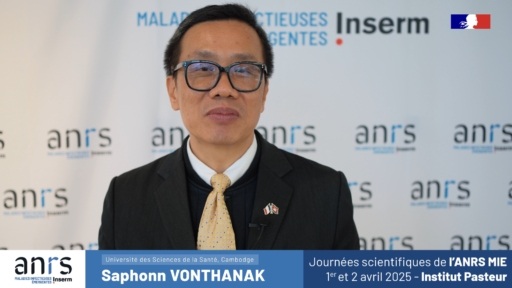
This study [CAMELIA] has benefited HIV-infected patients with tuberculosis not only in Cambodia but it has a worldwide impact.
Beyond individual research projects, Franco-Cambodian cooperation has contributed to strengthening research skills and capacities in Cambodia for the past thirty years. This partnership is built around two key institutions: the University of Health Sciences (UHS) and the Institut Pasteur du Cambodge (IPC).
Training young researchers, supporting research teams and developing dedicated research structures: several initiatives have emerged over the years, including the Grant Management Office at UHS, the Clinical Research Group, and efforts to identify and support the next generation of Cambodian researchers through the supervision of master’s students, PhD candidates and postdoctoral researchers. More recently, these efforts have included the development of the AFRAVIH–ANRS MIE–IRD–UHS clinical research training programme and the establishment of the Global Health Research Center (GHRC) within UHS.
This approach is based on a central principle: developing research projects that address Cambodia’s public health priorities while strengthening the leadership of local scientific teams.
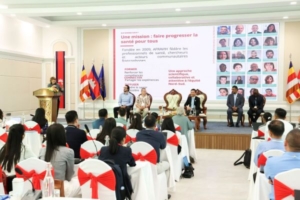
AFRAVIH–ANRS MIE–IRD–UHS clinical research training programme, 2026

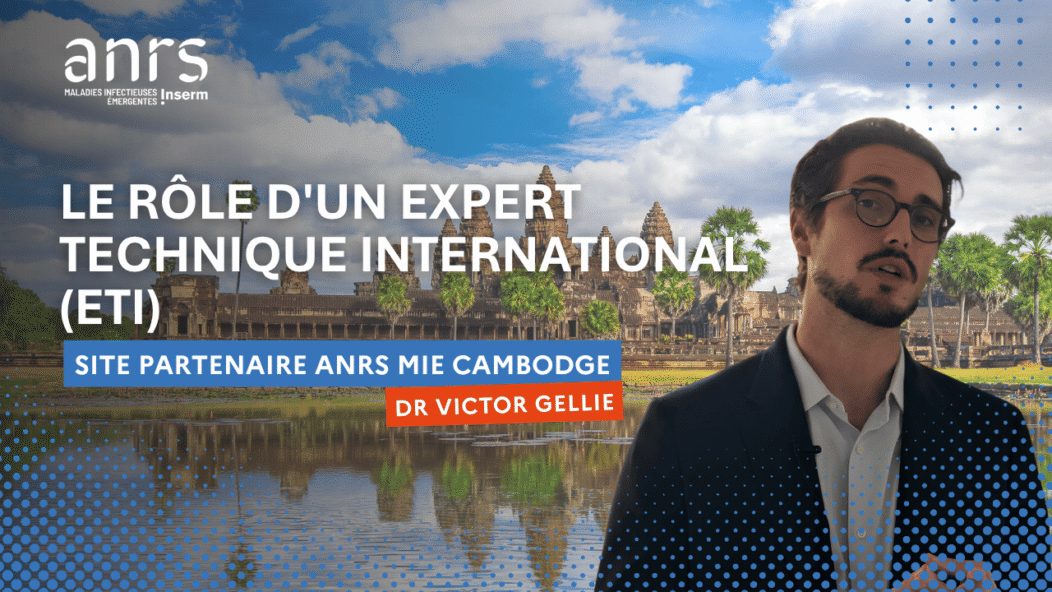
The French teams are here to help and contribute, but the Cambodian researchers are the leaders of the research questions.
Historically focused on HIV, tuberculosis and viral hepatitis, Franco-Cambodian scientific cooperation has gradually expanded to address new health challenges.
Since 2024, particular attention has been paid to sexually transmitted infections (STIs), in the context of their increasing incidence in Cambodia. Research has also expanded to include emerging infectious diseases, arboviral diseases, fungal infections and antimicrobial resistance.
This diversification is reflected in numerous projects: CAM-C and HEPEDIAC on screening and treatment, HDV4Cambodia, FUNgiCAM and Papillomazimuth on diagnosis and follow-up, as well as QualiPrEP, DATURA and PrestiCam on prevention and care strategies.
The DEMELE-JEV cohort [co-funded by ANRS MIE and the French Ministry for Europe and Foreign Affairs], focusing on meningoencephalitis associated with Japanese encephalitis virus, illustrates the expansion of research into emerging infectious diseases.
This diversification reflects a shift towards a more comprehensive approach to health challenges, taking into account the interactions between infectious diseases, health systems, populations and their environment. It is accompanied by the expansion of collaborations to include new research teams and new French and Cambodian stakeholders.
International research collaboration benefits all parties but careful planning and implementation of research and especially considering human to human relationships are crucil to its success. Prof. Vonthanak Saphonn, Cambodian coordinator of the ANRS MIE Partner Site, during the ANRS MIE Scientific Days 2025. Duration: 4 min 19 sec.
In 2026, Franco-Cambodian scientific cooperation enters a new phase with the launch of the PRISME France-Cambodia initiative (International Global Health Research Platform). This structured, multilateral and long-term partnership brings together Cambodian and French academic and research institutions, as well as operational stakeholders and public health decision-makers. It aims to establish lasting links between research and realities on the ground, ensuring that medical needs and public health challenges identified by local stakeholders inform the definition of future research questions. In turn, the findings are intended to be translated into concrete applications within health programmes and public policies.
PRISME France-Cambodia will bring together fourteen French and Cambodian institutions and authorities, with the ambition of strengthening long-term scientific cooperation in global health.
While communicable diseases and emerging pathogens form the foundation of existing collaborations, the platform aims to gradually expand its scope to include non-communicable diseases, antimicrobial resistance and the health impacts of environmental and climate change.
Through its activities, PRISME France-Cambodia will pursue five main objectives:
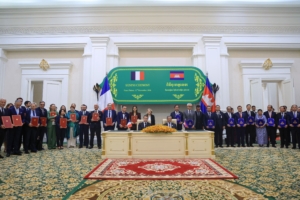
This partnership was officially announced on the sidelines of the Francophonie Summit in Phnom Penh by the President of the French Republic and the Head of State of Cambodia on November 15, 2026.
More information about the ANRS MIE Cambodian Partner Site


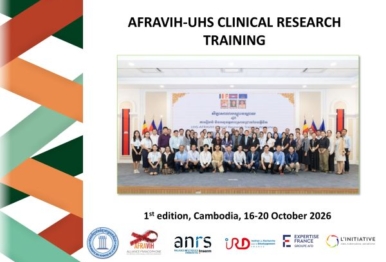
In partnership with ANRS MIE, IRD, and UHS, AFRAVIH offered a training programme in clinical health research in 2026.
28 October 2026

April 1-2, 2025 at the Institut Pasteur Conference Center in Paris
26 November 2024
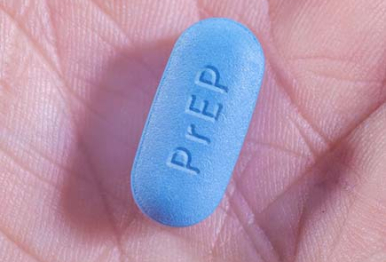
An unprecedented study on key populations that are particularly vulnerable to HIV
24 May 2024