

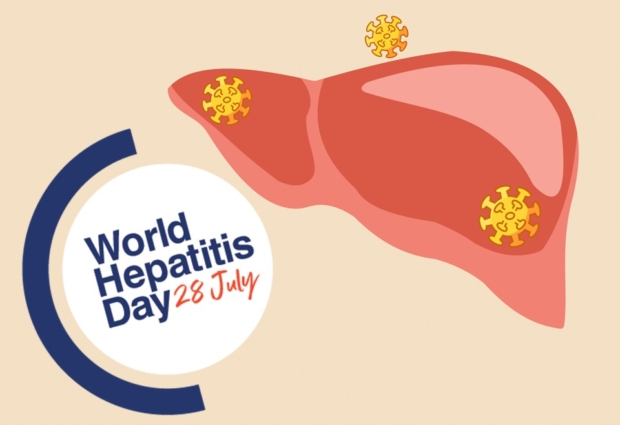
As it does every year to mark World Hepatitis Day on 28 July, ANRS MIE reaffirms its commitment to research into viral hepatitis.
Last updated on 05 August 2026
Since 2010, the World Health Organisation (WHO) and the World Hepatitis Alliance (WHA) have been celebrating World Hepatitis Day every year on 28 July, the birthday of Baruch Samuel Blumberg, winner of the 1976 Nobel Prize in Medicine and the first person to identify the hepatitis B virus.
In 2026, the two organisations are calling on the scientific community and countries around the world to “break the silence, break the cycle and break the stigma” surrounding viral hepatitis.
ANRS Emerging Infectious Diseases (ANRS MIE), which has been involved in this fight since 1999, continues to contribute to advancing research into these diseases.
Viral hepatitis is one of the deadliest communicable diseases in the world, ahead of tuberculosis. These forms of liver inflammation are caused by one or more viruses (hepatitis A, B, C, D or E) and are transmitted in various ways (through blood, sexual contact, etc.). In the case of hepatitis B and C, the infection can become chronic and lead to liver cancer, of which it remains the leading cause.
The World Health Organisation (WHO) estimates that 287 million people worldwide were living with chronic hepatitis B or C in 2024. This figure is down from the 304 million people affected in 2022. Nevertheless, the annual number of deaths caused by these two diseases remains unchanged at 1.34 million.
In July 2022, WHO set itself the goal of eradicating HIV/AIDS, hepatitis and other sexually transmitted infections by 2030. With regard to hepatitis, it aims to help reduce the number of new infections to 520,000 per year (compared with an estimated two million new cases per year) and the number of deaths to 450,000 per year.
“Without urgent and sustained action, however, viral hepatitis is projected to cause an additional 9.5 million new infections, 2.1 million liver cancer cases, and 2.8 million deaths by 2030,” projects WHO. “The tools needed to eliminate viral hepatitis already exist. Effective vaccines, accurate diagnostics, curative treatments for hepatitis C, and lifelong therapies for hepatitis B can prevent infections, save lives, and reduce liver cancer and cirrhosis. Despite this, millions of people remain undiagnosed, untreated, or unable to access care due to stigma, limited awareness, health system gaps, and persistent inequalities.”
Originally founded in 1988 to combat the HIV/AIDS epidemic, the ANRS Emerging Infectious Diseases (ANRS MIE) has been supporting research into viral hepatitis since 1999 (for hepatitis C, and then, from 2005, for hepatitis B). The agency’s mission is therefore to fund, coordinate and facilitate research into these conditions. And the past twelve months have continued to demonstrate this.
In October 2025, researchers from the Cam-C study, promoted and funded by ANRS MIE, published their initial findings in the journal The Lancet Regional Health – Western Pacific. This study was carried out in 2022 in Cambodia to assess the effectiveness of two strategies for combating hepatitis C (HCV), a major public health problem in the country. The results showed that the community-based approach is more effective than the healthcare-facility-based approach, as it improves uptake of rapid screening for HCV antibody carriers.
ANRS MIE contributed to the launch, in December 2025, of the SHIELD project (standing for Strategies for Health Interventions to Eliminate Infection-related Cancers). Coordinated by the Centre of Excellence for Health, Immunity and Infections (CHIP) at Rigshospitalet in Denmark, this European project aims to facilitate access to vaccination against hepatitis B (HBV) and human papillomavirus (HPV), as well as to improve screening for HBV, HCV, HPV, HIV and tuberculosis through an integrated approach to these various conditions across 25 partner countries. In this context, ANRS MIE has been tasked, alongside the Public Health Centre of Ukraine, with monitoring and evaluating the implementation of the SHIELD project, ensuring that it remains in line with the objectives, timelines and expected outcomes.
Launched in January 2026, the Delta Amazonia research project aims to trace and explore in depth the epidemiological history of hepatitis D (or delta) in the Amazon basin and neighbouring areas, at the junction of Brazil, Peru and Venezuela, from the early 20th century to the present day. Funded and supported by ANRS MIE, it adopts a geographical approach to characterise the landscapes and territories affected by hepatitis D epidemics, combined with ethnohistorical studies of the epidemics and phylogenetic and phylogeographic analyses of both ancient and recent viral strains.
Also in January 2026, several researchers who are members of the taskforce ‘ANRS HBV Cure’—which is dedicated in particular to identifying new therapeutic targets and antiviral molecules for a functional cure for the hepatitis B virus (HBV)—published a study funded by ANRS MIE in Cell Host & Microbe. The study shows that the antiviral GLP-26, which acts on the virus’s capsid, effectively reduces viraemia and slows the proliferation of HBV in infected humanised mice. This leads to seroconversion and a functional cure for HBV.
Furthermore, the initial results from the Overseas territories section of the CSF-2023 survey, which examines the context of sexualities in France, were published in April 2026. Conducted on the initiative of ANRS MIE, in collaboration with, amongst others, Inserm, Santé publique France, CNRS and INED, this survey described for the first time the sexual and preventive practices of the general population in French Guiana, Martinique, Guadeloupe and Réunion. Among its key findings, the study highlights an ‘insufficiency’ in vaccination coverage against HBV and HPV.
Finally, during June and July 2026, the launch phase of the HIPOCAMP study began in two of the four participating countries: Vietnam and Côte d’Ivoire. This study, promoted and funded by ANRS MIE, aims to compare two strategies for preventing HBV transmission during pregnancy: through routine treatment of women carrying the virus, or only following a ‘point-of-care’ diagnosis. The first health centres were set up in June in Côte d’Ivoire and in July in Vietnam, and training was provided to healthcare teams to enable the first participants to be enrolled as quickly as possible. In total, 3,200 women carrying HBV will be enrolled across the four countries (which also include Cameroon and Togo) for follow-up for up to nine months after giving birth.
The younger generation of scientists supported by ANRS MIE, through the various initiatives of its Start programme, has also helped to advance research into viral hepatitis.
A study published in March 2026 in the journal Cell was one of the few to focus on deltaviruses, a little-known family of microscopic viruses that includes the hepatitis D virus. The study’s first author, Dr Joe McKellar, contributed to the research as part of a postdoctoral fellowship funded by ANRS MIE. He was part of the team that discovered that deltaviruses do not merely borrow surface proteins from other viruses (as is the case with hepatitis D and hepatitis B) but can also integrate into them in the form of hybrids. A discovery that “opens up a whole new range of possibilities”, according to Dr Joe McKellar, who has since been awarded the Academy of Sciences’ “Major French Advances in Biology 2026” prize.
Furthermore, as it does every year, the ANRS MIE’s coordinated action ‘Fundamental and Translational Research on Viral Hepatitis’ (AC42) has joined forces with the French Society of Virology (SFV) to award prizes for theses defended the previous year on the subject of viral hepatitis. In 2026, it recognised the work of Olivia Paronetto (University of Toulouse III) on the replication mechanisms of the hepatitis E virus and that of Zakaria Boulahtouf (ITM, Strasbourg) on the impact of hepatitis B virus infection on hepatocytes.
Finally, a ‘François Barré-Sinoussi, Nobel Prize in Medicine’ academic excellence scholarship, awarded annually by ANRS MIE, was also awarded, for the first time, to a young midwife. Adjo Amandine Eza, who is currently studying public health at the University of Bordeaux, was commended for her internship project focusing on the prevention of mother–to–child transmission of the hepatitis B virus. Carried out in Togo, this project formed part of the HIPOCAMP project promoted by ANRS MIE.
The ANRS MIE’s involvement in research into viral hepatitis is by no means a recent development. The agency has long been promoting numerous research projects in this field, covering both clinical and basic research. These include several large–scale cohort studies that are still ongoing, notably:
The aim of the ANRS CO12 CirVir study is to describe the natural history of a large cohort of patients with viral cirrhosis.

The ANRS CO22 HEPATHER cohort is entitled ‘Therapeutic options in hepatitis B and C: a French national cohort’.
National cohort of patients co-infected with hepatitis B and Delta viruses